

Different Vehicles, Unequal Protection
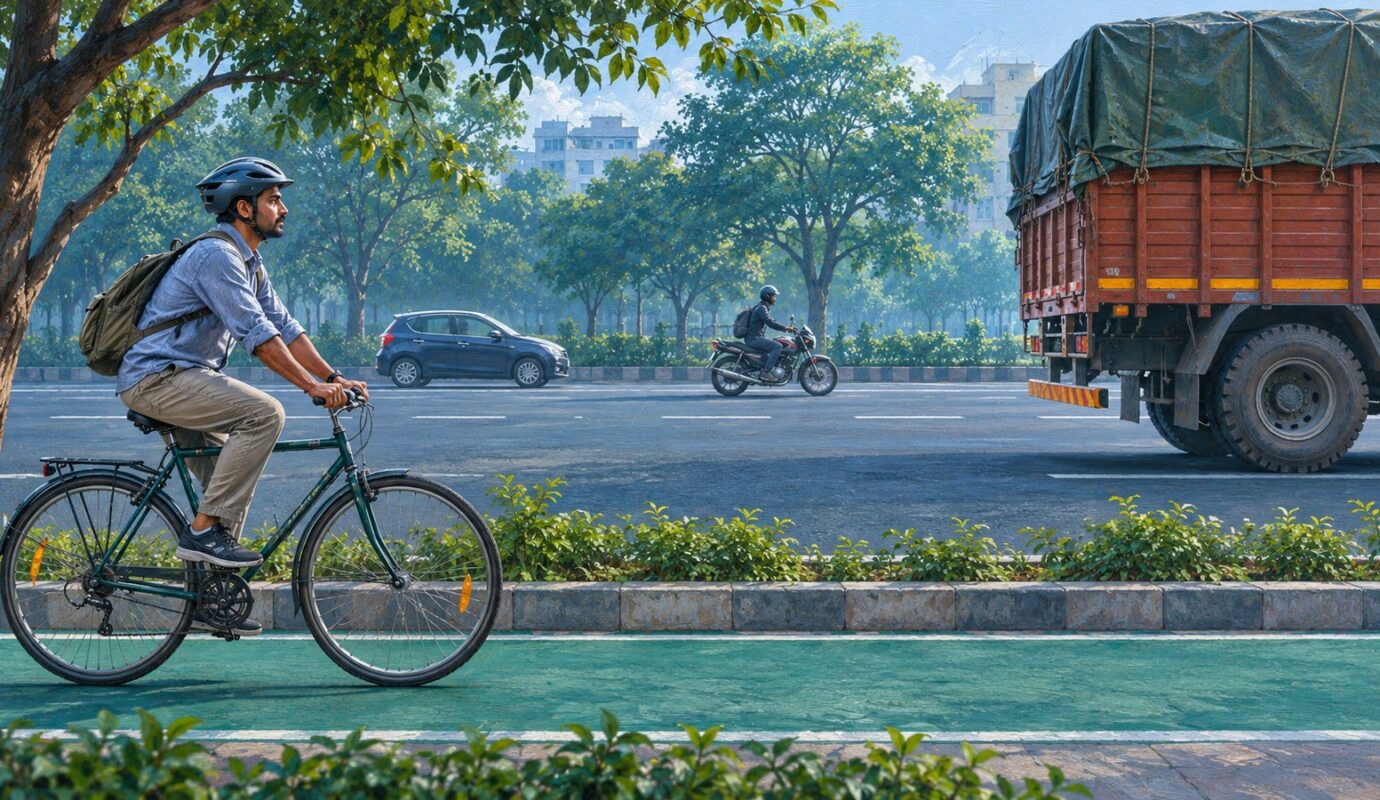
A goods vehicle, a car, a motorcycle and a bicycle may pass through the same junction within seconds. A person walking may be trying to cross between them.
They share a location, but they do not share the same physical protection. That difference should shape how we use space and how streets are planned.
See Beyond the Vehicle Category
A cyclist may be travelling to work. A person pushing a cart may be carrying the day’s income. Someone walking slowly may be managing pain or limited mobility.
We rarely know the full circumstances. We can still avoid treating a smaller or slower road user as less entitled to consideration.
Leave Space That Does Not Depend on Intimidation
Do not crowd a rider or pedestrian to make them hurry. A movement that feels minor from inside a larger vehicle can feel threatening to someone beside it.
Wait for a suitable lawful opportunity to pass, allow appropriate clearance and remain attentive to the actual conditions. If you cannot complete the movement safely, the useful decision is to wait.
Consider What You Cannot See
Larger vehicles can restrict views for their drivers and for people around them. Avoid assuming that being close means being visible.
Drivers need to use mirrors and appropriate checks; other road users also benefit from avoiding unnecessary lingering in places where they may be difficult to see. These precautions do not remove anyone’s duty to drive carefully.
Do Not Expect Everyone to Move Alike
A person with a walking aid may need longer to cross. A bicycle may need room around an uneven surface. A rider may be affected by conditions that are less noticeable inside a car.
Observe before judging. Making another person’s pace the target of anger can distract from the practical task of sharing the road safely.
Ask for Infrastructure That Recognises Differences
Continuous walking routes, accessible crossings and appropriate cycling provision belong in road safety conversations. Their design needs to consider how people actually move through the area.
The WHO pedestrian safety manual describes the importance of pedestrian facilities and measures that manage exposure to traffic. Residents can use such principles to frame specific requests for professional assessment.
Make Responsibility Match the Situation
Different forms of travel require different skills and precautions. Every road user should follow the applicable rules, while those operating vehicles should recognise the harm their movements can cause.
At the next busy junction, widen your attention beyond the vehicles most like your own. A road becomes more considerate when its least protected users remain visible in everyone’s decisions.
About the Book: HarGhar Se EkSainik
HarGhar Se EkSainik, written by Syed Abdul Hakeem and published by Hetch Foundation, examines the relationship between everyday road behaviour, human life and shared responsibility. Lesson 1 describes a mixed road environment to show how very different people and vehicles occupy the same stretch of space. This article develops a theme from its opening lesson, “The Road We Share”, in original wording. The book invites readers to carry awareness into their homes, habits and daily journeys.
Explore Hetch Foundation’s HarGhar Se EkSainik initiative to learn more about the movement behind the book.