

A Delivery Deadline Should Never Decide a Rider’s Safety
A delivery update moves across a phone screen. On the other side of it, an adult rider is navigating junctions, addresses and traffic. The estimate looks like a number. The journey is being made by a person.
When an order is delayed, irritation can arrive before curiosity. We may never know whether the rider encountered congestion, a difficult entrance or a previous delivery that took longer than expected. We do know that pressure from a customer cannot make a crowded street safely disappear.
Look beyond the tracking dot
Chapter 2 of HarGhar Se EkSainik centres the homes behind everyday journeys. Delivery work makes that idea especially relevant: one household receives something it wants while another household depends on the worker returning.
A rider should not have to earn our consideration through a dramatic personal story. Ordinary employment is enough reason to expect decent treatment. It is possible to raise a service concern without demanding that someone take risks to resolve it.
What customers can control
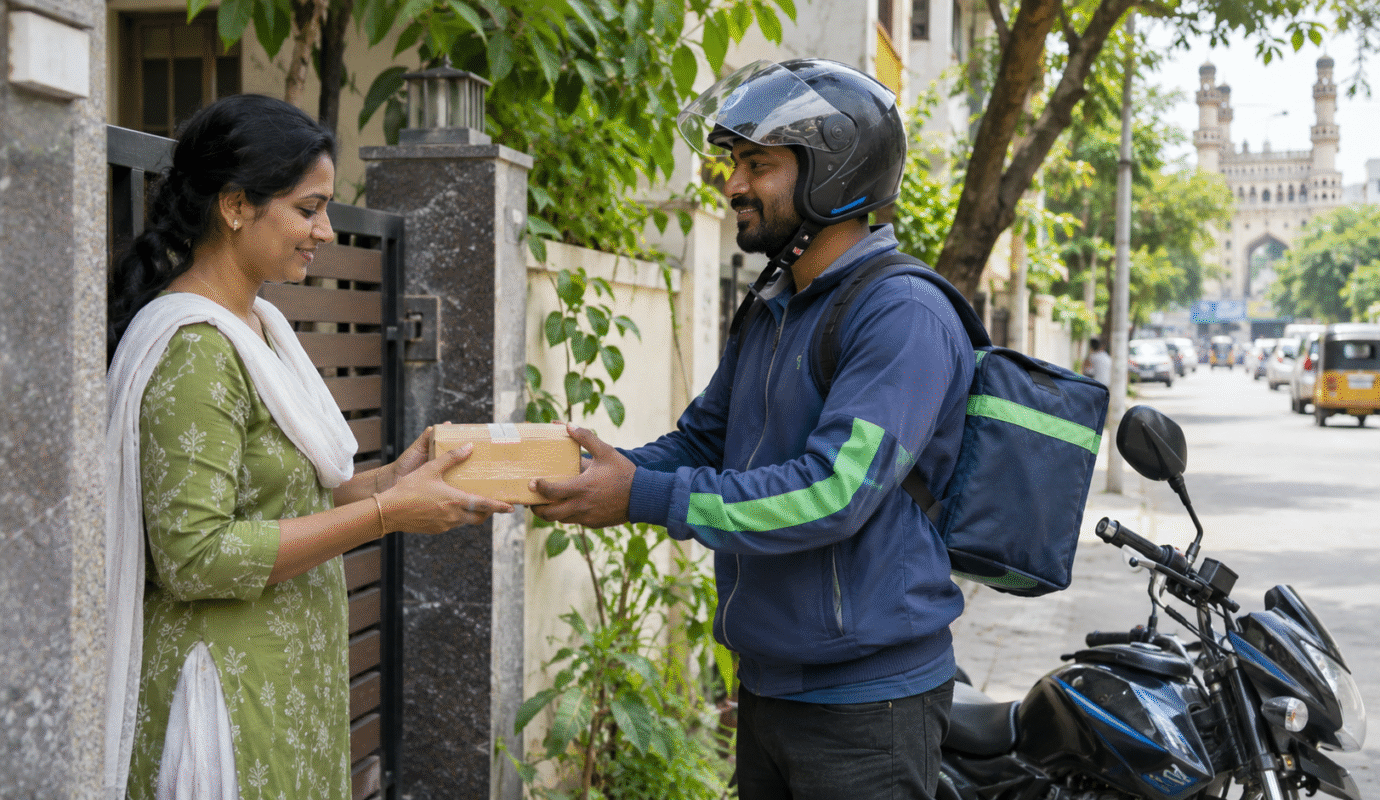
Provide an accurate address and useful access information before the rider arrives. Keep your phone available while waiting. If the building has a complicated entrance, explain it concisely rather than letting the rider circle unfamiliar lanes.
When communicating, avoid instructions to hurry, jump a queue or stop in an unsafe place. Ask for a safe handover location if your doorway is on a busy road. A few clear details can remove unnecessary movement and confusion from the end of the trip.
Make complaints about the service, not the person’s worth
If something goes wrong, describe the actual issue through the service’s normal process. Insults and threats add distress without repairing an order. A polite interaction also does not require overlooking genuine concerns; it makes those concerns easier to explain accurately.
Drivers sharing the road have their own part to play. A delivery bag does not reduce the space a motorcycle rider needs. Leave room, anticipate movement and resist treating work vehicles as obstacles that must be pushed aside.
A small change at your next doorstep
Replace “How quickly can you get here?” with “Here is the clearest way to find the entrance.” Be ready to receive the delivery. Let safe travel remain more important than the satisfaction of an impatient message.
The order belongs to you. The person making the journey belongs to a life of their own.
About the inspiration
This original article by Oliver Bennett is inspired by Chapter 2, “The People We Forget Are There — Lives and Homes Behind Every Journey,” of HarGhar Se EkSainik by Syed Abdul Hakeem, presented by Hetch Foundation. It is an independent reflection on the chapter’s themes rather than a verbatim extract. Explore the book for a wider discussion of awareness, family responsibility and everyday road behaviour.