

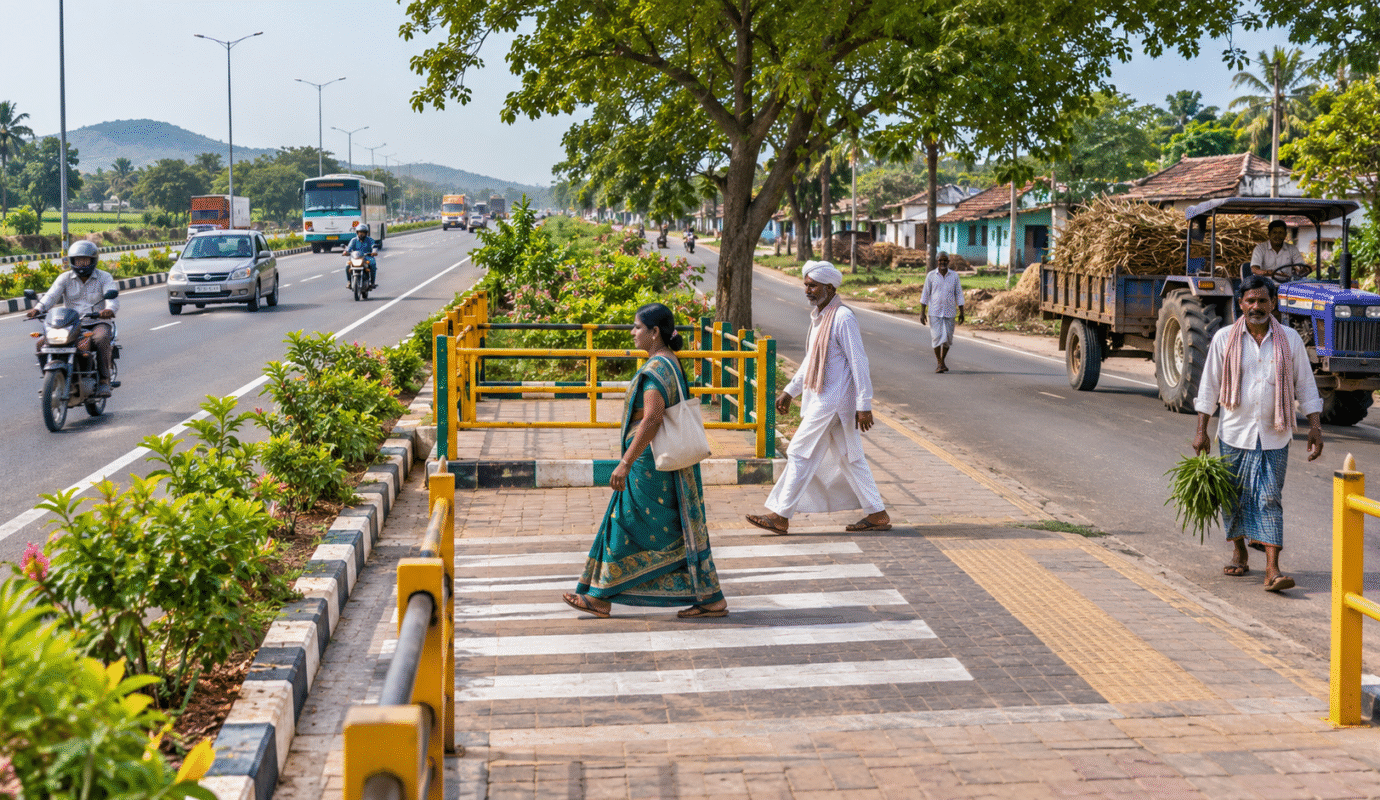
A Highway Beside a Village Must Make Room for Village Life
A highway serves long journeys. A village beside it serves daily ones: fields, shops, bus stops and neighbours. Chapter 5 asks what happens when both kinds of movement share a place without enough protection.
Begin with real routes
Understand where residents need to go before choosing crossing and access arrangements. A facility requiring an unreasonable detour may fail to serve the intended movement. Include people walking, cycling, using mobility aids and operating agricultural vehicles.
WHO’s pedestrian safety manual addresses infrastructure and protective measures. Specific designs need competent assessment and local consultation.
Connect speed with place
A transition from open road to settlement needs suitable design, signs, speed management and enforcement as appropriate. A warning alone may not resolve the conflict.
Drivers must obey controls and respond to actual conditions. Residents also need usable routes rather than depending entirely on passing drivers anticipating them.
Protect access
Barriers, service roads and crossings must work together. Preventing one conflict while leaving no practical route requires further thought. Safe access belongs in the project from the beginning.
Include drainage, lighting and maintenance: local journeys continue through rain and darkness.
Ask whose trip is missing
Identify one everyday local journey that remains difficult and bring it into planning. A highway can connect distant places while treating people beside it as part of the community it serves.
About the book
This original reflection by Oliver Bennett is inspired by Chapter 5, “The Pressures That Push Us — Deadlines, Survival, and the Weight Beneath Every Choice,” printed pages 51–64 of HarGhar Se EkSainik by Syed Abdul Hakeem, presented by Hetch Foundation. It independently develops the chapter’s argument that personal responsibility and safer public and working systems must stand together. Explore the book’s wider call to protect ordinary lives in everyday movement.