

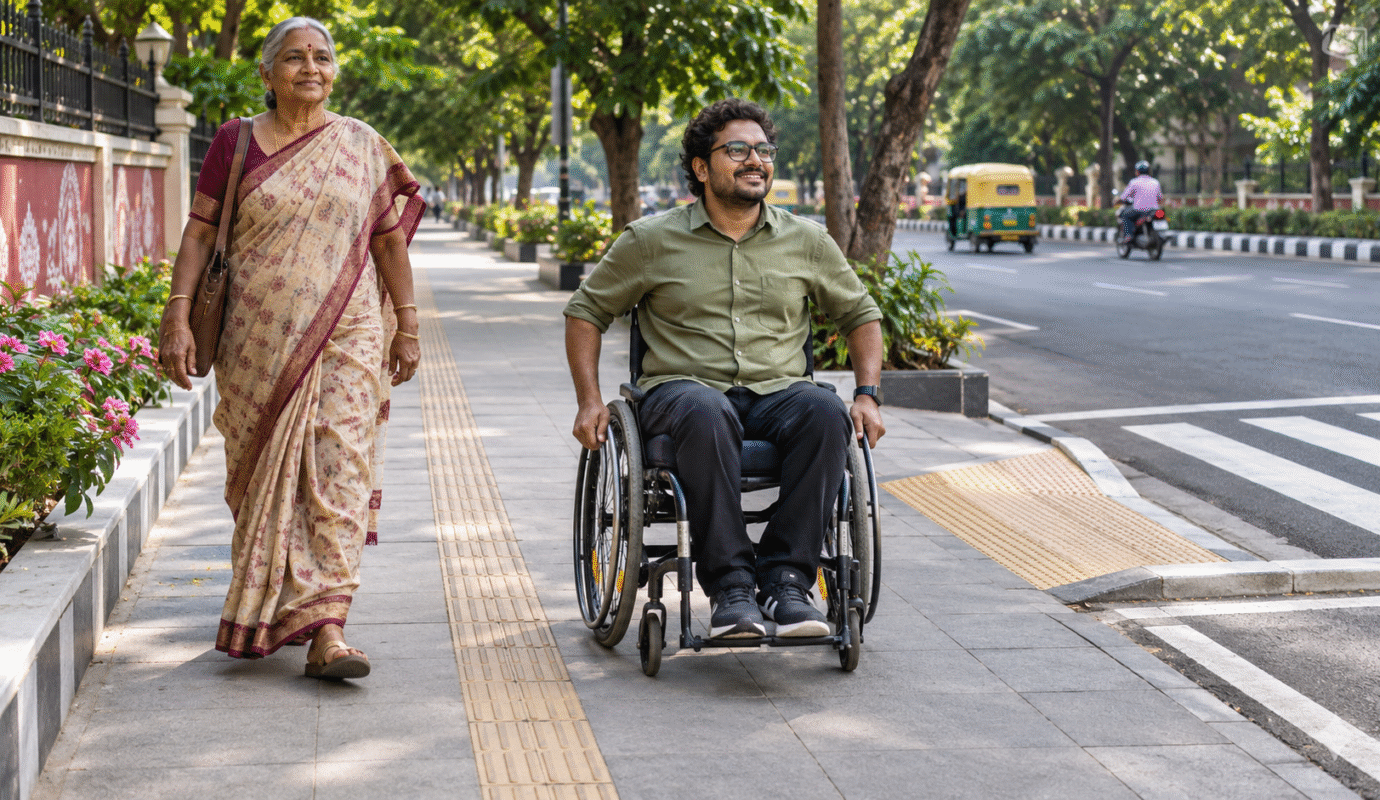
Development Should Be Measured by the Journeys People Can Make Safely
A wider road may shorten a drive while making a pedestrian crossing harder. Chapter 5 asks us to judge development through the lives protected and the everyday journeys made possible.
Include the whole journey
Travel includes reaching a stop, crossing a street, boarding and continuing to the destination. Improving one section can leave the hardest part untouched. Look for continuous, usable connections.
WHO includes pedestrian and cycling facilities in safer road design. Transport progress needs to include people outside vehicles.
Ask who struggles
Consult older residents and people with disabilities. A ramp appearing on a drawing does not establish that it works. Examine actual surfaces, gradients and connections with competent professionals and the people using them.
Workers and businesses also need reliable access. Loading arrangements and public transport should avoid forcing conflicts with pedestrians.
Keep success visible after opening
Construction milestones and budgets belong alongside working lighting, maintenance and responses to hazards. A project serves people long after its ceremony.
Chapter 5 places safe mobility within India’s development aspirations. The concrete test is whether people can use a route safely, consistently and with dignity.
Choose a human measure
Describe an ordinary door-to-destination trip at the next community discussion. Identify the difficult section and who can improve it. Development becomes tangible when that journey works for the person who needs to make it.
About the book
This original reflection by Oliver Bennett is inspired by Chapter 5, “The Pressures That Push Us — Deadlines, Survival, and the Weight Beneath Every Choice,” printed pages 51–64 of HarGhar Se EkSainik by Syed Abdul Hakeem, presented by Hetch Foundation. It independently develops the chapter’s argument that personal responsibility and safer public and working systems must stand together. Explore the book’s wider call to protect ordinary lives in everyday movement.