

Women’s Education: Her Learning Should Not Have an Expiry Date
Women’s Empowerment Series · Hetch Foundation
Women’s education should remain possible at every stage of life. Finishing school matters, and so does having a realistic route back to learning after work, marriage, or years of caregiving.
An everyday situation
In this illustrative example, a woman wants to complete a qualification she paused years ago. Her family welcomes the idea, but expects her usual household routine to continue unchanged. A course is available; dependable study time is not. Encouragement alone cannot remove the barrier.
The problem: learning opportunities disappear too early
Some women leave education before completing their goals. Later, returning may be difficult because courses are distant, schedules are inflexible, or entry requirements are unclear. Others need literacy, digital skills, or vocational learning rather than a formal degree.
The cause: unequal demands and limited access
Costs, transport, household responsibilities, and expectations around marriage can interrupt education. Online learning can help some people, but it requires a suitable device, connectivity, accessible materials, and enough privacy and time to participate.
The impact: fewer routes to independence
Interrupted education can narrow employment choices and make everyday services harder to navigate. It can also leave women dependent on others to interpret documents or complete applications. Learning has value beyond income: understanding information and making informed choices are important goals too.
Evidence in brief
UNICEF India identifies household responsibilities, marriage, distance, and inadequate sanitation among factors contributing to girls leaving secondary education. This evidence concerns adolescents; it helps explain why interrupted learning requires attention early, while adult learners need their own appropriate pathways. Read UNICEF India’s overview.
What needs to change
- Families: Protect agreed study periods and redistribute tasks during lessons and assessments. Ask the learner what support she wants.
- Education providers: Explain admission routes, recognition, costs, accessibility, and schedules clearly. Offer flexible options where possible.
- Communities: Help identify credible local learning opportunities, safe travel options, and shared access to devices without promising unavailable services.
- Learners and supporters: Choose a manageable first goal and verify the provider before paying. A short practical course may suit one goal; a recognised qualification may be necessary for another.
Key notes to save
- Barrier: Interrupted education and limited time or access.
- Change needed: Credible learning pathways with practical support.
- Who can act: Families, educators, employers, and communities.
Important questions and answers
Is it too late to restart education after marriage or a long gap?
A gap does not erase the value of learning. Entry rules differ between courses, so check current requirements and available support with the provider. Begin with a goal that fits your circumstances.
Is online learning always the easiest option?
No. It can reduce travel, but requires access, time, and suitable teaching. Compare online, in-person, and blended options, especially if literacy or digital confidence is a barrier.
How can families help without taking over?
Let the woman choose her learning goal. Offer specific support with tasks, costs, or transport, and agree what is realistic. Avoid choosing a course solely because it is considered suitable for women.
One action this week
Identify one credible learning option and write down its total cost, entry requirements, schedule, and support needs. Review after a week: What practical barrier still needs removing?
Read our guide to sharing household responsibilities to make protected learning time possible.
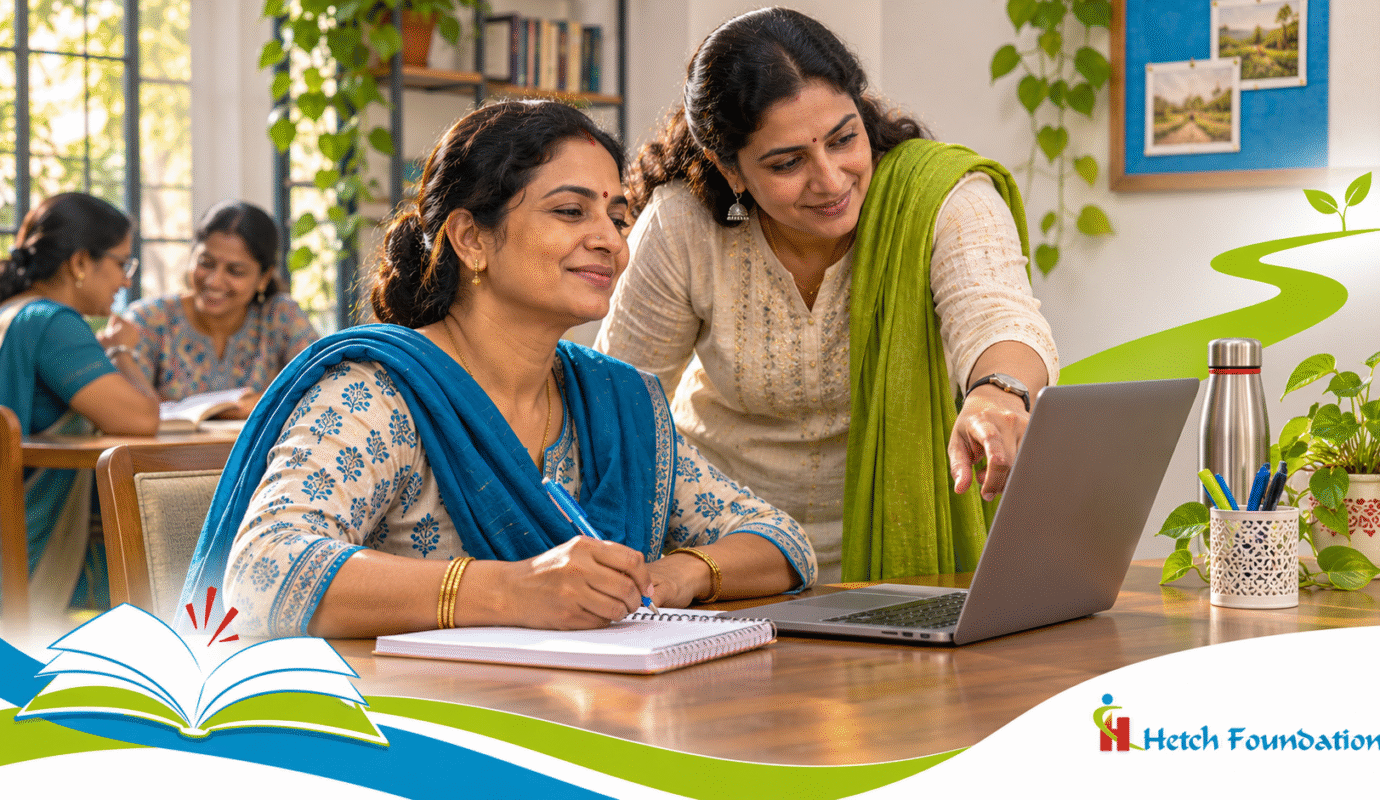
Featured image: AI-generated editorial illustration.