

Women in Decision-Making: Her Voice Belongs in the Decision
Women’s Empowerment Series · Hetch Foundation
Women’s participation in decision-making must include the power to influence outcomes. Being present in a room matters, but meaningful participation also requires information, speaking time, responsibility, and a response to what is said.
An everyday situation
Consider this illustrative example: A community committee invites women to a meeting about public facilities. The budget and design have already been settled. Women can comment on decoration, but cannot change the location, opening hours, or accessibility. Attendance is visible; influence is missing.
The problem: inclusion becomes symbolic
At home, at work, and in community organisations, women may be consulted after major choices have been made. Others receive titles without control over resources or implementation. A meeting photograph cannot show whether someone’s contribution affected the decision.
The cause: stereotypes and unequal access to power
Assumptions about who understands finance, technology, or leadership can shape who gets information and authority. Meeting times, inaccessible spaces, unpaid care demands, and informal networks may exclude people before discussion begins. Women are also diverse; one participant cannot represent every experience.
The impact: decisions miss relevant needs
Without meaningful input, services and plans can overlook the people expected to use them. Exclusion can discourage future participation and reduce opportunities to develop leadership experience. The aim is fair access to influence, not an assumption that all women will agree.
Evidence in brief
United Nations Sustainable Development Goal 5 explicitly calls for women’s full and effective participation and equal opportunities for leadership at all levels of decision-making in political, economic, and public life. This is an international policy commitment, rather than a measure of any particular organisation’s performance. It gives a clear standard: participation must be effective. Read the UN Goal 5 targets.
What needs to change
- Meeting organisers: Invite input while options remain open. Share relevant documents early in understandable, accessible formats.
- Chairs and managers: Make space for contributions without interruption. Record proposals, explain decisions, and identify who has responsibility and authority.
- Organisations: Review selection processes, meeting schedules, accessibility, and routes to leadership. Include women with different backgrounds and experiences.
- Families and community groups: Apply the same principle to household budgets, education, care, and shared plans. Discuss the choices with those affected before committing.
Key notes to save
- Barrier: Presence without information, influence, or authority.
- Change needed: Participation early enough to affect outcomes.
- Who can act: Leaders, organisers, employers, families, and institutions.
Important questions and answers
Does inviting one woman make a committee inclusive?
It may improve representation, but it does not settle the question. Check whether she can contribute, access information, and influence decisions. Broader representation also matters because women’s experiences differ.
What if a woman does not want to speak publicly?
Offer alternative ways to contribute, such as written feedback or smaller discussions. Do not force public disclosure or performance. An inclusive process removes barriers while respecting personal choice.
How can an organisation check whether participation is meaningful?
Look beyond attendance totals. Review whose proposals were considered, what changed, who controls resources, and whether decisions receive follow-up. Ask participants privately whether the process gave them real influence.
One action this week
Review one upcoming decision and identify who is affected but missing from the discussion. Invite their input before the choice is final. After a week, ask: What changed because they participated?
Remove a practical participation barrier with our guide to safe and accessible transport for women.
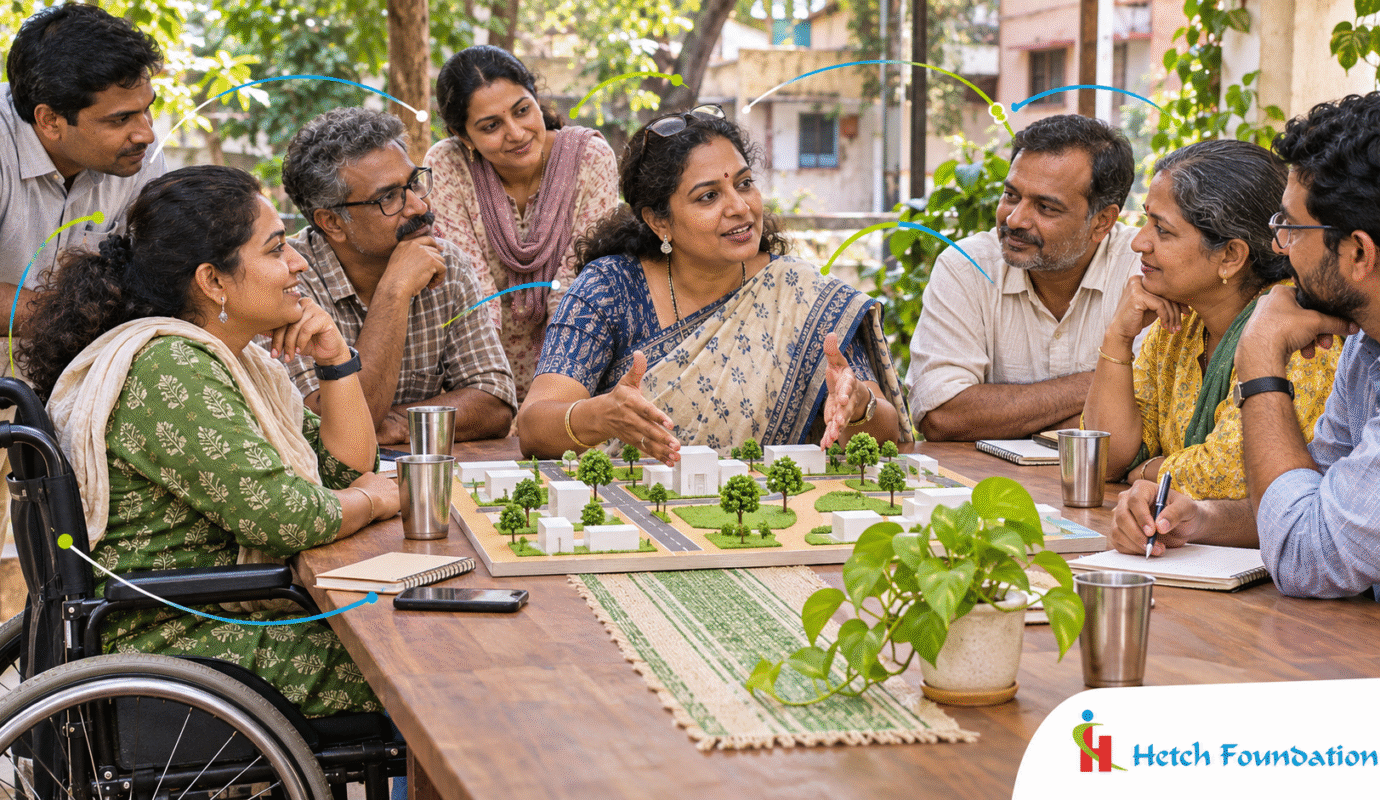
Featured image: AI-generated editorial illustration.