

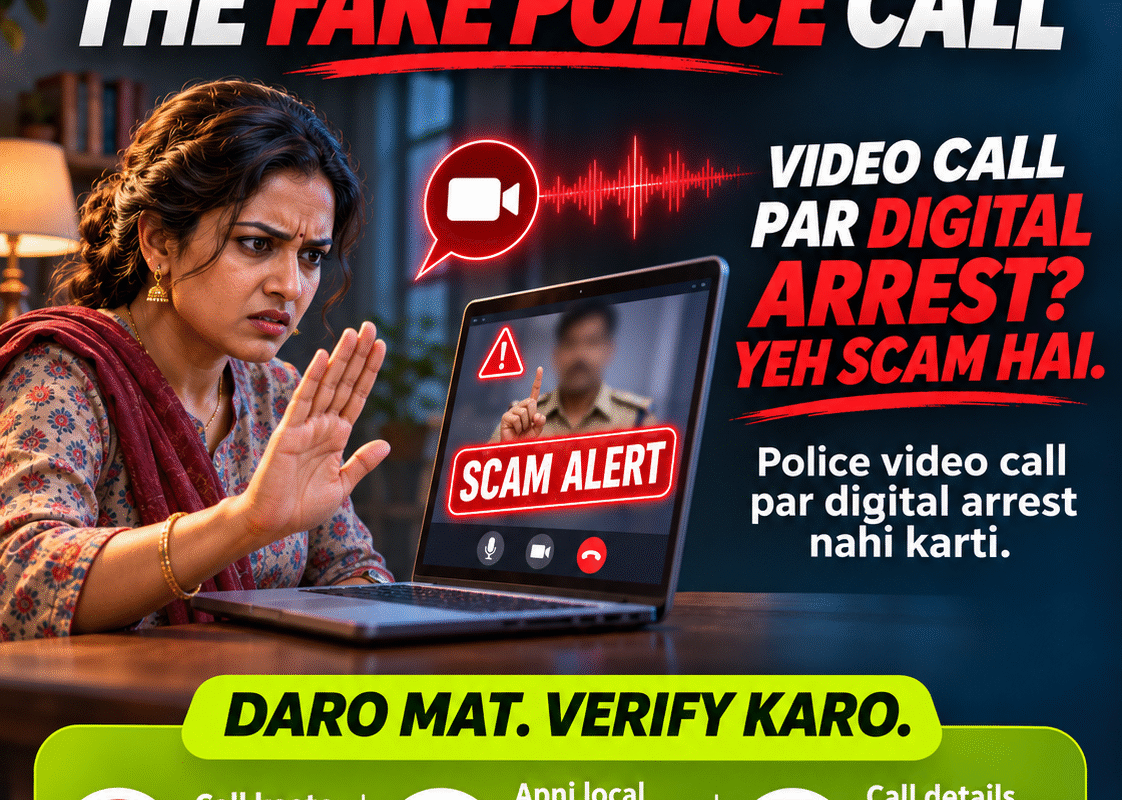
The Fake Police Call: Recognise a Digital-Arrest Scam
A stranger in uniform appears on a video call. They claim your identity has been linked to a crime and order you to stay online. Then comes a demand for money. Fear can make the scene feel official, but appearances are not verification.
What you should know
India’s cybercrime authorities warn that “digital arrest” is a scam tactic, with no legal existence under Indian law. Criminals impersonate police and other agencies to frighten people into obeying them.
Common stories involve a suspicious parcel, misuse of identity documents or an alleged offence by a relative. Fake uniforms, office backgrounds and official-looking notices can reinforce the deception. Demands to stay isolated or transfer money to settle the matter are serious warning signs.
What you should do
- End the threatening call. Do not remain on camera because a stranger orders you to. Do not pay a supposed verification deposit, disclose an OTP or install an app on their instructions.
- Verify independently. Contact your local police or the named agency using contact details found through its genuine official channels. Do not use the caller’s number or links. Tell a trusted person what happened so you are not facing the pressure alone.
- Save evidence and report. Keep existing messages, screenshots, numbers and payment details without prolonging the call to collect more. Report through cybercrime.gov.in or 1930. If money was transferred, notify your bank immediately. Reporting promptly may help, but cannot guarantee recovery.
One habit to practise today
Make a household rule: an unexpected threat involving police or money triggers an independent check and a conversation with someone trusted before any payment.
Quick questions
What if the caller knows my name or document details?
Personal information does not prove authority. Treat the claim as unverified until you check through a separate official route.
Should I ignore every contact claiming to be from police?
No. Verify genuine matters through official channels and respond appropriately. Ending an unverified, coercive call gives you space to check safely.
Sources and further reading
Ministry of Home Affairs: impersonation and digital-arrest warning · I4C digital-arrest advisory
Part of Hetch Foundation’s “Kaash Mujhe Pehle Pata Hota!” public-awareness campaign. Learn. Act. Share.