

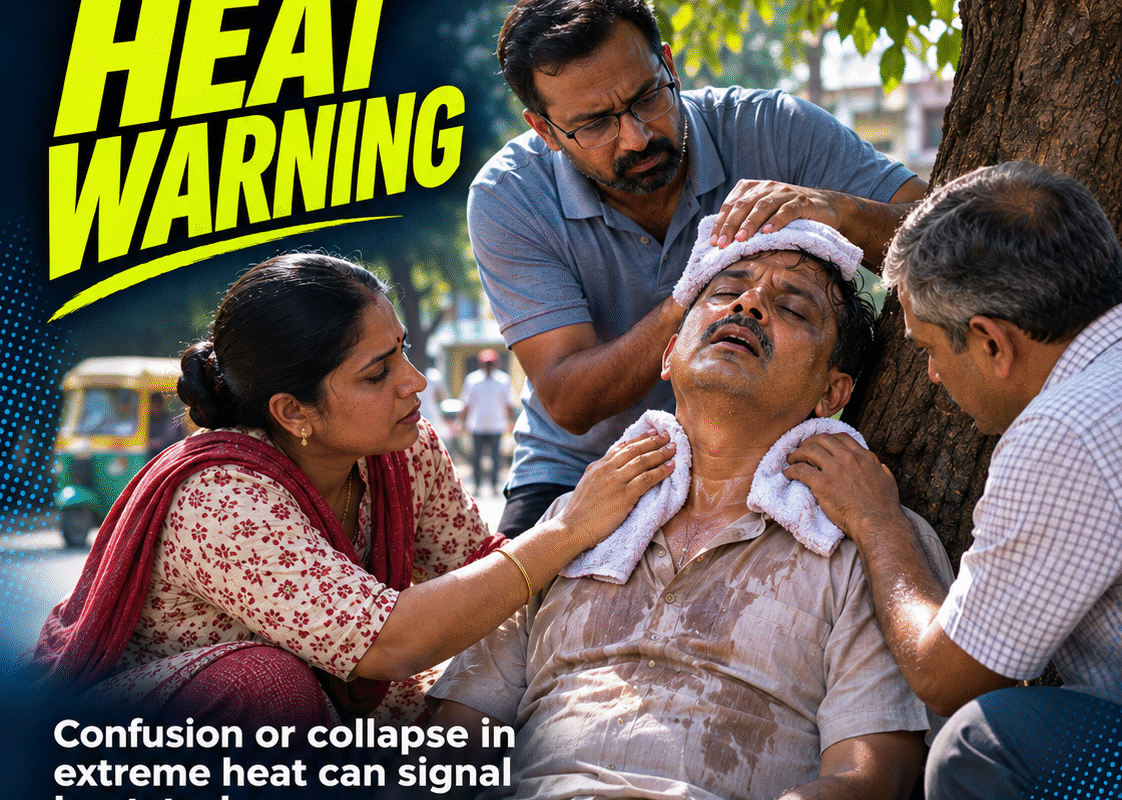
Heat Can Become an Emergency: Recognise Confusion and Start Cooling
A person working outside becomes confused and unsteady. Someone suggests resting for a few minutes. Changes in awareness during heat exposure can signal a medical emergency; they should not be dismissed as ordinary tiredness.
What you should know
Heatstroke can involve confusion, unusual behaviour, collapse, seizures and a very hot body. Skin may be dry or sweaty. Continuing to sweat does not rule it out, and you should not delay action while looking for a thermometer.
Heat exhaustion can cause weakness, headache, dizziness, nausea and heavy sweating. Stop the activity and move to a cooler place. Worsening symptoms, altered consciousness or uncertainty about severity require urgent medical assessment.
What you should do
- Call for emergency help. For a suspected heat emergency in India, call 112. Give the exact location, heat exposure and symptoms. Ask someone nearby to guide responders while you remain with the person and follow the dispatcher’s instructions.
- Begin cooling immediately. Move to shade or a cooler place if safe. Remove unnecessary outer clothing. Wet the skin or clothing with cool water and fan the person. Apply cold wet cloths or available ice packs while help is coming. Do not wait for transport before starting cooling.
- Protect and monitor. Do not give food or drink to someone confused, unconscious or unable to swallow safely. Stay with them and follow emergency instructions if breathing becomes abnormal. An alert person with milder heat symptoms may sip cool water, but deterioration needs medical help.
One habit to practise today
Before a hot-day journey or shift, plan drinking water, shade, breaks and a way to get help. Check on people who may struggle to recognise heat stress or reach a cooler place.
Quick questions
Must heatstroke involve completely dry skin?
No. Profuse sweating can occur. Confusion and the overall situation are important warning signs.
Should we wait to see whether rest fixes confusion?
No. Seek emergency help and start cooling promptly. Do not leave the person alone.
Sources and further reading
- CDC: Heat-related illnesses and first aid
- NCDC: Heatwave advisory
- MHA: Emergency response system 112
Part of Hetch Foundation’s “Kaash Mujhe Pehle Pata Hota!” public-awareness campaign. Learn. Act. Share.