

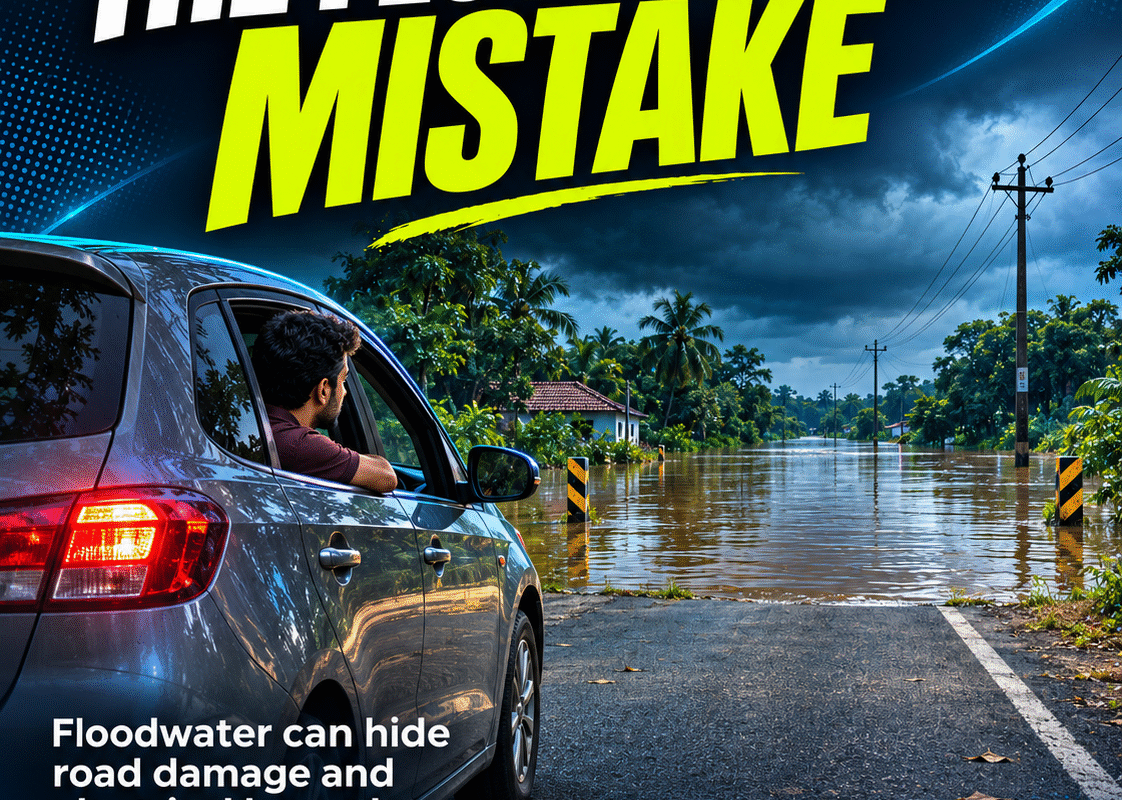
Floodwater Is Not Ordinary Water: Turn Back From Hidden Hazards
Water covers a familiar road, and another vehicle starts crossing. The usual route may now hide a missing manhole cover, a strong current or a fallen cable. Familiarity does not make floodwater predictable.
What you should know
Floodwater can contain sewage, chemicals and sharp debris. It can conceal road damage and sudden changes in depth. Moving water can sweep away people and vehicles, while electrical hazards may be present even when no spark is visible.
CDC guidance advises staying out of floodwater and not driving across flooded areas. A vehicle or strong swimming ability does not remove the danger. Turning back protects you and the people who might otherwise have to attempt a rescue.
What you should do
- Avoid flooded routes. Do not walk, swim or drive across flooded roads. Follow closures and official evacuation instructions. Use a confirmed safe route instead of following another vehicle or an unverified video.
- Keep clear of electricity. Avoid fallen lines, poles and flooded electrical equipment. Never touch a switch or appliance while standing in water. Do not enter water to reach the main power switch. Keep away and contact the electricity provider, a qualified electrician or emergency services.
- Get help without entering danger. If stranded, seek a safe place above the water and call 112 in India, explaining your location and situation. Do not enter floodwater to attempt an untrained rescue. After exposure, wash with safe water and seek medical care for injury or illness.
One habit to practise today
Identify an alternative to a flood-prone part of your regular route before heavy rain. Save official local warning channels and agree how your household will change travel plans when flooding is reported.
Quick questions
Is shallow water safe if others are crossing?
No. Current, depth, footing and electrical conditions can change quickly. Other people taking a risk does not prove a route is safe.
Can I switch the power back on when the floor looks dry?
Do not assume it is safe. Have flood-affected electrical equipment and installations checked by qualified professionals before use.
Sources and further reading
Part of Hetch Foundation’s “Kaash Mujhe Pehle Pata Hota!” public-awareness campaign. Learn. Act. Share.