

The Message That Can Wait
By Hetch Foundation
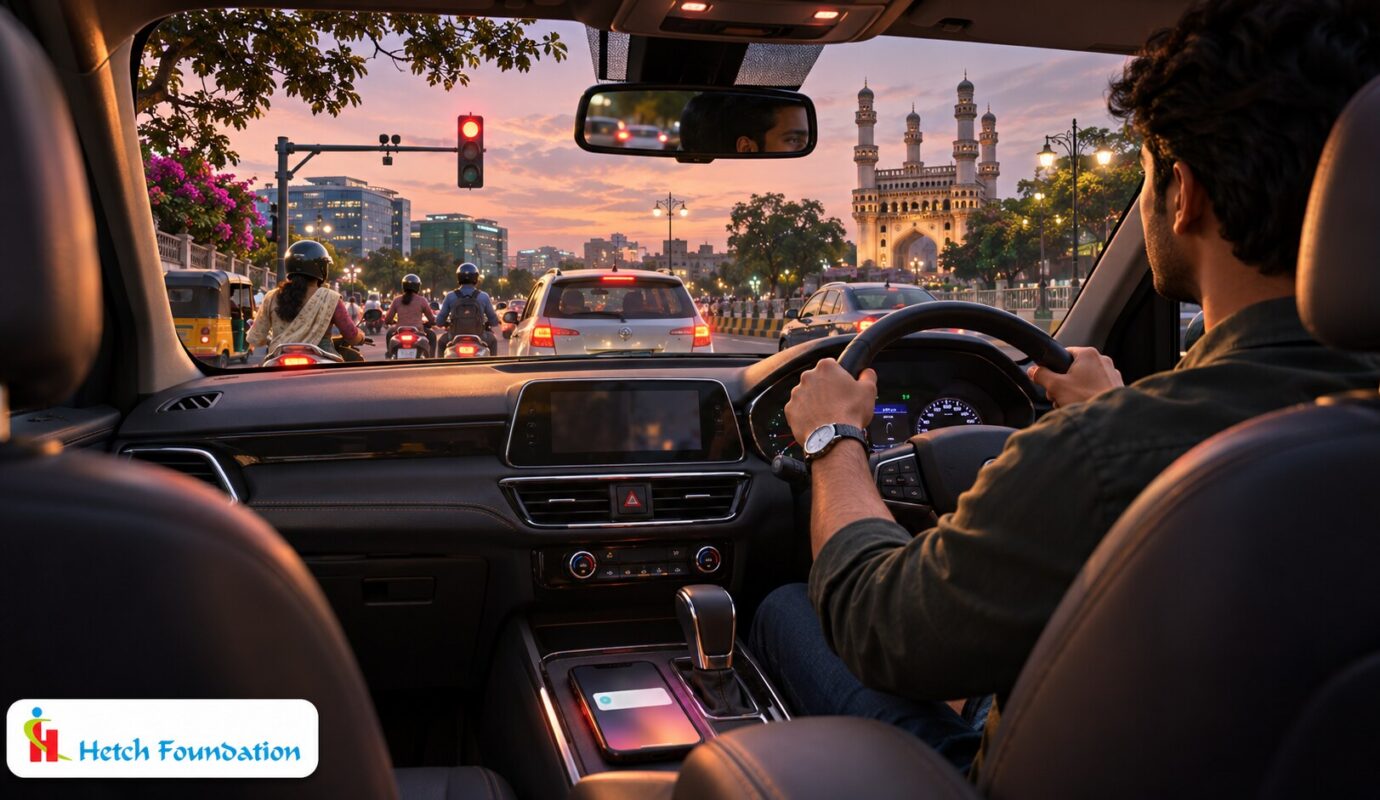
You are first in line at a red light. Your phone vibrates. The message might be from a colleague waiting for you or a family member asking when you will be home. You glance down. While you are reading, a scooter moves up alongside the car and a person finishes crossing in front of you. Then the light changes and someone behind taps the horn. The road has changed while your attention was somewhere else.
Phone distraction often starts with a reasonable intention: check one detail, acknowledge a message or find the right turn. Each task feels small on its own. In traffic, however, a glance can happen just as the information you need changes. A good driving routine moves as many phone decisions as possible to the time before you set off or after you are safely parked. That leaves you free to deal with what happens between those two points.
A glance interrupts more than your view
A driver continually builds a picture of what is happening ahead, beside and behind the vehicle. You see a bus slowing, remember where the cyclist was a moment ago and watch the front wheels of a car that may be about to turn. These details help you anticipate movement before it becomes urgent. Look away and some of that picture becomes outdated. When you look up again, it takes attention to work out what changed.
Using a phone can pull your eyes from the road, occupy a hand or take your mind off the driving task. A conversation can absorb attention even with both hands on the wheel. The effect is easy to miss because you may have completed a call on an uneventful trip many times. The real test is the unusual moment: a vehicle braking unexpectedly, a scooter emerging from a side road or a pedestrian choosing a gap you did not anticipate.
On a motorcycle, the interruption can be as simple as a lit screen in a handlebar mount. At a junction, a rider needs to notice the signal, turning vehicles, the road surface and the people around them. A notification adds a demand precisely when the rider is gathering information. The safest time to read it is after finding somewhere safe and lawful to stop.
Set up the trip before you move
Choose your destination while parked. Check which entrance you need, especially at a hospital, office park or apartment complex with several gates. If you use navigation, turn on spoken directions and set the volume before leaving. Keep the screen and its mount clear of your sightline and vehicle controls. Push the route to a passenger’s phone if they will be guiding you. Do the same with music or a podcast so your first decision after pulling out is about traffic.
Turn on your phone’s driving focus or do-not-disturb setting if it helps keep routine alerts out of view. Put the phone somewhere it will stay secure and where you will be less tempted to reach for it. Before leaving, tell anyone expecting an update that you will check messages once you are parked. For a family pickup, agree on the gate or meeting point in advance so you have fewer reasons to send a message on the way.
The setup matters on short trips too. A drive across a neighbourhood may include more turns, crossings, parking movements and people stepping into the road than a longer stretch of highway. On a familiar route, you can make the habit even simpler. Start with the alerts muted and the phone put away every time, including when you are only going a few streets away.
Have a plan for a missed turn or an urgent call
Missing a turn is ordinary. Continue safely and let the route update. If you need to change the destination or check something the spoken instructions did not explain, find a safe and lawful place to park. A passenger can handle the phone and give one clear direction at a time. They can also tell someone you are driving, which is often all the caller needs to know.
An important call can feel different from an ordinary notification, especially if it comes from a school, a hospital or someone at home. Plan for that possibility before setting off. Decide where you could pull over along a regular route and give yourself time to reach it. If you are alone, return the call once parked. If someone is with you, ask them to answer and explain the situation while you focus on driving.
The same principle applies when you are waiting in traffic. A queue can start moving unevenly and people on foot or scooters may weave between stationary vehicles. Treat the red light or the pause in a queue as part of the driving task. Use it to check the intersection, mirrors and crossing so the next movement does not take you by surprise.
Families and employers can make it easier to put the phone down
A person sending a message often has no idea the recipient is driving. Agree at home that a driver can reply after parking without having to explain the delay. If you know someone is on the road, send the destination or pickup instruction before they leave and avoid asking for live updates. This is particularly helpful for a new driver who already has a lot to keep track of at each junction.
A business can make the same expectation explicit. Give delivery riders and field staff enough time to stop for updates, and avoid judging response times while people are travelling. Send complete addresses with entrance details and make it easy to confirm arrival from a parked location. A policy is more useful when the schedule and the dispatch system allow people to follow it on a busy day.
Two questions people often ask
Is a hands-free call a good option for a complicated conversation?
Save a demanding conversation for when you are parked. A hands-free call can still occupy your attention, especially when you are discussing something urgent or unfamiliar. If you are already speaking and the traffic needs more of your focus, end the conversation as soon as you can do so safely and call back from a safe place.
What if a navigation instruction comes too late?
Keep going safely. Let the app find another route or pull over lawfully to check the directions. Drivers beside and behind you make decisions based on where your vehicle is going. A predictable movement gives them more time to respond than a sudden turn or lane change.
Before your next trip, test one change while you are still parked. Set the route, silence the alerts and decide when you will next look at your phone. If a message arrives on the way, you already have an answer for yourself: it can wait until you arrive or find a safe place to stop.