

The Gap You Need When Traffic Stops
By Hetch Foundation
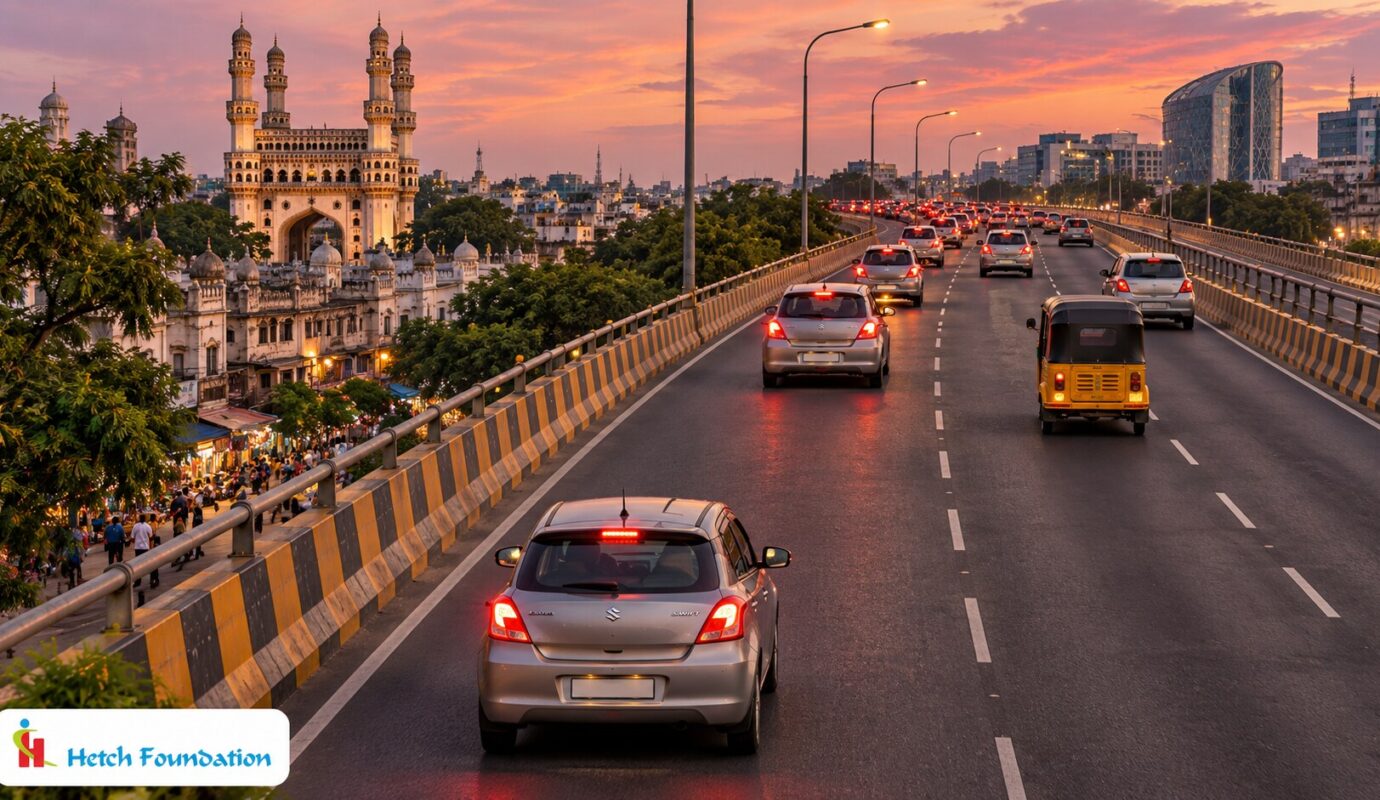
You are crossing a flyover when the brake lights ahead start to come on. First one car slows, then the one behind it. The vehicle in front of you is still moving for a moment, so the road looks clear just long enough to draw you closer. By the time its brake lights come on, you are already using the space you need to stop. This is an ordinary way for a safe-looking gap to disappear.
A following gap gives you time to notice a slowdown and room to act on it. Keeping that space takes a series of small decisions because traffic rarely moves at one steady speed. Vehicles merge, riders change lanes and an open road can narrow into a queue just beyond a crest. The useful habit is to recognise when your gap is shrinking and restore it before you have to brake sharply.
Why braking starts later than you think
When a driver ahead brakes, your vehicle does not change speed immediately. First you have to notice the signal or the change in movement. Then you have to recognise what it means and act on it. During that time, your vehicle is still moving. Once you brake, you need more road to slow down. Rain, road surface, tyres, visibility and speed can all change how much room you need.
A short gap also restricts your view. Behind a delivery van or bus, much of the road ahead may be hidden by the vehicle’s body. You may only learn that traffic is slowing when the driver directly in front begins to brake. Drop back and you may see more of the traffic around that vehicle. You also have more time even if the road beyond it remains hidden. Both advantages matter when approaching the crest of a flyover or a bend.
Think of approaching a signal where two cars have slowed for a turn. If you have left room, you can ease off as soon as you notice the pattern. The person behind has a more predictable change in speed to respond to. If you have driven right up to the bumper, the same event may leave you with only a sharp stop. A gap changes how early and smoothly you can respond to what the street asks you to do.
Check the gap using a roadside landmark
On a faster road in good conditions, use a fixed object such as a signpost as a quick check. Notice when the vehicle ahead passes it. Then count how long it takes your vehicle to reach the same point. Allow at least two seconds as a starting check in good conditions. A count can be more useful than trying to judge a number of metres from the driver’s seat, because the physical distance represented by the same count grows as your speed rises.
Leave substantially more time if the road is wet or visibility is poor. Also increase the gap where a large vehicle limits your view, where the surface offers uncertain grip or where traffic is slowing unpredictably. The number is only an aid to noticing your spacing. You still need to be able to stop safely for the conditions in front of you. Choose a speed that matches what you can see as well as leaving room to the vehicle ahead.
In stop-and-go traffic, the useful approach is to keep enough room to move smoothly when the queue starts and stops. Let the forward movement develop before you follow. If you can see brake lights coming on several vehicles ahead, lift off the accelerator and prepare to slow. Keep watching the road directly in front too. Someone in the nearest vehicle may brake for a reason that has little to do with what the rest of the line is doing.
Rebuild the gap after someone merges
A car may join your lane at the end of an on-ramp or move across because its lane is about to turn. At that instant your previous following gap has become two smaller gaps. Treat the space ahead as something you can rebuild. Ease off early where you can, let the new car move ahead and settle at a distance that suits your speed. If braking is necessary, do it smoothly when conditions allow. Keep your attention on the space you need rather than trying to reclaim the position you had in the queue.
The same habit helps a scooter rider following a car or auto-rickshaw. A rider may be able to see a clear strip of road alongside, even when the view ahead is blocked. Resist the temptation to use the strip as an escape route. A passenger door might open on a slow street, someone may cross between vehicles or a driver may change direction. Make the following distance your first source of room to respond.
Give drivers room to keep their distance
A road authority can help by providing clear merge markings, good signs and enough warning before drivers encounter a queue, diversion or lane drop. Signals and crossings also need to be visible far enough ahead for drivers to slow gradually. If vehicles frequently stop at the same place out of sight beyond a crest, a report that specifies the location, direction and time of day can help the responsible authority understand the problem.
Employers who schedule trips can reinforce the same habits. Brief drivers on places where queues are common, leave room in timetables for slower conditions and give staff a way to report repeated close calls without blame. A regular route review can reveal that a delivery slot or shift schedule repeatedly puts drivers on the same congested stretch at the worst time.
Two questions people often ask
What if someone is following me too closely?
Give yourself more space ahead so you can slow progressively if traffic changes. Stay predictable and use your signals. If it is safe and lawful to let the other vehicle pass, allow it to go. Continue at a speed that suits the conditions instead of letting the vehicle behind set your pace.
Does the gap still matter when everyone is crawling?
Yes. People cross between stopped vehicles, and a queue can move and stop again before everyone has noticed. Space helps you see more and makes it easier to slow smoothly. If another vehicle uses the space to merge, restore the gap as traffic begins moving again.
On your next drive, pick one stretch where traffic often bunches up. Notice when you first catch the vehicle in front and how early you can ease off. Repeat that small adjustment whenever the space shrinks.