

The Wrong-Side Shortcut
By Hetch Foundation
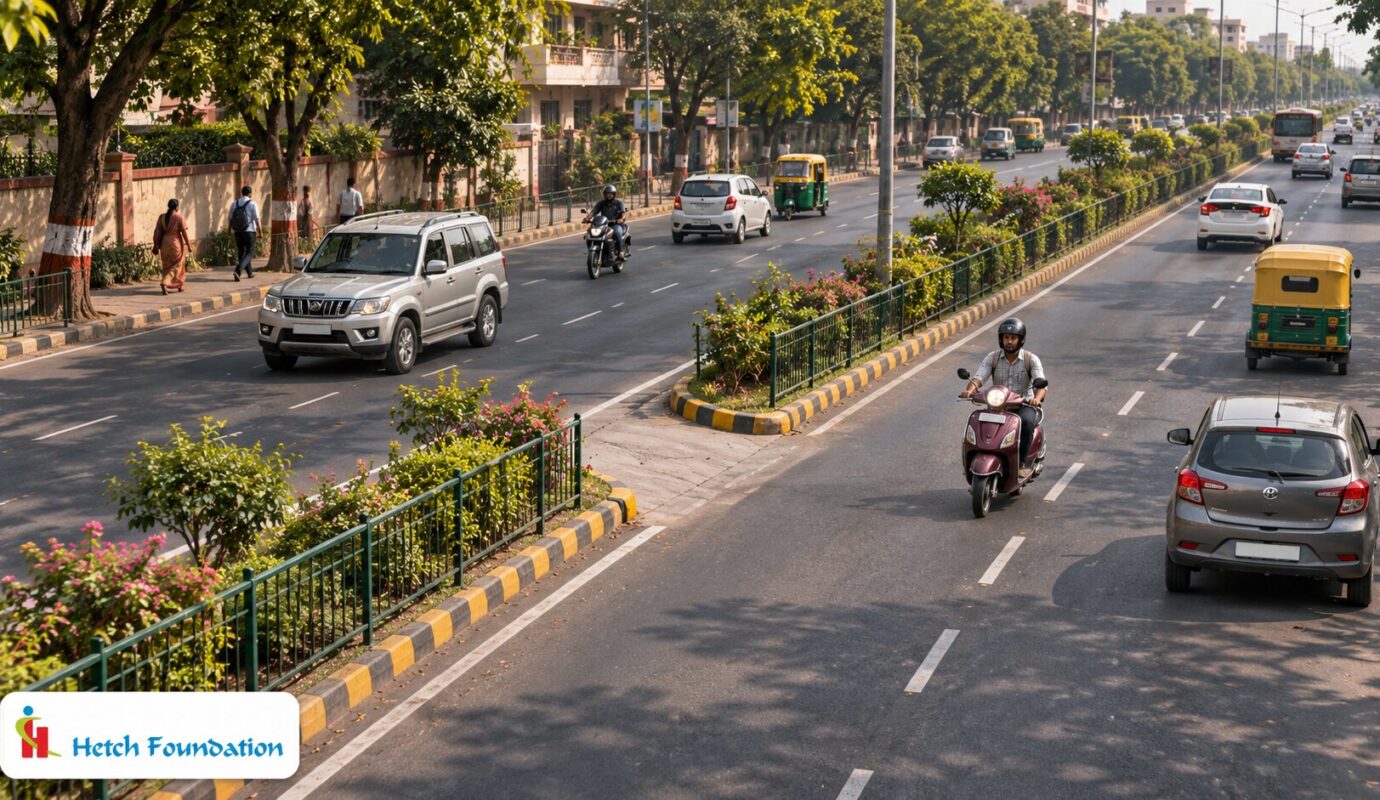
The entrance is on the other side of the divider. You have just passed the turn that would have taken you there, and the next opening looks far away. The shop you need is only a few doors back. A scooter could squeeze along the edge of the road against traffic and reach it in moments. If you are tempted to take that route, consider who else has to respond to the decision.
A driver turning out of the shop’s driveway expects traffic to move in the signed direction. A pedestrian preparing to cross is watching for vehicles in the lawful traffic flow as well as checking the other direction. A bus pulling into its stop needs the space nearest the kerb. Those people are making decisions with the road layout as a guide. Riding or driving against the flow adds a movement they have less time to recognise.
Why the edge of the road is still part of the road
The strip outside the main line of traffic can look like unused space. On a city street, it may be where a bus approaches a stop, a cyclist rides past a row of shops or a driver pulls in to park. Pedestrians may also need to use the roadside where a footpath is missing or blocked. Riding against the flow to stay clear of the faster lane moves the conflict towards people with less protection and often less room to move.
The view from a driveway is especially important. Imagine a driver preparing to join a one-way street. They look for a safe gap in lawful traffic, while a parked vehicle or a wall limits their view from one side. A scooter coming from the unexpected side can appear at the same moment the car starts out. Both people may be travelling slowly. They still need room to stop, and the wall or parked vehicle may have taken away the time they would ordinarily have to see each other.
At a median opening, different paths cross in a small space. Someone may be waiting for a permitted turn while another vehicle is approaching the opening from ahead. A wrong-side rider adds a movement that can be difficult to see behind a waiting car. On a narrow street, the same situation can happen between a loading vehicle and a pedestrian. In each case, the short distance of the shortcut tells you little about the number of conflicts it creates.
What to do after a missed turn
Continue in your lane and look for a permitted route. If you are using spoken navigation, let it recalculate. Follow signs and markings, since the app may not reflect a temporary closure or turn restriction. If you need to inspect the map or call the person you are meeting, find a safe and lawful place to stop first. A passenger can check with the destination and help you identify the proper entrance while you focus on driving.
When a U-turn is permitted, approach it in good time and check the traffic and people around the opening. Give yourself time to decide whether the available gap is enough. If the turn is prohibited or you cannot make it safely, continue to another permitted route. A missed turn can cost a little time. It is a normal part of driving anywhere with divided roads, service lanes and several entrances to the same building.
If you see a wrong-way vehicle approaching, slow down as conditions allow and keep your own movements predictable. Give as much space as you safely can. A sudden move into the next lane can create a second conflict with traffic you have not checked. Stay aware of people walking or cycling alongside you, and avoid using your own vehicle to block or confront the rider. If there is a serious recurring problem, report the location and pattern once you have stopped safely.
Make the legal route easier to find
Ask a person why they used the wrong side and the answer often points to a place: an entrance marked on the wrong road, a gate that closes after a certain hour, an opening that drivers can see only after passing it. These details help explain where prevention can start. Businesses can give customers the approach direction with the address. An apartment association can put the entry instructions in its visitor message. A delivery team can include the access gate and the permitted approach in its route notes.
Road authorities and traffic teams can look at repeated incidents differently from a single poor decision. If many drivers miss the same opening, advance signs or clearer lane markings may help. If drivers repeatedly cross a divider at an informal opening, the authority can assess whether the layout is inviting an unsafe approach and whether a different access arrangement would serve people better. A road change should account for walkers, riders and anyone who needs an accessible route.
A useful report gives enough detail to investigate. Record the road name or landmark, the direction the vehicles travel, the time it happens and the place they are trying to reach. From a safe public position, you may be able to show how a closed gate or unclear sign adds confusion. Keep the report focused on the pattern or layout. That gives the recipient more to work with than a general description of people taking shortcuts.
Two questions people often ask
What if the shortcut covers only a few metres?
The short distance does not change who may be using that space. A bus can pull in, a person can step out from a driveway, or a vehicle can turn across the gap in those few metres. Continue to a permitted way back, even if the destination is already in sight.
What if the map sends me towards a one-way street?
Follow the traffic signs and road markings. Continue safely and allow the app to find another route. If you need help with access to a property, call from a parked position or ask a passenger to check. When sharing the destination later, include the approach that brings people to the correct entrance.
On your next trip to a building beside a divided road, check the entrance and approach direction before leaving. If you miss the turn anyway, keep moving in the lawful direction and take the next suitable route back. The people travelling along the edge of that road should be able to rely on the same directions you do.