

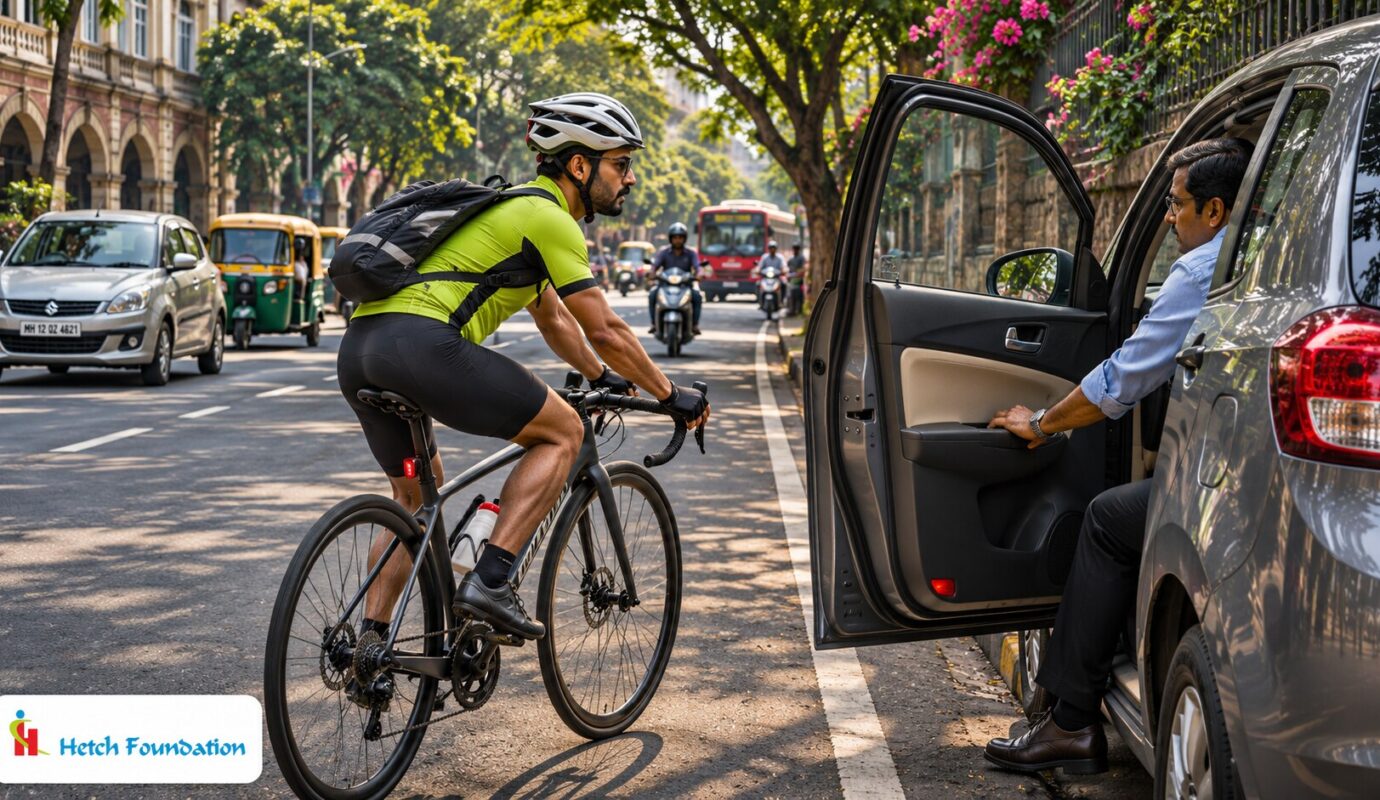
Cycling Beside Parked Cars
By Hetch Foundation
You are cycling past a row of parked cars on your way home. Traffic is moving beside you, and the useful space between the parked cars and the next lane feels narrow. A driver inside one of the cars may have just arrived. A passenger may be about to get out of a taxi. From the saddle you might see a head move or notice the brake lights go out, but there may be no clue at all before a door starts to open.
A door can swing into the path of a bicycle faster than a rider can find room to go around it. Sometimes the rider strikes the door. Sometimes they swerve and enter the path of another vehicle. The risk involves more than two people. It also depends on how the street is laid out, how drivers pass cyclists and where people are expected to get in and out of cars.
Think about the space a door needs
Look at a parked car from the side. The door begins at the body of the vehicle but ends a good distance away once it is open. A bicycle needs its own space beyond that area, with room for the handlebars and for normal movement. Riding next to the bodywork can feel like keeping out of traffic while putting the rider inside the space the door will sweep through.
If you are cycling, look ahead for parked vehicles and choose a position that leaves clearance for a fully opening door where conditions allow. Keep your line as steady as you can. Before you move farther out, check what is coming behind you and signal your intended movement when it is safe to do so. If there is no room to pass safely, slow down and wait in a predictable position until the road gives you enough room. A gap in the parked row does not require you to move in and out of the traffic lane every few metres.
Look for places where a door is more likely to open. A car with people sitting inside, a taxi outside a station or a vehicle that has just pulled in deserves particular attention. So does a queue near a school or clinic, where passengers may be in a hurry. Leave space for anyone who might step out and look ahead to the next obstruction. A door can open without a warning light or visible movement inside the car.
Check before opening from either side
Drivers can look in the mirrors and then check over their shoulder before opening a roadside door. Passengers should look back as well. The vehicle’s mirrors may give the driver a useful view while the passenger is sitting farther back and cannot see the same area. Turn enough to check the space beside and behind the door, then open it only when doing so is safe. Going slowly gives you a chance to stop opening if someone comes into view. It cannot replace the check before the door moves.
Using the hand farthest from the door can prompt the body to turn towards approaching traffic. Use that habit if it helps you look properly and you can comfortably reach the handle. The important part is the view. A child or other passenger may need an adult to choose where to get out and supervise the exit. Where a safe kerbside exit is available, use it while checking for people walking or cycling on that side too.
Think about the place you stop before asking a passenger to leave the car. At a busy pickup point, choose a lawful spot with space for passengers to open a door safely. Avoid blocking a cycle lane or forcing someone to step into moving traffic. A caller arranging a pickup can name a side street or designated stopping place if it lets everyone approach on a clearer route. An easy drop-off begins with where the driver pulls in.
Drivers passing a cyclist can prevent a second conflict
A cyclist may need to stay farther from the kerb beside parked cars than they do on an open stretch. If you are driving behind them, allow enough following room and wait for a safe opportunity to pass with adequate clearance. A narrow gap beside a cyclist who is already passing parked cars can leave the rider with nowhere to go if a door opens or a passenger steps out. Take the road width, visibility and lawful passing conditions into account before moving alongside.
A person walking between parked vehicles presents a related problem. Their first visible movement may be a foot or shoulder coming out from between two cars. A driver can ease off early and look along the gaps. A cyclist can choose a pace that allows room to respond. These decisions help where the street needs to support passing traffic and people reaching shops, homes or bus stops at the same time.
Street design can reduce the number of decisions everyone has to make. Where a cycle route runs next to parking, the road owner can assess whether the layout provides enough separation from opening doors and whether delivery and passenger activity needs a different location. A report can describe where doors regularly open into a cycling route, at what times and what other traffic makes it difficult to move farther out. A photo from a safe position can show the width and layout without identifying riders or passengers.
Two questions people often ask
Should I ride closer to parked cars when a driver wants to pass?
Keep the clearance you need from the doors and aim to maintain a predictable line. If there is a safe place to let someone pass, assess it when you reach it. Avoid moving into the path of an opening door to make room for a driver behind you.
What if I see a cyclist as I begin to open the door?
Stop opening the door and allow the cyclist to pass safely. Then check again before continuing. The space behind them may already contain another rider, scooter or vehicle. Make the check each time you open the door, including at a place where you stop every day.
On the next trip, pick the action that matches your role. If you cycle, notice the space an open door would occupy. If you travel in a car, check back before unlatching your door. If you drive past a cyclist beside parked vehicles, leave them space to stay clear of the doors.