

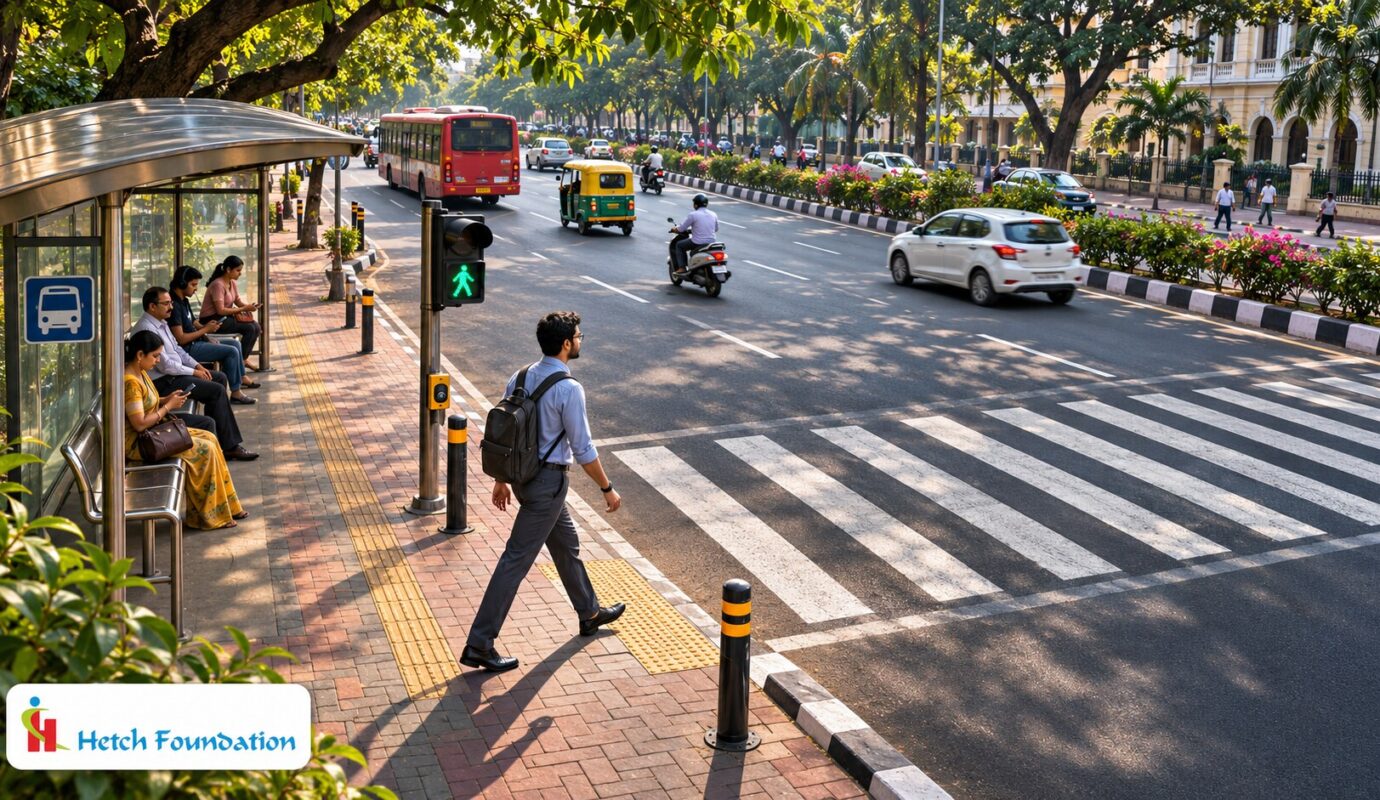
Getting Off the Bus Is Only Half the Journey
By Hetch Foundation
You step off a bus and see the building you are going to directly across the road. The bus pulls away. There is a marked crossing farther along, but the footpath leading to it narrows around parked scooters. The shortest path is straight across the traffic. The safer path depends on whether you can actually get to the crossing, wait there and reach the other side.
That is the part of a bus journey that can get missed when people talk about routes and timetables. Every rider arrives at the stop on foot or by another mode, and every rider has somewhere to go after getting off. A busy stop needs a safe connection between the bus door and the street around it. That connection can look very different to a passenger using a walking aid, carrying shopping or finding the route for the first time after dark.
Follow the trip from the bus door
Start with the place where people actually step down. Does the bus stop next to an accessible boarding area or out in a lane because the kerb is blocked? Is there somewhere to stand before choosing a direction? A shelter can help people wait, and its position can also narrow the space people have to walk past it. Look at the stop after several passengers have arrived at once. A path that seems wide enough for one person may become difficult to use once it also has a queue.
Next, follow the likely routes away from the stop. A hospital entrance, office, market or station opposite the bus stop will draw people towards a crossing. The route needs to make sense from the point where they get off. If the crossing is difficult to find, the approach is broken or the required detour is long, some people will try to cross near the stop instead. Observing where people already walk helps identify which connection needs attention first.
Look in both directions along the street. The nearest crossing on the map may require passing a driveway or a side road that adds another conflict. The other direction may offer a wider footpath or a signal but require more time. If the street has a median, find out whether the crossing continues through it and whether there is enough room to wait safely when the crossing is designed in stages. These details determine how usable the route is for each passenger.
Why the bus itself can briefly hide traffic
When a bus pulls up, its body can hide people waiting beside it from drivers passing in the next lane. It can also hide passing vehicles from passengers who have just got off. A passenger who walks immediately around the front or back of the bus may step into a point where the approaching driver has little time to see them. The view can change again as a bus starts to move or another one pulls into the same area.
After getting off, move to a safe waiting area away from live traffic. Use a marked and accessible crossing where available. Check the view before entering, including vehicles turning from a side street or passing a queue. A nearby bus can obscure part of the approach even when the stripes are visible. Give yourself time to find a position from which you can check traffic without stepping into its path.
If you are driving past a stopped bus, ease off before reaching it. Look for movement around both ends and check for people walking towards a crossing or emerging beside the bus. A clear-looking lane can become much less clear as passengers disperse. At a marked crossing, slow in time to yield and keep the crossing free of stopped vehicles. When your view is restricted, allow more time and space before moving into the section you cannot see.
Connect stop placement with the walking route
A transport operator and road authority can look together at where buses stop, where passengers wait and which destinations attract crossing movements. A stop may work well for a bus to enter and leave while making a passenger cross three driveways to reach the nearest signal. Assess the whole movement. Check walking space, kerb ramps, the route to the crossing, lighting, visibility and whether waiting passengers can stay clear of traffic.
On some streets it will make sense to improve the existing crossing or the footpath that leads to it. In others, changing the position of a stop or the way vehicles load may help. Those choices should be assessed for the site. Moving a stop can transfer a difficulty to another junction, increase the walk for regular passengers or make another transfer less accessible. Ask passengers, including people who need more time or room, what would change for them.
Small management decisions matter too. Keeping the boarding area free of parked vehicles means the bus can get closer to the place people are expected to wait. A clear sign directing passengers to a crossing helps new riders use it. A property manager can keep the walking route to a gate free of deliveries. Each action improves a part of the connection, and a short walk along the entire route can show whether those parts join up.
Two questions passengers often ask
What if the crossing is farther away than I expected?
Check whether you can reach it by a clear footpath and whether it connects to where you need to go. Use a safe and accessible option if there is one. If the detour makes the journey hard, report the location and describe the two points passengers are trying to connect. Include which part of the existing route is difficult to use.
Where do I report a problem at a stop?
Contact the bus operator about the boarding point or where a bus is actually stopping. Report footpath, crossing, lighting or traffic issues to the authority responsible for the street. When the two problems overlap, share the same location, bus direction and observation with both so they can see how the services meet on the ground.
On your next bus trip, pay attention to what happens after you get off. Look at where people stand first and which route they take next. One blocked ramp, hidden crossing or missing stretch of footpath can be the detail that keeps the bus from serving a destination safely.