

The Overtake You Should Abandon
By Hetch Foundation
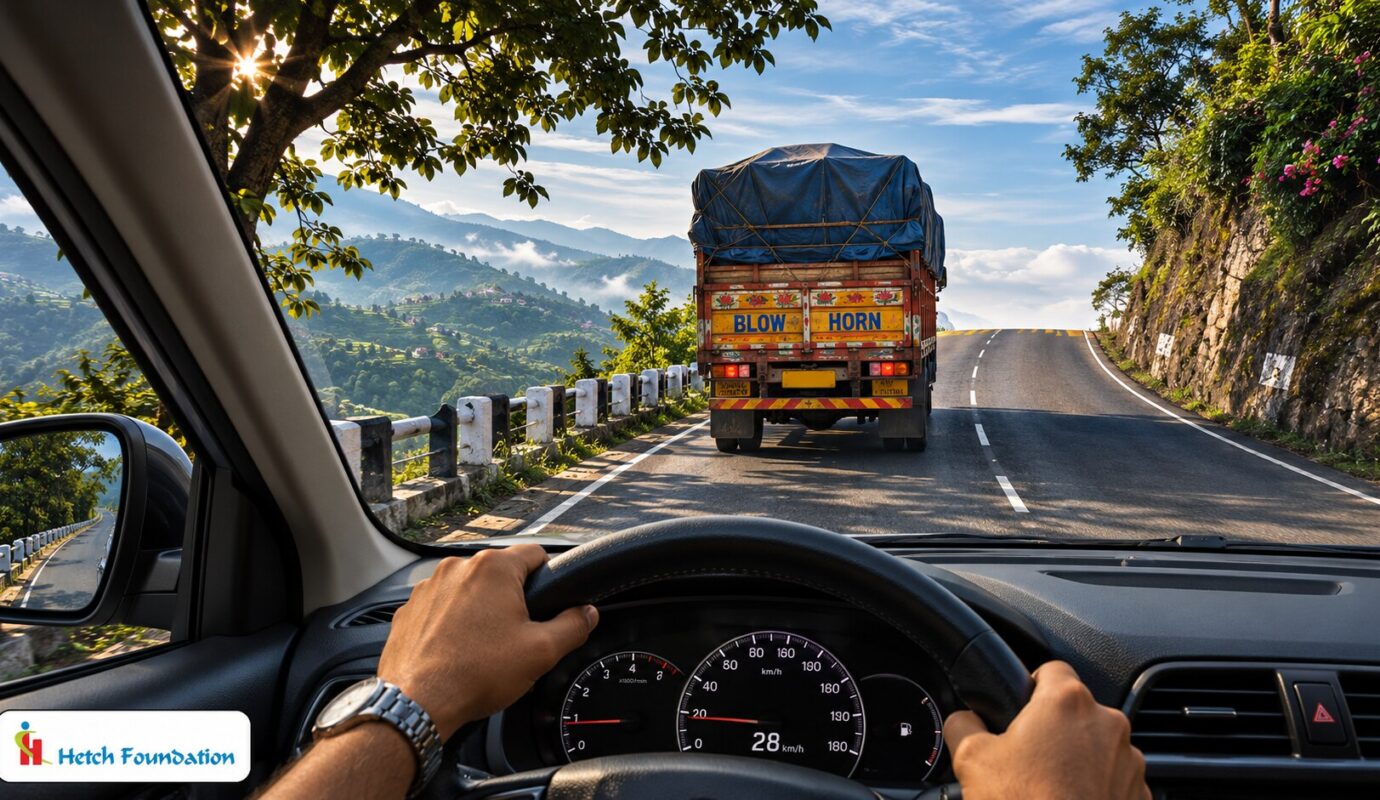
A goods vehicle is moving slowly up a two-lane road. You have been behind it long enough to know that you are losing time. The centre line seems to open up ahead, but the road disappears over a rise. There is no vehicle in the section you can see. The decision is whether that visible section is enough to start and finish a pass safely. At a crest, the road beyond it is still carrying traffic even when you cannot see any.
Overtaking takes space and time. On a two-way road, it can bring you into the path used by oncoming vehicles. Before starting, you need to see a clear lawful route out, enough room to pass and a safe place to return. If one of those pieces is missing, stay behind. The fact that another driver passed a moment ago tells you about their situation at that instant. It tells you little about what may now be approaching.
A bend can hide more than oncoming traffic
Imagine a bend on a road between villages. A truck ahead partly blocks the view, and buildings sit close to the edge of the road. An oncoming car may be hidden around the corner. A scooter could also be waiting to join from a side road. The truck itself might be slowing to make a turn. The delay you experience behind it can draw your attention to the space beside the truck, while the reasons for its slowing remain out of sight.
A crest presents a similar problem. At the top of the rise, the first movement you see from the opposite direction may be only the roof or lights of a vehicle. By then it may be much closer than you expected. Vehicles travelling towards each other close the gap quickly. This is why the apparent empty space before the crest is a poor basis for a manoeuvre that needs a clear view beyond it.
Rain, glare or dust can take away usable sight distance even on a straight stretch. So can a larger vehicle ahead. Leave enough following space to see more of the road where possible. When the view remains limited, let the opportunity go. Moving closer to a truck to prepare a pass may make it harder to see the conditions you need to judge, while giving you less time if it brakes.
Decide to wait before you move out
Check the road markings, traffic signs and the type of place you are approaching. Indian driving regulations restrict overtaking where the view is obstructed and in situations such as junctions and pedestrian crossings. A continuous longitudinal line that you would have to cross is another reason to stay behind. A broken line is one part of the information available to you. You still need a clearly visible, lawful path and space to complete the whole manoeuvre safely.
If the conditions are unclear, maintain a steady following distance behind the vehicle ahead. Avoid using the other side of the road as a viewing position. From your own lane you may spot a change such as a junction sign, brake lights ahead of the truck or a line of vehicles waiting farther down. Check your mirrors so you are aware of the people behind you, but make your own decision based on what you can see and on the conditions ahead.
Passing a line of vehicles requires more space and time than passing one. The gaps between those vehicles may disappear as they slow. The vehicle at the front may be preparing to turn or stop. A driver who sees space beside just the first vehicle has yet to establish where they will return. If the entire path cannot be assessed, wait for a different opportunity or an appropriate section where the road provides more room.
Handle pressure from passengers and other drivers
People who travel together can agree in advance that a slower stretch is part of the trip. If a passenger needs to update someone about a delay, ask them to do it. The driver can then choose a pace and following gap without having to think about the appointment. On repeated routes, build time for hills, farm traffic or other predictable delays. A realistic arrival time takes pressure off a decision that must be made in seconds.
A driver behind may close up or sound the horn. Stay predictable and leave enough room ahead to respond gradually. If you are the person driving the slower vehicle, follow the rules and use an appropriate stopping or passing area only when it is safe and lawful. Avoid signalling to another driver that it is safe for them to overtake. They need to assess the view ahead for themselves, and your view may differ from theirs.
Road owners can help by making the road’s limits easier to read. Inspect markings and signs where drivers often attempt a pass near a bend, crest or narrowing. Consider whether a lawful passing area can be provided on a suitable section and whether hazards are signposted clearly. Reports from regular users can help identify patterns. Describe the location and both directions of traffic from a safe place, including which obstruction hides the view and when the problem tends to occur.
Two questions people often ask
What if a truck driver waves me past?
Use your own view of the road, the markings and the signs. A gesture cannot confirm what a driver outside the truck can see or how long the gap will last. Wait unless the whole manoeuvre is lawful and can be completed safely with the space you have.
Does a straight road always give me enough sight distance?
A straight alignment can still have a crest, glare, patches of fog or a large vehicle obscuring the view. It may also contain a junction or crossing. Check the full visible path and conditions from your own driving position. If you cannot see enough to assess the whole pass, stay behind.
Next time you catch a slower vehicle, look for the point where your view ends. If it ends at a crest or around a bend, you have the information you need to wait. Keep a useful distance and let the road open up before considering another decision.