

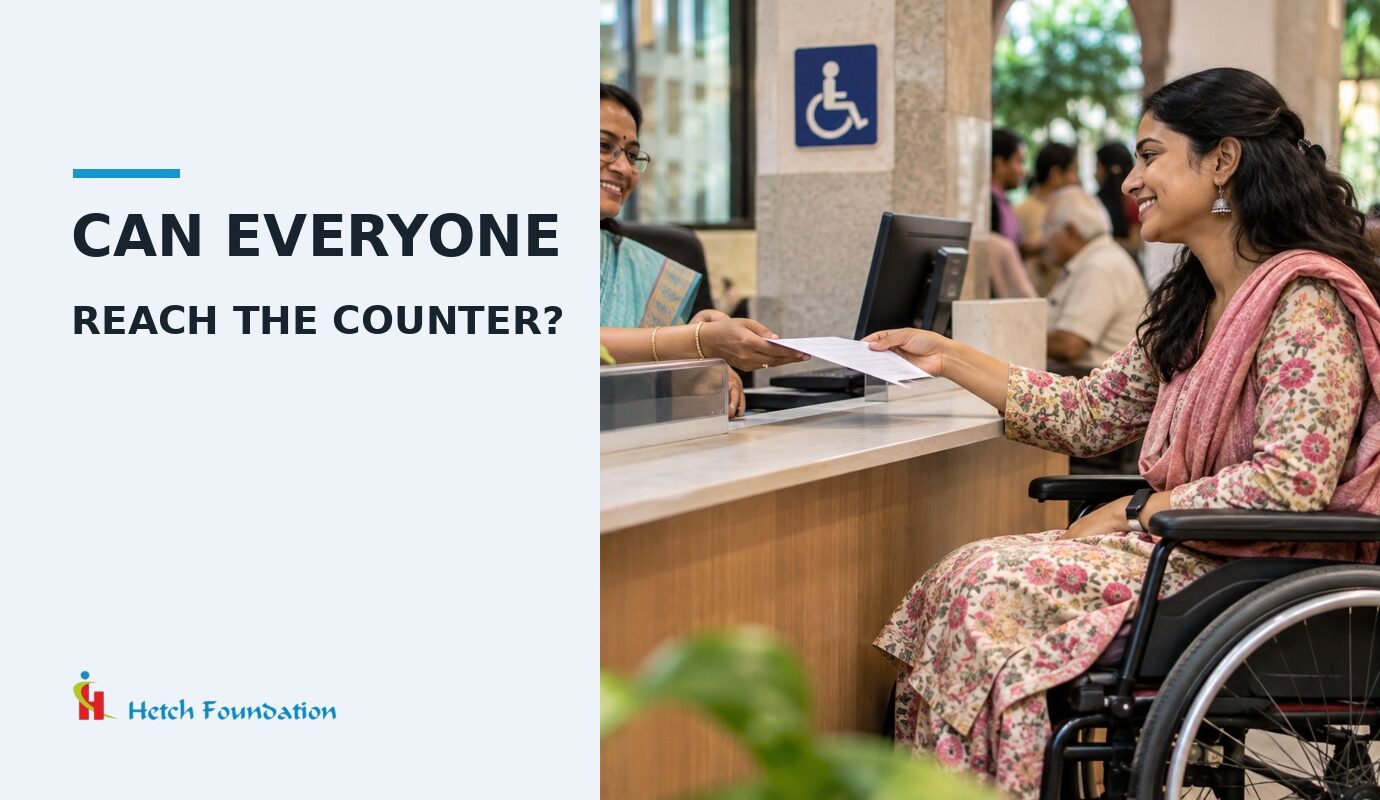
Can Everyone Reach the Service Counter?
A public office can have an accessible entrance and still ask visitors to complete a journey that some cannot manage independently. A person enters through a ramp, follows signs to a queue and reaches a counter where the paperwork is out of reach or the conversation cannot be heard. The journey is only complete when the visitor can obtain the service, communicate a question, and leave safely. In November 2026, a United Nations expert described implementation as a priority for disability rights in India. Local offices can begin by looking at the route through the eyes of people who actually use it.
Walk from the street to the counter
Choose the entrance a visitor is most likely to use. Start at the nearest pedestrian approach, pickup point or public parking area. Check where the visitor has to cross traffic, negotiate a change in level or make a decision about which door is open. A map may show an entrance that the visitor cannot find because its signs are hidden behind vehicles or because an adjacent gate is closed. Record which entrances are open at different times. Ask staff what they would tell a person arriving when the usual route is unavailable.
Walk the same route at a busy time. An obstacle may be temporary or depend on demand. A vendor, parked scooter or queue can narrow a passage that looked clear on an early inspection. A door may be easy for staff to hold but difficult for a person who arrives alone. Look at the connection between each part of the journey. A smooth ramp is less useful if it leads to a blocked landing or a direction sign that nobody can read. Ask a visitor who has used the service where their trip first became difficult.
Check how the queue actually works
A queue can create access problems even when the route to it is clear. Ask how people get a number, whether there is seating and how staff let the next visitor know it is their turn. An announcement alone may miss someone who cannot hear it. A display alone may miss someone who cannot see it. Use complementary communication methods where possible and give people a way to ask privately for a different arrangement. Make sure someone using that option still knows where to go and when they will be called.
Look at the physical space during busier periods. Can someone sit without losing their place? Can a person using a mobility aid move between chairs and turn where they need to? Is there a straightforward place to wait with a companion, without blocking others or being separated from the service? Ask staff to describe what they do when the line reaches the door. Keep enough information visible for a first-time visitor to understand how the system works. A clear sign and an available staff contact can reduce the need for people to ask several strangers.
Test the service itself
Consider the moment the visitor reaches the counter. Can they hand over documents, read and sign a form, and speak directly with the person helping them? If standing, reaching, hearing or seeing is difficult, is there a way to complete the same task? Ask whether an alternative desk or private space is available. Make sure staff know who can provide it and whether it can be used throughout the opening period. A workaround that only one employee knows often disappears when that employee leaves their shift.
Check the forms and the instructions given to visitors. Use understandable language and formats appropriate to the service. Ask whether the person wants assistance before taking anything from them or speaking to their companion. Give the visitor control over how private information is discussed. A person should be able to ask about a sensitive matter without announcing it to the entire waiting area. Review digital and printed options alongside the physical counter. People may need to use both during the same visit.
Record problems in a way someone can act on
Write down the exact place, time and effect of each barrier. For instance, a visitor may have been able to enter through the main door but had to ask someone to carry a form to a high counter. Identify what staff could do immediately and what needs a competent assessment or physical change. Give each issue a named owner and a date for review. When work involves design requirements, ask a qualified person to check the relevant accessibility standards and local obligations. Ask visitors with disabilities whether the proposed change addresses the problem in practice.
Check restrooms, exit routes and the way visitors learn about emergencies. A person who can complete the service should also be able to get information about facilities and leave by the approved route. If access is temporarily disrupted, tell people before they travel where possible and provide usable alternatives. Update the signs at the premises as well as any website or booking confirmation. The person answering the phone and the person at the gate should know the same information.
One habit for the next opening day
Ask a staff member and a visitor to walk through one ordinary transaction, from arriving at the gate to leaving after receiving the service. Ask the visitor which part required extra effort or help. Record one specific change, assign it, and repeat the same journey after it is made. Give people using the service a simple way to report an access problem without having to disclose personal details to a group.
Frequently asked questions
Is a ramp enough to make a counter accessible?
Check the full journey, including the approach, doorway, queue, communication and use of the counter. Also check how people reach the relevant facilities and leave safely.
What if changes to the building take time?
Ask a competent person which physical changes are needed and what appropriate service arrangements can be provided in the meantime. Give visitors clear information about available options, and test whether those options work during the hours people need them.
How do we know whether a fix worked?
Invite people who encountered the barrier to test the change if they want to. Observe ordinary service conditions and check whether people can complete the same task with less difficulty. Record what still needs attention so the next review can start where this one ended.