

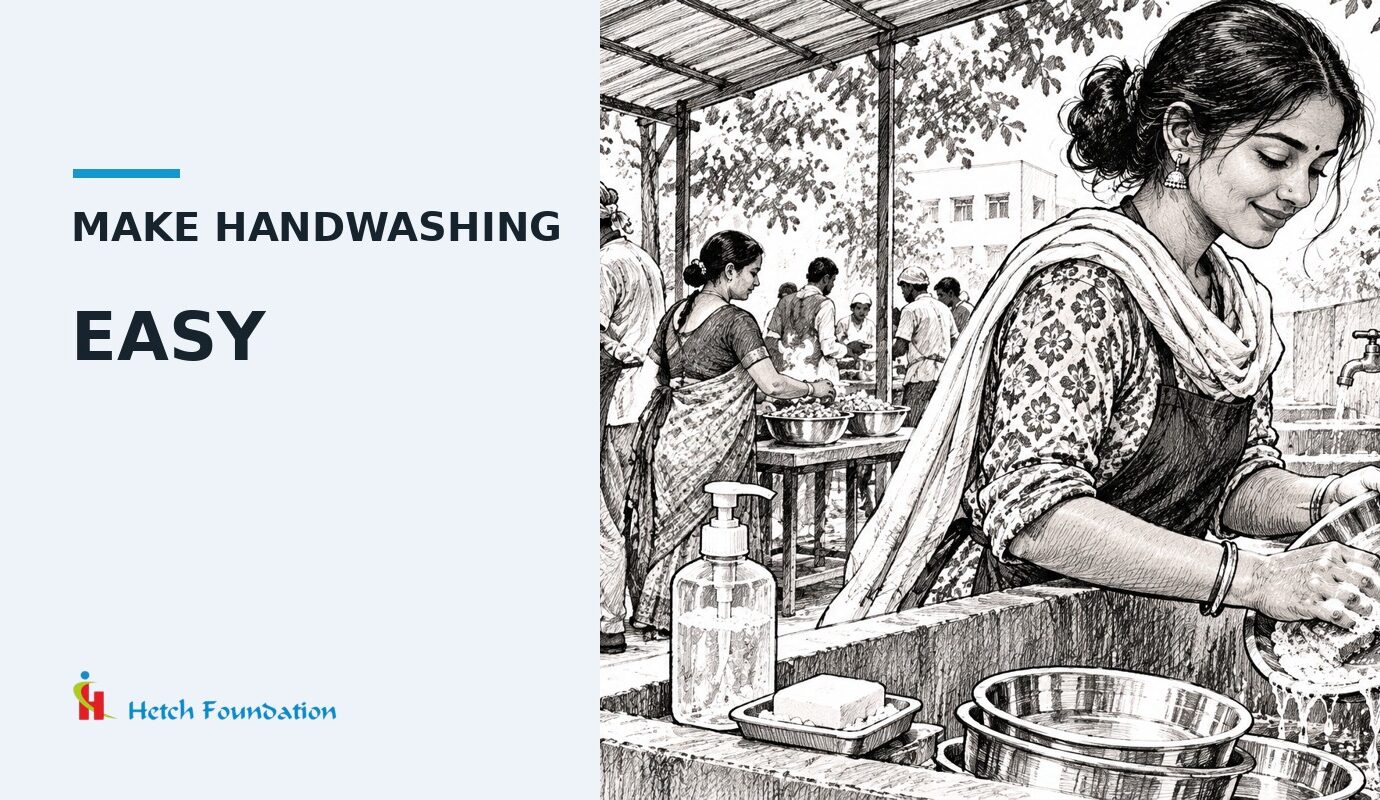
The Handwashing Station That Actually Gets Used
At a busy event, a volunteer can see a handwashing station on the other side of the hall. It is clean and well stocked, but reaching it means leaving the distribution table and crossing a queue. By mid-afternoon the soap container is empty and everyone assumes another volunteer will replace it. A useful station is where people can reach it when they need it, supplies are available throughout service and somebody knows how to fix problems. Design the station around the movement of the people who prepare food, serve it and attend the event.
Put the station where the need occurs
Walk through the job from arrival to cleanup. Mark where staff or volunteers need to wash their hands after using the toilet, before handling food, and after tasks such as dealing with waste or touching potentially contaminated surfaces. Work with the venue or food safety lead to determine the approved facilities needed for the activity. A handwashing point beside the right work area is easier to use than one people can only reach by leaving their responsibilities without cover.
Consider guests and volunteers who may need a different approach to the station. Check whether someone using a wheelchair or other mobility aid can reach the entrance and operate the equipment or obtain assistance if they want it. Consider children’s access under appropriate supervision and whether signs can be understood without reading a long instruction. Check where the queue will form when the station is busy. Keep the route free of obstructions, and use a location where water on the floor can be managed promptly. An accessible route should remain usable after other equipment has been delivered.
Provide the necessary supplies and plumbing arrangements
Make sure people can use soap and clean running water, with a suitable means to dry their hands and appropriate waste disposal. Ask the venue or responsible food safety lead what fixtures, servicing and wastewater arrangements are required. Where a temporary station is suitable and permitted, use equipment intended for the purpose and plan how it will be refilled and emptied safely. Avoid a shared bowl of water that becomes dirty while several people use it. Keep handwashing equipment separate from equipment used for other tasks where the required procedures call for it.
Place soap where it can be reached and check that dispensers operate. Give the team supplies enough for the expected attendance and a labelled place to find replacements. Think about what happens if a tap fails or the approved water source is interrupted. Identify the relevant venue contact and verify a suitable backup. If people cannot wash their hands when they need to, ask the responsible food safety person what activity should pause or move until an appropriate arrangement is restored.
Make the instruction simple and visible
A short sign can remind people to wet their hands, apply soap, lather and scrub all surfaces, rinse under clean running water, and dry their hands. Public health guidance commonly recommends scrubbing for at least 20 seconds. Use relevant official guidance and any food handling procedures for your site. Explain the routine during the shift briefing so a volunteer knows which times matter for their role. Signs should be readable where the person stands, including when a queue forms or light changes.
A sign can encourage good practice, but people also need time to use the station. Arrange cover when a person leaving a busy service point would leave nobody in charge. Avoid keeping people on different tasks that require repeated handwashing without planning for those transitions. If a new person moves from waste collection into food service, give them time to follow the appropriate hygiene procedures before they begin. Make it clear that a shortage of time or supplies is something they can raise with the shift lead.
Name the person who will check it as the day goes on
Before service starts, assign a person to verify water, soap, drying supplies and waste capacity. Give that person a backup and a way to report a failure. Decide when checks are needed based on the event, attendance and risk, and include the parts of the day when staff rotate or leave. A short record can capture the time, condition and action taken. Tell volunteers where the nearest suitable alternative is if a station closes, so they do not keep sending people to a broken dispenser.
Track the issues that repeat. If soap runs out quickly, check whether the refills are hard to find or the dispenser size is unsuitable for the number of users. If the area gets crowded, look for a safe layout that gives people more room or an additional suitable point. If people cannot tell which water is meant for handwashing, improve the signs and instructions. Ask somebody who used the station where they waited, what they could reach and whether they knew who to contact about a problem.
Include the station in your venue handover so the next team receives the same information about refills, cleaning and the nearest suitable alternative.
One habit before the next service
Walk through the station as a first-time volunteer five minutes before the doors open. Try reaching it from the food area, using the soap and drying supplies, and finding the person responsible for refills. Ask the next shift to repeat the check at handover. Fix any missing part while service can still be adjusted safely. Afterward, note one change that would make the station easier to use during the busiest hour.
Frequently asked questions
Is hand sanitiser enough for a food-service station?
Soap and clean running water are the basis of a handwashing station. Follow the food-service lead’s and relevant authority’s requirements, including when hands are visibly dirty and when handwashing is required.
What if a station runs out of water or soap?
Tell the person responsible, use a suitable approved alternative and agree with the food safety lead how affected activities will be handled until supplies are restored.
Who should check a station shared by several teams?
Name one lead and a backup before service. Make sure all teams know who they are and how a supply or access issue will be resolved.