

When a Working Vehicle Stops, a Household Can Lose More Than Transport
For one household, a repair is an inconvenience. For another, it can stop the day’s earnings. Chapter 5 asks us to notice the uneven ability to absorb a road problem.
See the work attached to a vehicle
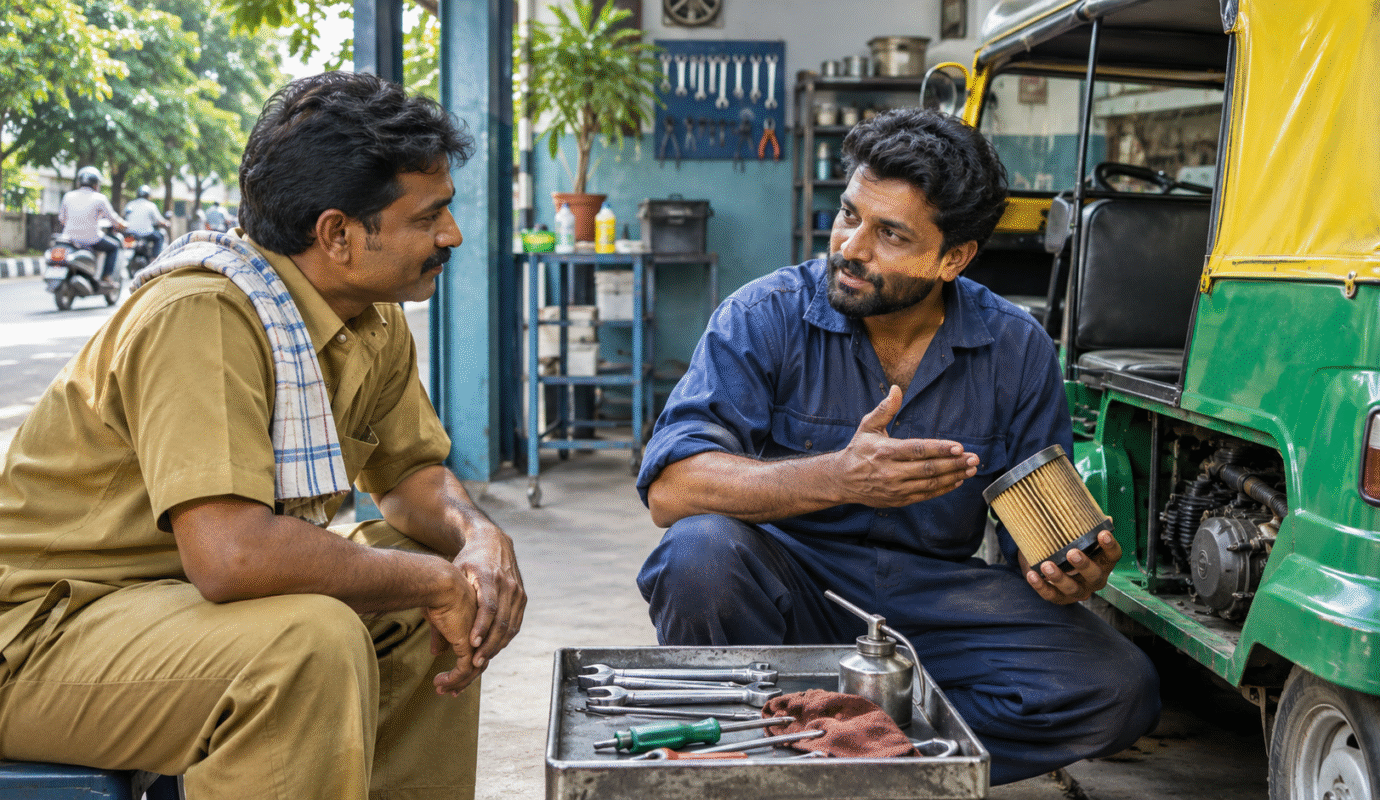
An auto-rickshaw or delivery motorcycle may support household income. Downtime can therefore involve a repair bill and missed work. The impact varies with ownership, savings, insurance and support; appearance alone does not establish anyone’s finances.
The book’s comparison invites attention to vulnerability. It is not proof that every car owner is secure or every auto driver lacks protection.
Protect continuity through prevention
Regular maintenance and careful driving support the ability to keep working. Workers need realistic opportunities to report faults and stop using unsafe vehicles. A maintenance plan loses force if every repair makes a schedule impossible.
Businesses can discuss substitute arrangements and flexible appointments with workers. Practical support works better when it reflects the actual task.
Respond fairly
After an incident, prioritise safety and use proper reporting and insurance processes. Avoid threats, humiliation or pressure for an immediate informal settlement. Seek qualified local advice for complex disputes.
Community help can be concrete and consensual: a reputable repair referral or help with an agreed task. Do not turn financial difficulty into publicity without permission.
Keep dignity central
Recognising unequal consequences should make road interactions more patient. A working vehicle carries a livelihood, but the person using it remains more than their earnings or repair bill.
About the book
This original reflection by Oliver Bennett is inspired by Chapter 5, “The Pressures That Push Us — Deadlines, Survival, and the Weight Beneath Every Choice,” printed pages 51–64 of HarGhar Se EkSainik by Syed Abdul Hakeem, presented by Hetch Foundation. It independently develops the chapter’s argument that personal responsibility and safer public and working systems must stand together. Explore the book’s wider call to protect ordinary lives in everyday movement.