

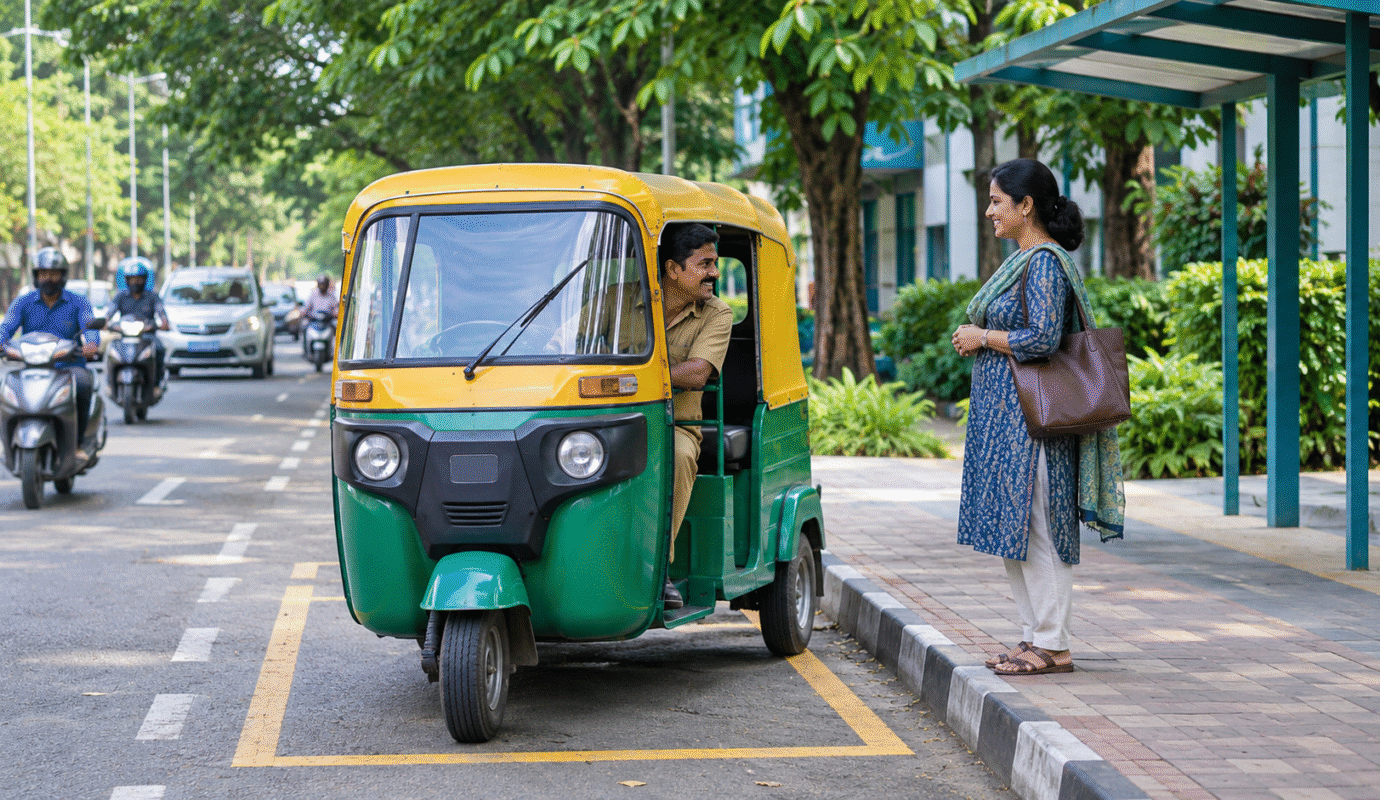
A Safer Pickup Starts With Where the Passenger Waits
A passenger appears and a fare becomes possible. Chapter 5 explores livelihood pressure that can make a sudden movement feel urgent. That pressure deserves understanding, while people around the vehicle still need a predictable manoeuvre.
Choose a suitable place
Wait where stopping is permitted and practical, away from junctions, crossings and moving lanes. Use designated stands where available. Avoid beckoning a driver across traffic when a safer meeting point is nearby.
Drivers should observe, signal appropriately and stop only when safe and lawful. If a position is unsuitable, continue to a better place instead of making an abrupt correction to secure the fare.
Give boarding time
Wait until the vehicle stops before approaching. Allow passengers to board and settle. Do not pressure the driver to pull away while someone is still arranging belongings.
Check the surroundings before rejoining traffic. A passenger being ready does not mean the road is ready. A signal communicates intention without granting priority over occupied space.
Improve recurring arrangements
Better stands, clear access and sensible waiting space can support livelihoods and safety together. Operators and planners should ask drivers where pickups repeatedly create conflict and consult passengers about actual movement.
Avoid stereotyping auto drivers or passengers. Improve the situation rather than attach a label to an occupation.
Make the next pickup calmer
Agree a safe meeting point and allow the driver to reach it without sudden changes. A little coordination gives everyone nearby more time to understand what is happening.
About the book
This original reflection by Oliver Bennett is inspired by Chapter 5, “The Pressures That Push Us — Deadlines, Survival, and the Weight Beneath Every Choice,” printed pages 51–64 of HarGhar Se EkSainik by Syed Abdul Hakeem, presented by Hetch Foundation. It independently develops the chapter’s argument that personal responsibility and safer public and working systems must stand together. Explore the book’s wider call to protect ordinary lives in everyday movement.