

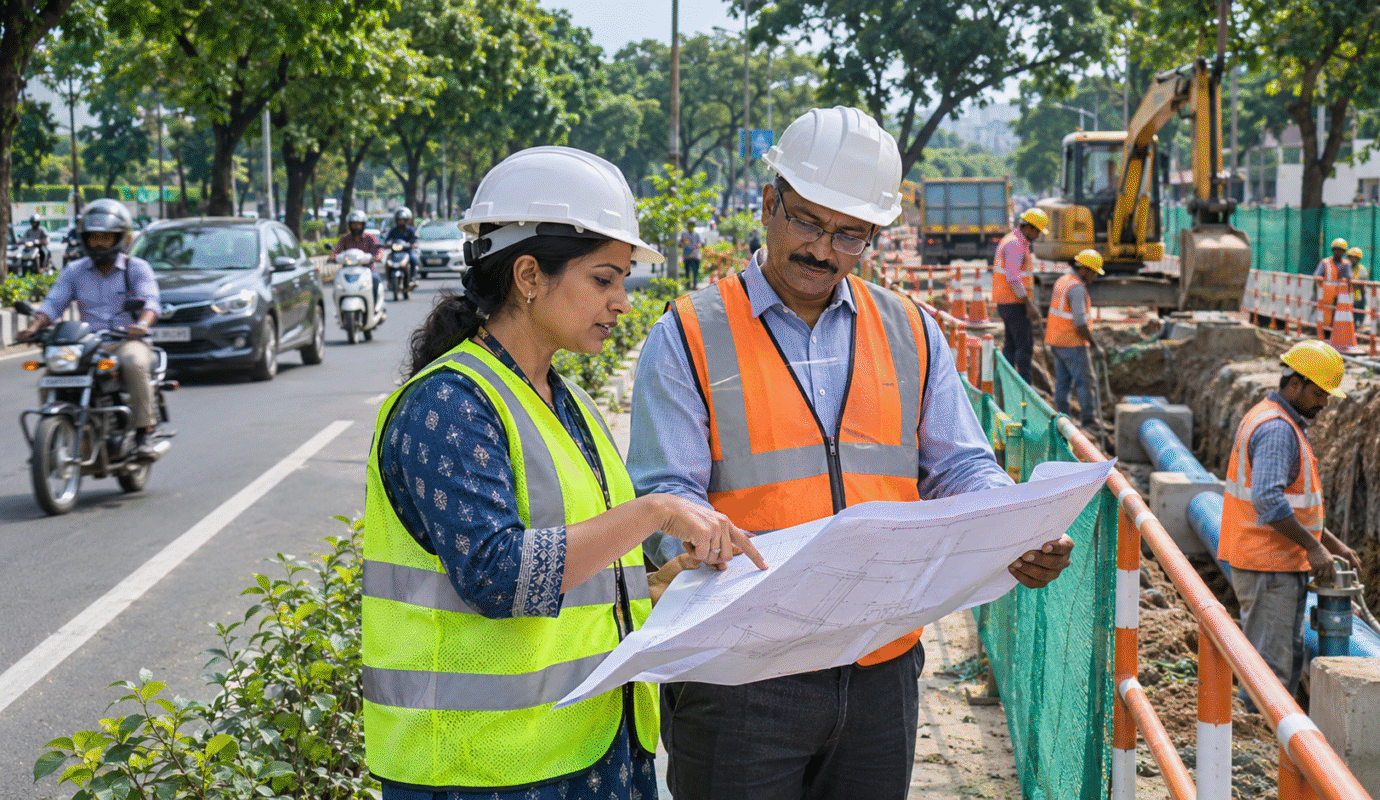
Coordinate Utility Work Before the New Road Is Laid
A road is resurfaced, then dug up for utility work that might have been coordinated earlier. Chapter 5 uses this kind of scenario to examine the space between departments. Each transition also needs a safe route for the public.
Plan the corridor together
Road surfaces, drainage, utility lines, lighting and footpaths occupy one place. Identify which teams must contribute, how schedules interact and who owns each handover. Coordination should cover construction as well as the finished route.
People still need to reach homes, shops and transport. A plan focused only on the final road leaves the temporary journey unaddressed.
Protect every stage
Competent teams should design and manage appropriate barriers, warnings and accessible alternatives. Inspect conditions as the site changes. Do not expect residents to improvise a route around open works.
Explain practical access changes clearly. Discuss workable alternatives with affected businesses and people with mobility needs before a closure.
Include reinstatement
The job is not fully finished when a utility is installed. Restore and check surfaces, drainage, markings and usable access. Name who verifies the route before responsibility passes to another team.
This develops the book’s illustrative scenario and makes no allegation about a named authority or contractor.
Ask for continuity
For the next project, identify who owns the sequence from planning to safe reopening. Separate departments may deliver the work, but the public experiences one continuous journey. Protection should continue across organisational boundaries.
About the book
This original reflection by Oliver Bennett is inspired by Chapter 5, “The Pressures That Push Us — Deadlines, Survival, and the Weight Beneath Every Choice,” printed pages 51–64 of HarGhar Se EkSainik by Syed Abdul Hakeem, presented by Hetch Foundation. It independently develops the chapter’s argument that personal responsibility and safer public and working systems must stand together. Explore the book’s wider call to protect ordinary lives in everyday movement.