

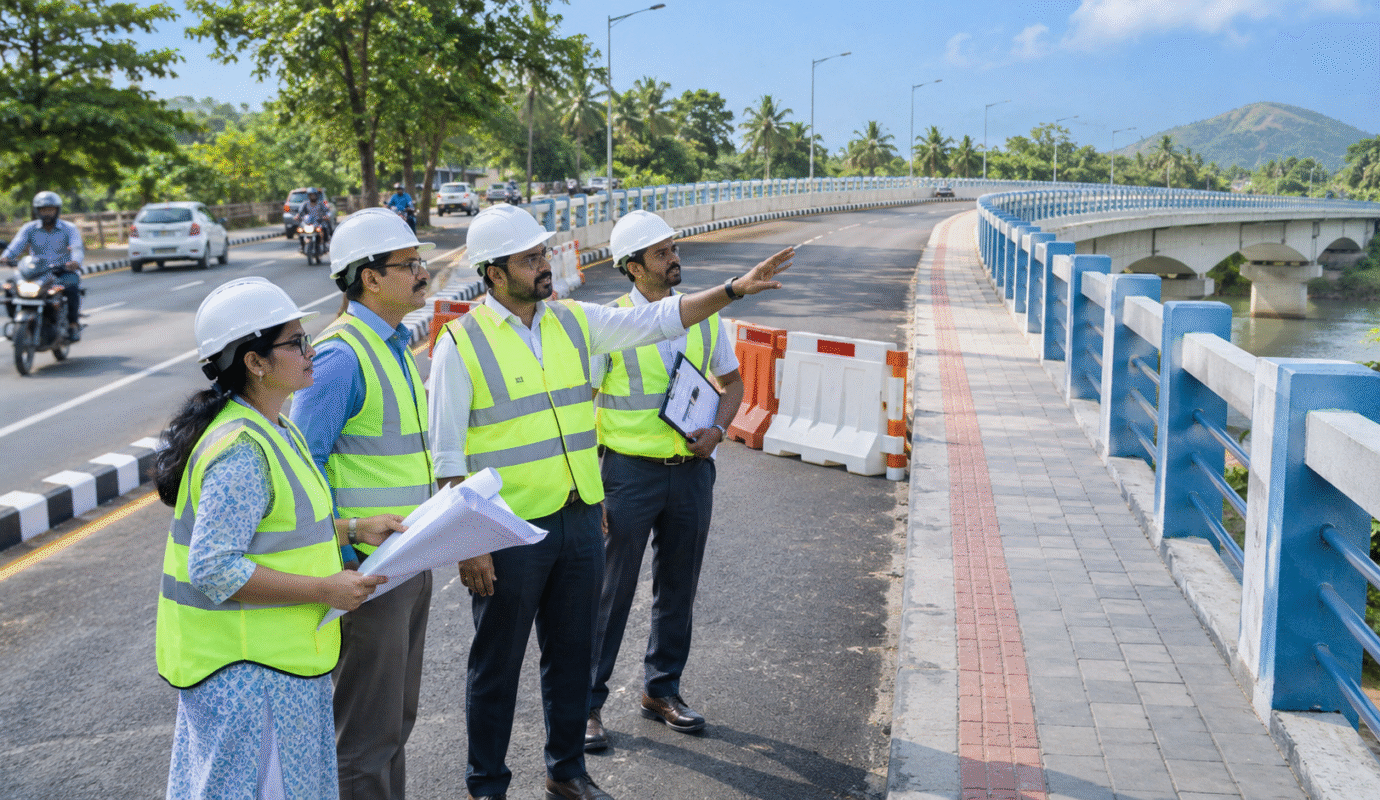
A New Road Is Not Ready Until Its Connections Are Safe
A bridge can look complete while an approach remains difficult to use. A widened road can move vehicles while leaving people walking without a continuous path. Chapter 5 asks us to judge the journey people actually experience.
Check both ends
Usefulness depends on how people enter, leave and cross a road. Review approaches, junctions, drainage, lighting, signs and pedestrian continuity before opening. Competent professionals should assess actual operating conditions.
WHO includes safer infrastructure in road injury prevention. A central structure does not replace safe access around it.
Follow different journeys
How does someone reach the bus stop? Can a wheelchair user continue along the footpath? Can a resident access home? Include people with different mobility needs rather than assume that a vehicle route serves everyone.
Phased openings need suitable temporary arrangements and competent assessment. Missing connections should not become problems the public must negotiate alone.
Make the handover explicit
Record outstanding work, its owner and the protection needed until completion. Provide a reporting process after opening. Responsibility continues beyond a ceremony or construction milestone.
Residents can contribute observations without entering the work site or attempting repairs.
Use the whole journey as the test
Ask whether ordinary people can complete their intended movement safely and with dignity. Completion should describe usable connections, not only concrete reaching the end of a construction programme.
About the book
This original reflection by Oliver Bennett is inspired by Chapter 5, “The Pressures That Push Us — Deadlines, Survival, and the Weight Beneath Every Choice,” printed pages 51–64 of HarGhar Se EkSainik by Syed Abdul Hakeem, presented by Hetch Foundation. It independently develops the chapter’s argument that personal responsibility and safer public and working systems must stand together. Explore the book’s wider call to protect ordinary lives in everyday movement.