

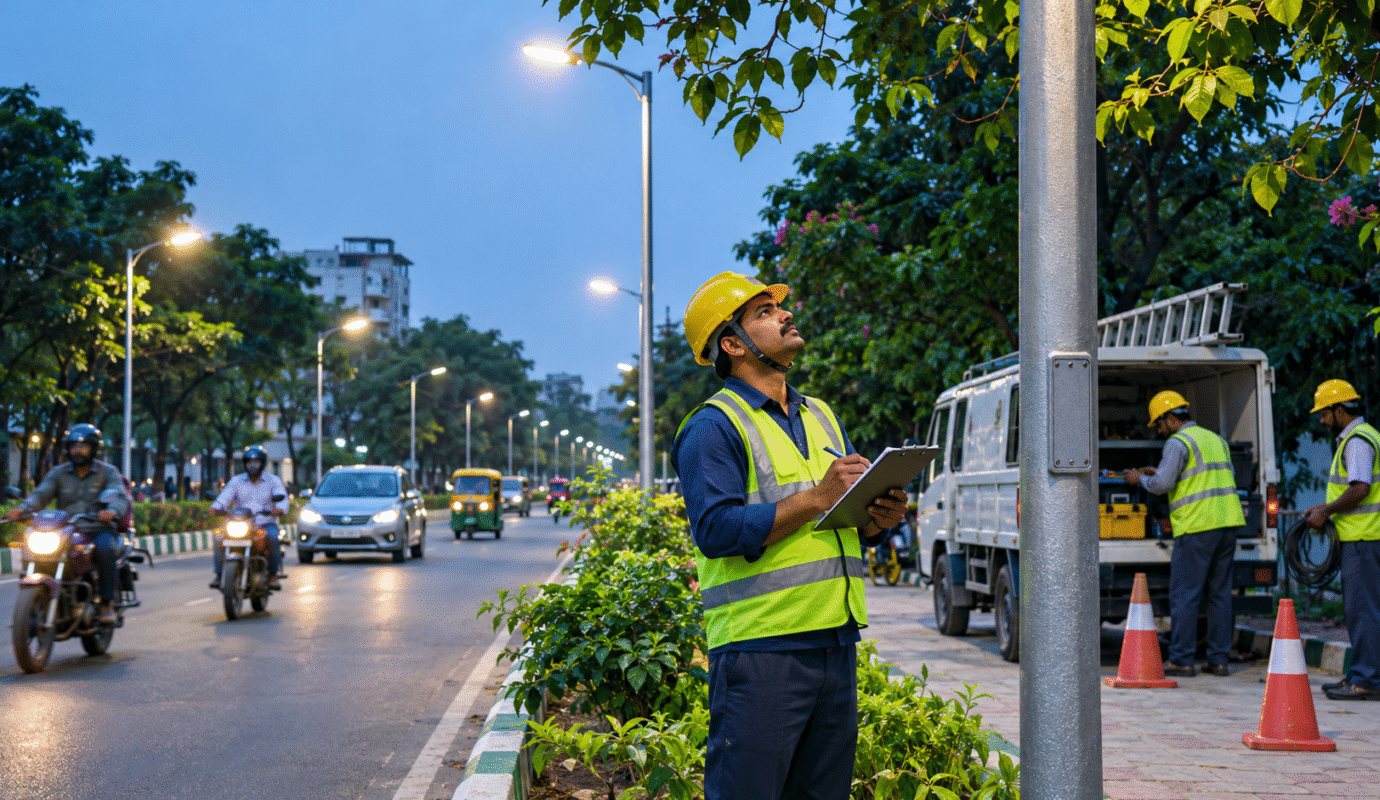
A Streetlight Approval Must Become Working Light on the Road
A streetlight can appear in an approved plan while the route remains dark. Chapter 5 asks what completion means to someone travelling after sunset. People need working light, not only a record of intention.
Follow the sequence
Approval, installation, connection, testing and maintenance are distinct tasks. Assign responsibility for each and check handovers. Dependencies on another team should be visible before they delay the result.
Competent design matters. More brightness alone is not a complete answer; coverage, placement, glare and pedestrian needs deserve attention.
Inspect real conditions
A daytime visit cannot show fully how a crossing works after dark. Arrange appropriate professional checks while lighting operates, including approaches to bus stops, homes and workplaces.
Residents can report failed lights from safety with clear locations. They should not open electrical equipment, climb poles or attempt repairs.
Explain what remains
Move reports beyond acknowledgement to inspection and action. Where permanent work is delayed, competent teams should assess suitable interim protection. Tell the public what has been checked without making unsupported promises.
Drivers still need a speed suited to visibility. Better infrastructure and careful conduct reinforce each other.
Verify the benefit
At review, ask whether the intended route is adequately served and who maintains it. Approval becomes public service when people can experience its benefit during ordinary journeys after sunset.
About the book
This original reflection by Oliver Bennett is inspired by Chapter 5, “The Pressures That Push Us — Deadlines, Survival, and the Weight Beneath Every Choice,” printed pages 51–64 of HarGhar Se EkSainik by Syed Abdul Hakeem, presented by Hetch Foundation. It independently develops the chapter’s argument that personal responsibility and safer public and working systems must stand together. Explore the book’s wider call to protect ordinary lives in everyday movement.