

Turn Shared Road-Safety Responsibility Into a Practical Action Plan
Everyone may share responsibility while remaining unsure what to do next. Chapter 5 brings personal conduct and public systems together. An action plan makes that responsibility visible.
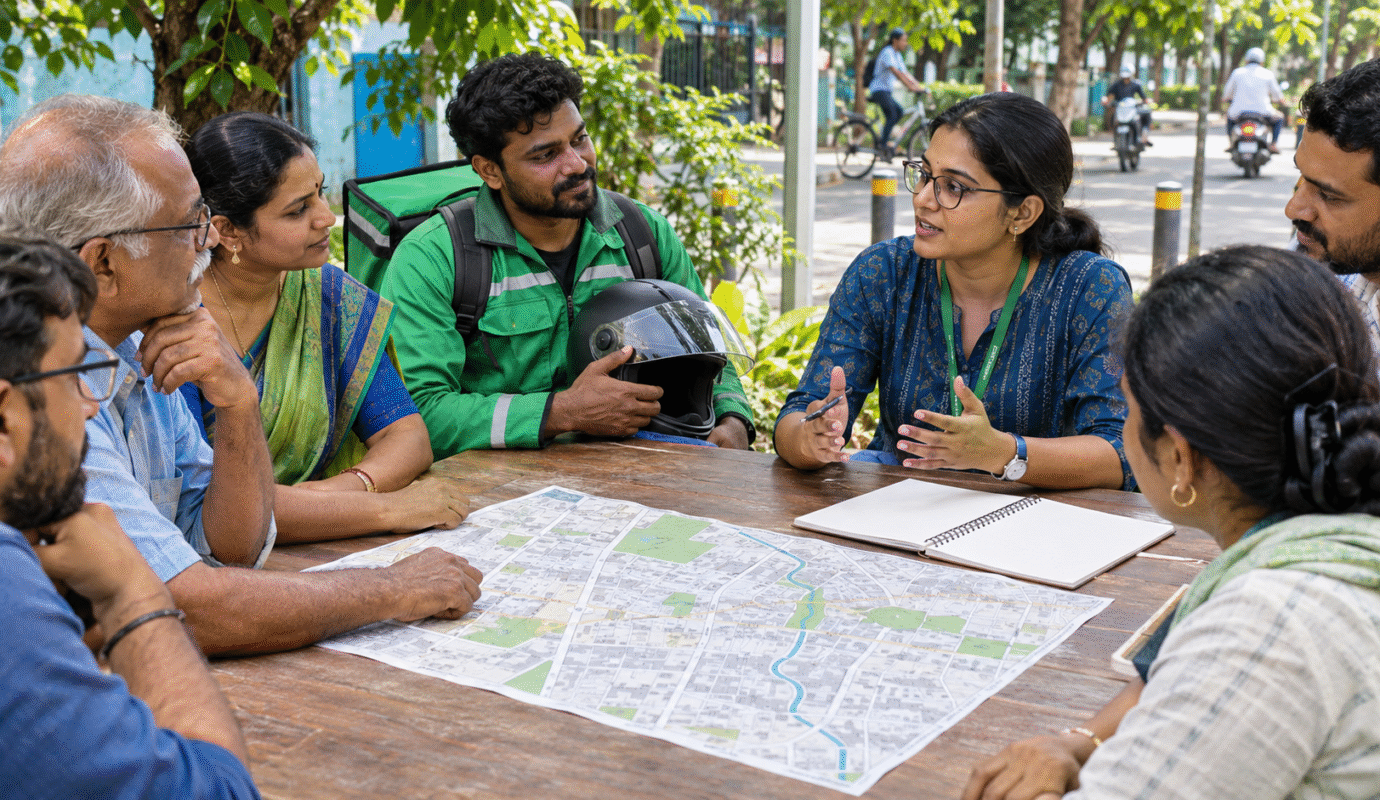
Choose one place or journey
Start with a delivery pickup, workplace route, difficult crossing or recurring defect. Describe the problem without assuming one cause. Listen to people using the route, especially those whose needs are overlooked.
A worker may identify schedule pressure, a resident a broken connection and a manager missing information. Each perspective helps establish what needs changing.
Match actions to authority
A driver can protect attention. An employer can revise a timetable. A customer can prepare access. An authority can inspect and arrange suitable work. Direct realistic requests to someone able to act.
Volunteers should not direct traffic, enter work sites or attempt technical repairs without appropriate authority and competence.
Set a review
Record the action, its owner and when progress will be checked. For matters outside the group’s control, record the proper reporting route. Do not promise results another organisation has not agreed to deliver.
Ask what actually changed. Did a schedule gain usable time? Was the defect inspected? A meeting is useful when it improves conditions on the next journey.
Keep conduct and conditions together
Ask what we can do more carefully and what pressure or hazard we can remove. Progress begins when people act within their responsibility while supporting changes others need to make.
About the book
This original reflection by Oliver Bennett is inspired by Chapter 5, “The Pressures That Push Us — Deadlines, Survival, and the Weight Beneath Every Choice,” printed pages 51–64 of HarGhar Se EkSainik by Syed Abdul Hakeem, presented by Hetch Foundation. It independently develops the chapter’s argument that personal responsibility and safer public and working systems must stand together. Explore the book’s wider call to protect ordinary lives in everyday movement.