

Before the Next Road-Safety Argument, Ask What You Can Change
It is easy to describe everything other people should change on the road. Chapter 6 asks a less comfortable question: what would change if we examined our own last journey with the same attention?
Start with an action you can describe
Choose a specific moment rather than judging your whole character. Did you reach for the phone? Did you leave enough space? Did you fasten protection before setting off? A clear observation gives you something to improve.
This is not a demand to accept blame for every danger around you. Poor design, vehicle faults and another person’s conduct may matter. Honest reflection keeps your own contribution visible without inventing responsibility for what you did not control.
Replace defence with curiosity
When a passenger raises a concern, ask what they noticed. Listen before explaining your experience or intentions. The useful question is whether a different action would have left more time or space.
If you are unsure about a driving technique, seek qualified instruction. Guessing is less useful than learning what a particular vehicle and situation require.
Make the change observable
Replace “I will be careful” with a departure action: put the phone away while parked, prepare the route or allow more time. Keep the step manageable enough to repeat on an ordinary busy morning.
Carry reflection onto the road
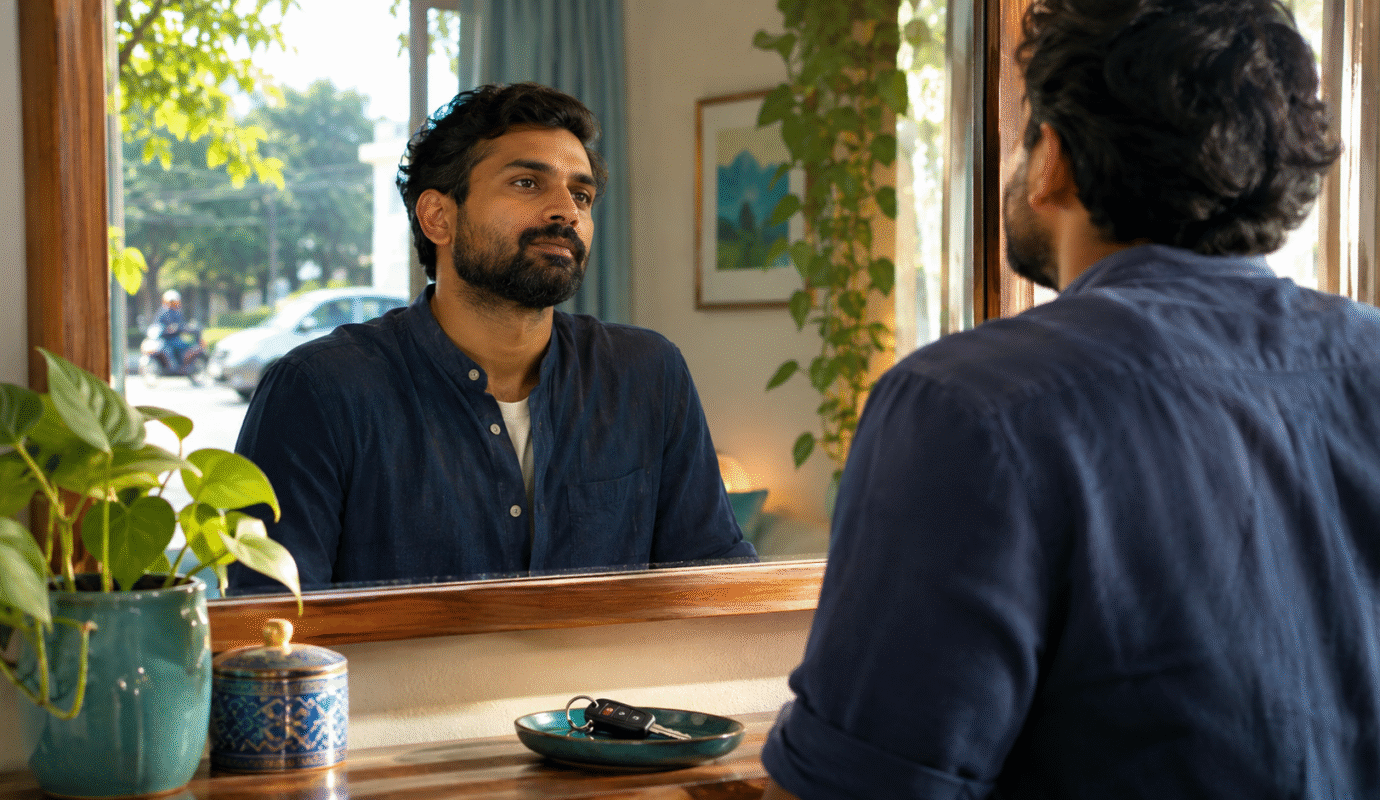
Tonight, identify one habit you want to change. Before the next trip, arrange the reminder or preparation that makes it easier. The mirror becomes useful when it leads to a different decision, not when it becomes another reason for self-criticism.
About the book
This original reflection by Oliver Bennett is inspired by Chapter 6, “The Mirror We Avoid — From Blame to Responsibility,” printed pages 66–84 of HarGhar Se EkSainik by Syed Abdul Hakeem, presented by Hetch Foundation. It independently develops the chapter’s invitation to examine our own conduct and the everyday influence we have on others, alongside the continuing responsibility of public institutions. Explore the book’s wider call to protect life through ordinary actions.