

Plan the Video Before the Journey Starts
A creator wants an energetic travel video. A friend offers to drive. The camera starts rolling, instructions change and suddenly the driver is expected to perform for the frame as well as manage the road.
Chapter Six raises a useful question for creators: who carries the risk of the content we want to make?
Choose a concept that works while stationary
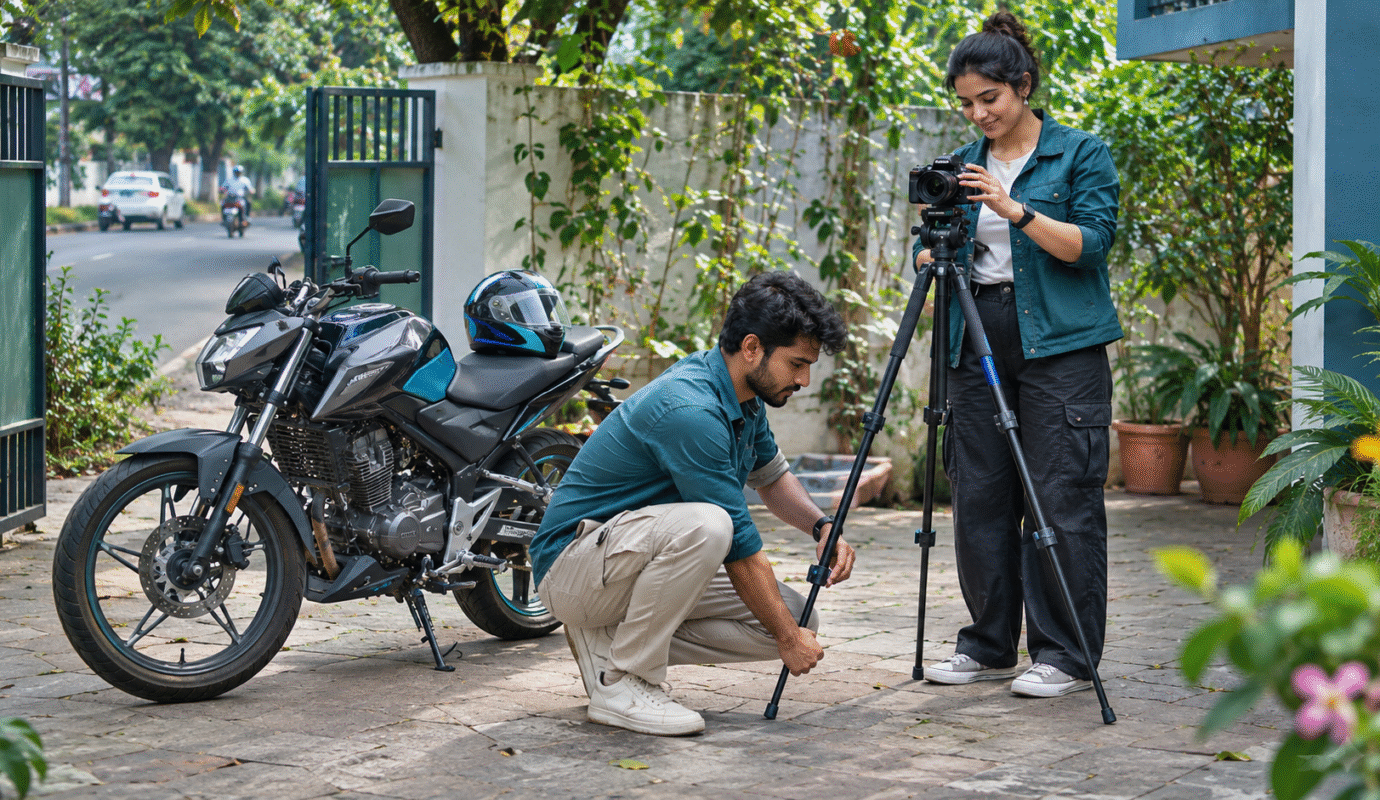
Film a conversation beside a parked vehicle, a helmet-preparation sequence or a portrait at a suitable private location. Get permission where needed and keep access routes clear. A thoughtful script can supply energy without requiring driving as a performance.
Assign roles before equipment comes out
Agree who will film and who is responsible for the location. If travel is needed, finish the creative discussion before departure. Nobody should ask the driver to look at the camera, repeat a movement or adjust a device while controlling the vehicle.
Distinguish passenger filming from driver distraction
A passenger holding a camera is not automatically the same as a driver filming. Even so, the setup must not block visibility, interfere with restraints or demand the driver’s attention. WHO identifies phone-related driving distraction as a road-safety risk.
Keep the final edit honest
Do not remove context to make ordinary travel look like a dangerous challenge worth copying. Obtain agreement before featuring recognisable participants and avoid exposing bystanders unnecessarily. Before the next shoot, write a simple condition into the plan: the story must work without asking a driver to divide attention between the road and the audience.
About the book
This original reflection by Oliver Bennett is inspired by Chapter 6, “The Mirror We Avoid — From Blame to Responsibility,” printed pages 66–84 of HarGhar Se EkSainik by Syed Abdul Hakeem, presented by Hetch Foundation. It independently develops the chapter’s invitation to examine our own conduct and the everyday influence we have on others, alongside the continuing responsibility of public institutions. Explore the book’s wider call to protect life through ordinary actions.