

Leave the Screen Spectacle on the Screen
A film chase is designed to feel effortless. The cut arrives at exactly the right moment. The hero escapes, the music rises and the consequences disappear from view.
Chapter Six asks readers to notice what happens when screen admiration leaks into ordinary road conduct. Enjoying a scene does not require adopting its behaviour.
Remember that a scene is constructed
Editing, performance and production decisions shape what an audience sees. A viewer cannot reliably infer a safe method from the finished sequence. Nor should we assume every production has identical safeguards merely because it appears professional.
Bring the unseen road users back into the picture
Real streets contain people with plans of their own. A pedestrian does not know the move you intend to make. A delivery rider has not agreed to become part of a reenactment. Their ordinary journey deserves more consideration than an impressive imitation.
Change the conversation after the film
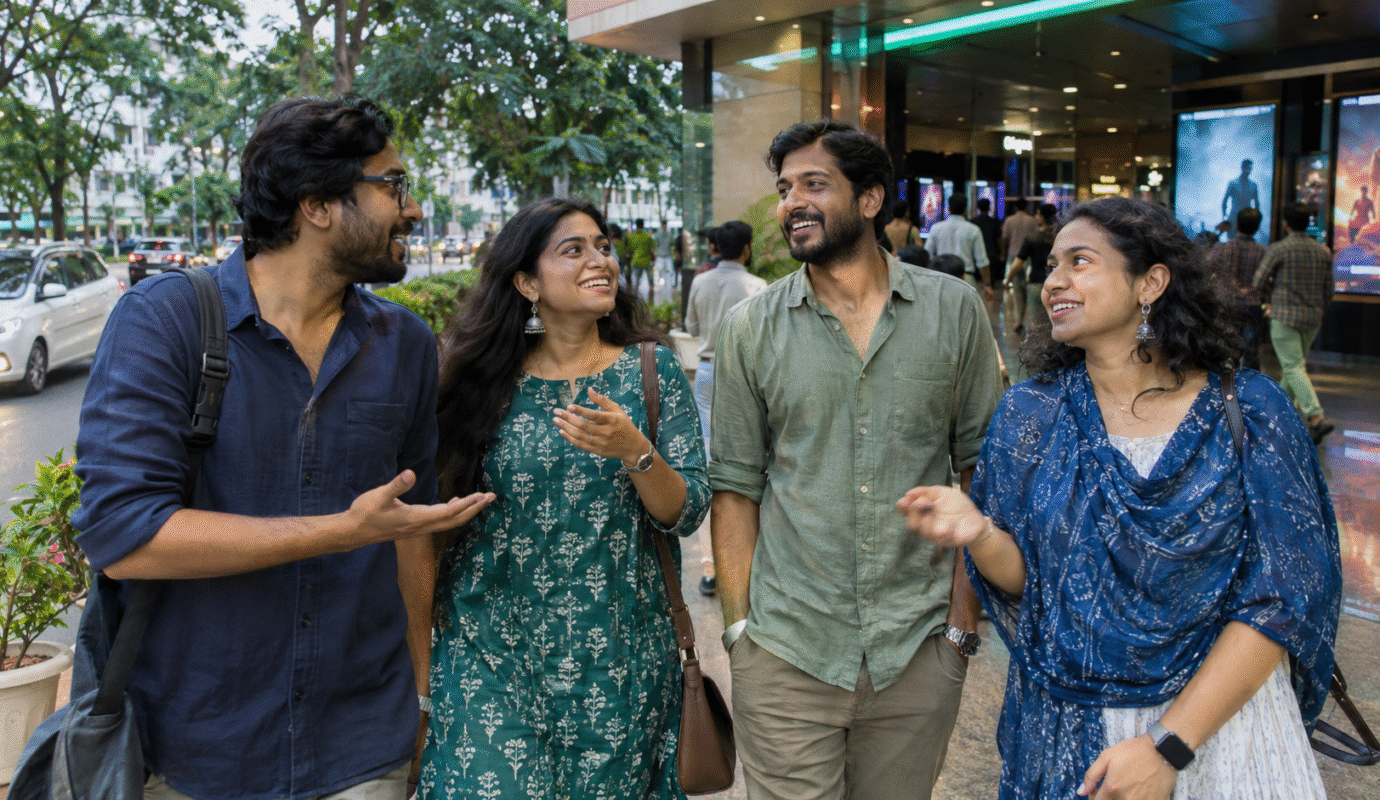
Talk about the storytelling, performances or visual design. If a friend suggests copying a manoeuvre on the road, decline and offer another creative idea. A stationary photograph or a discussion of the scene can preserve the enthusiasm without turning travel into a demonstration.
Check the mood before departure
Give yourself time to return to the practical task of travelling. Plan the route while parked and let a suitable driver concentrate. The next journey is not an extension of the film. It is a shared public activity in which the people around you should be able to continue their day without becoming part of somebody else’s spectacle.
About the book
This original reflection by Oliver Bennett is inspired by Chapter 6, “The Mirror We Avoid — From Blame to Responsibility,” printed pages 66–84 of HarGhar Se EkSainik by Syed Abdul Hakeem, presented by Hetch Foundation. It independently develops the chapter’s invitation to examine our own conduct and the everyday influence we have on others, alongside the continuing responsibility of public institutions. Explore the book’s wider call to protect life through ordinary actions.