

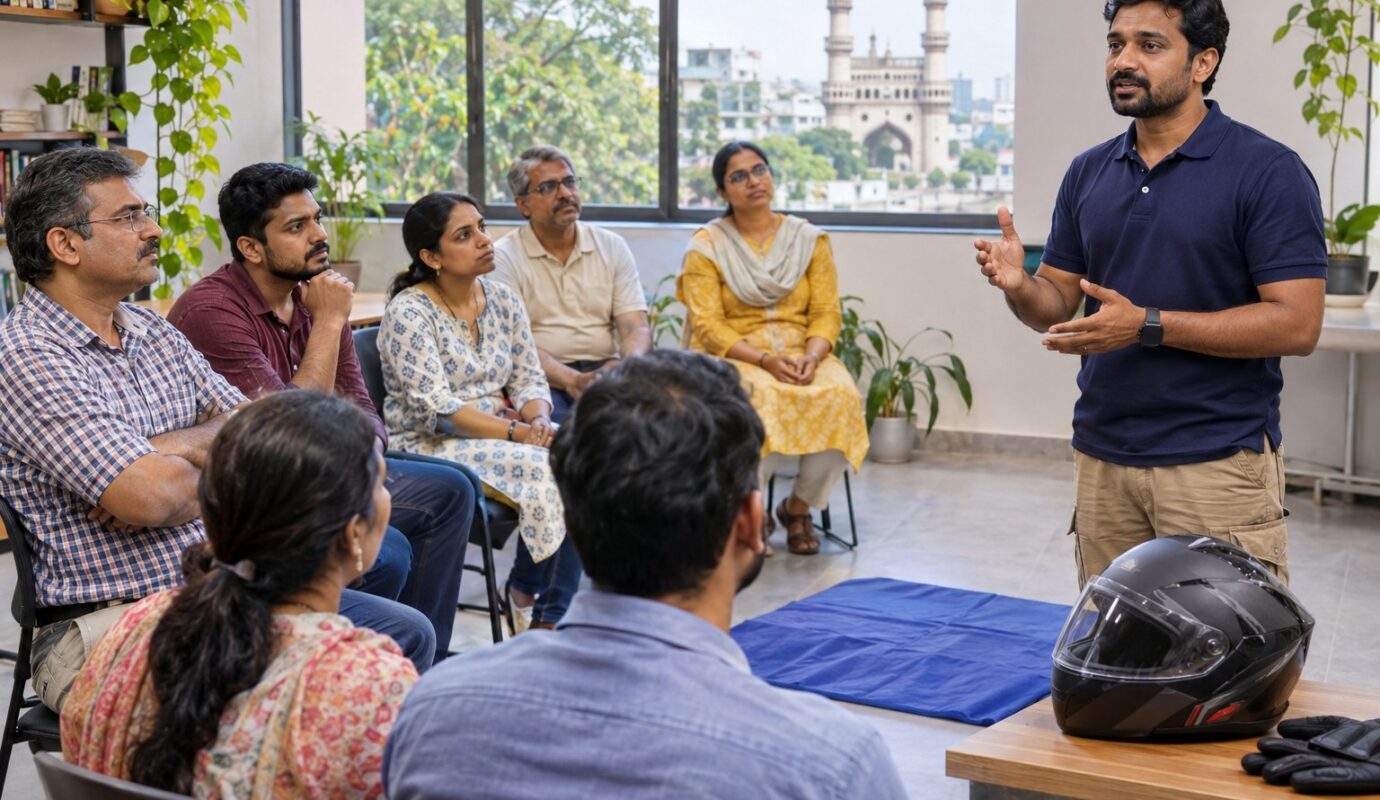
Why an Injured Rider Should Not Be Lifted in a Hurry
People often want to get an injured rider sitting up or into a vehicle immediately. Chapter 11 asks readers to resist unnecessary movement. After a crash, an injury may not be obvious from the outside, and the person may be unable to explain what hurts.
Make the call before inventing a manoeuvre
Call 112 in India, describe the scene and follow the operator’s instructions. Do not ask the person to stand, walk or test a painful limb. If a neck, back, hip or pelvic injury is suspected and the person is responsive and breathing normally, leave them in the position found unless the area is unsafe.
Know why the rule has exceptions
Immediate danger, an obstructed airway or the need for CPR can change the priority. Tell the operator about fire, traffic, breathing problems or reduced responsiveness immediately. Follow their guidance; do not let fear of movement prevent necessary lifesaving care. Do not casually remove a rider’s helmet. Training helps people understand these decisions before an emergency.
Give helpers a better job
Someone can keep the access route clear or speak calmly while the call is handled. A group does not need to lift the casualty to show concern. Respectful help includes preventing unnecessary interference and passing clear information to the professionals who arrive.
Reference: American Heart Association: first-aid positioning guidance.
About the book
This original article is inspired by Chapter 11, “The Knowledge That Saves Lives,” in HarGhar Se EkSainik by Syed Abdul Hakeem, Chairman of Hetch Foundation. The chapter brings the movement’s concern for every waiting family into emergency preparedness, responsible first response and practical learning. Explore the Chapter 10 appeal and learn more through Hetch Foundation.