

Unresponsive After a Crash: Report Breathing Clearly
Chapter 11 asks bystanders to notice whether an injured person responds and breathes normally. The purpose is not to diagnose the injury. It is to recognise an urgent change and tell the emergency service clearly. Call 112 in India and use speakerphone if this lets you follow instructions safely.
Do not confuse gasping with normal breathing
If a person is unresponsive and is not breathing normally, including only gasping, say so immediately. Follow the operator’s CPR instructions and ask someone to bring an AED if one is available. Do not wait for a pulse check you have not been trained to perform.
Breathing normally still needs attention
An unresponsive person who is breathing needs urgent assessment and continued monitoring. After a road crash, possible spinal injury affects positioning. Follow the operator about airway care and movement; do not simply leave the person unattended because you noticed a breath. If breathing changes, report that at once.
Learn the assessment in person
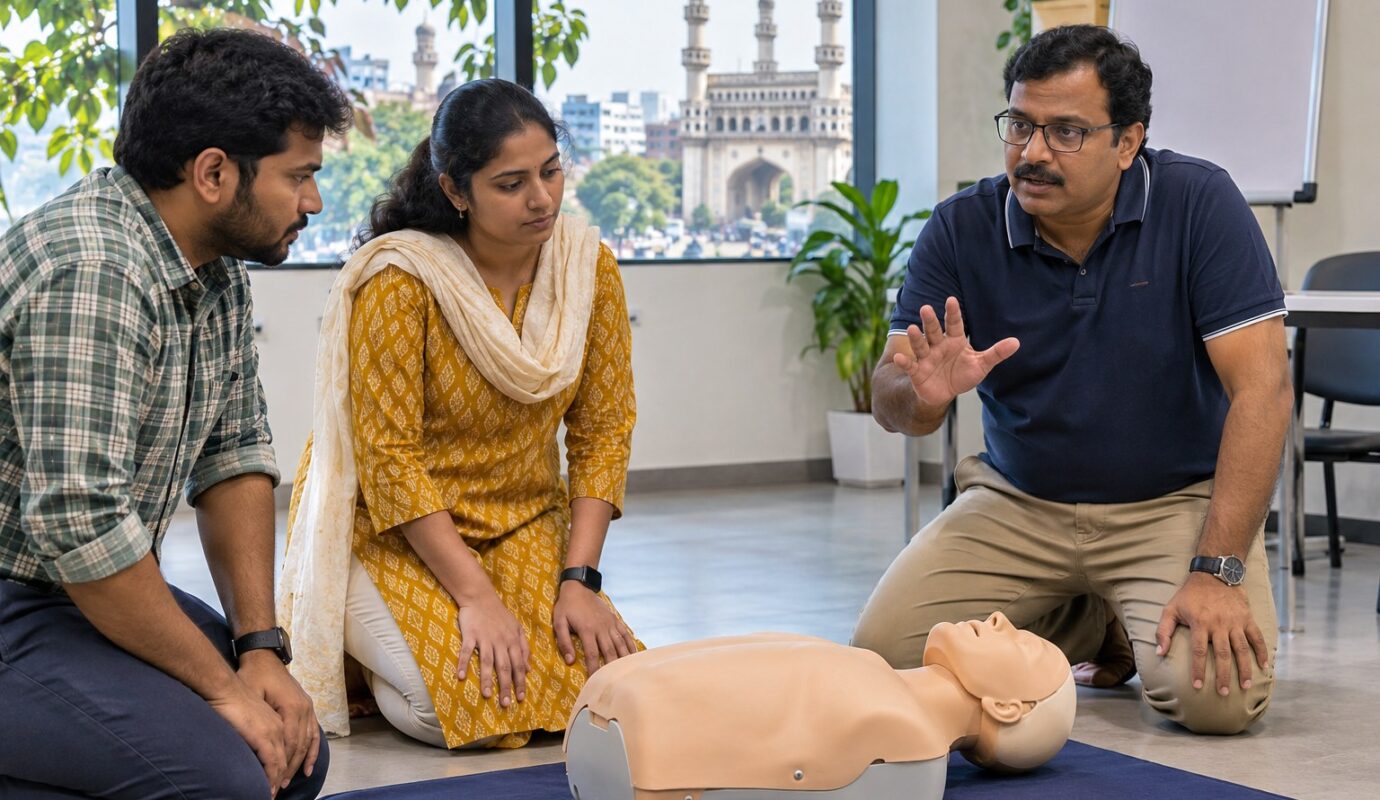
A supervised first-aid class lets you practise how to check and communicate without spending a long time deciding. Use a training manikin, never chest compressions on a healthy volunteer. The practical lesson is to notice, call and respond to the condition found. Reading should lead to training, not confidence in a diagnosis made at the roadside.
Reference: Red Cross: unresponsive and breathing person.
About the book
This original article is inspired by Chapter 11, “The Knowledge That Saves Lives,” in HarGhar Se EkSainik by Syed Abdul Hakeem, Chairman of Hetch Foundation. The chapter brings the movement’s concern for every waiting family into emergency preparedness, responsible first response and practical learning. Explore the Chapter 10 appeal and learn more through Hetch Foundation.