

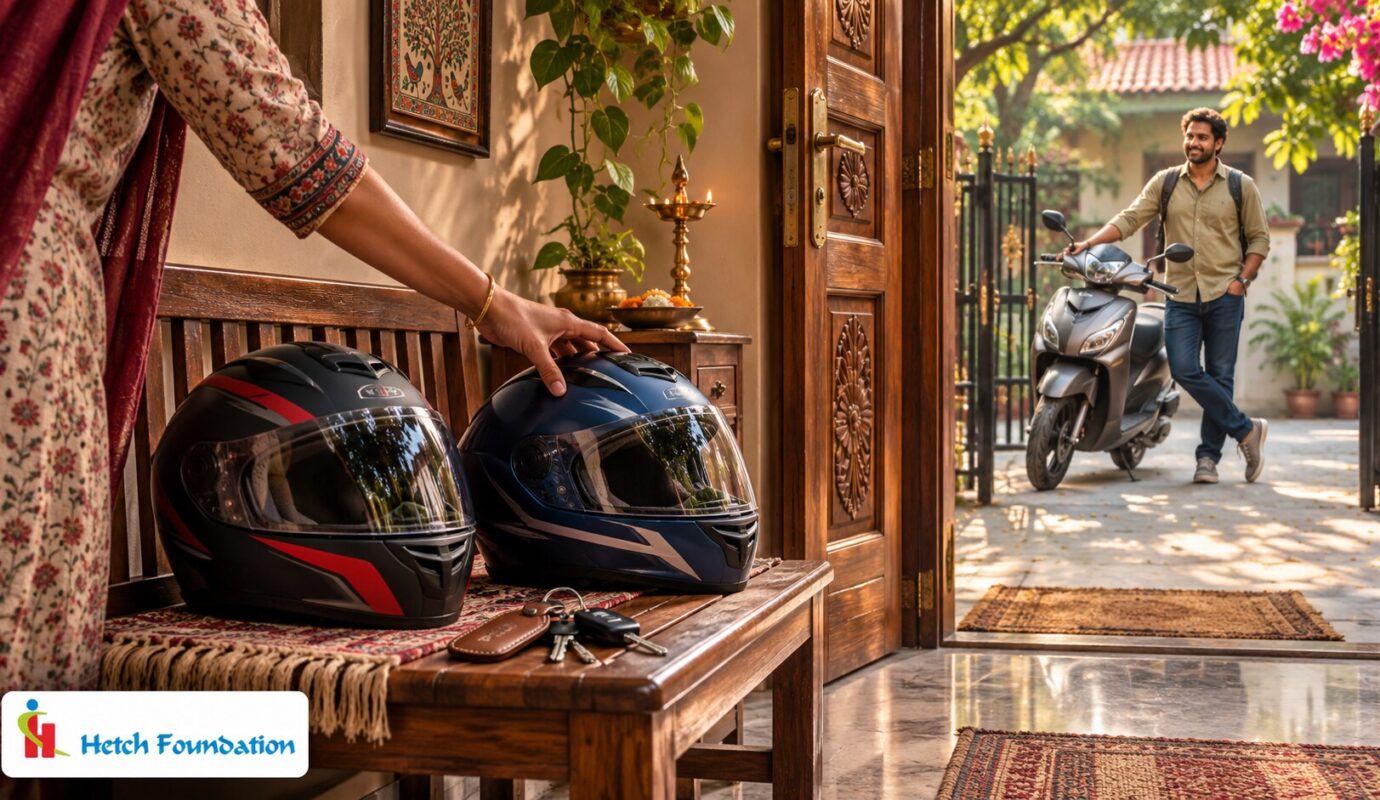
The Second Helmet Is for the Passenger
By Hetch Foundation
A friend offers you a lift to the corner shop. The scooter is already outside and your friend is fastening a helmet. There is one helmet between the two of you. The shop feels close enough to walk to, which is part of the reason the lift seems harmless. Before anyone sits down, there is a better question to ask: what will the passenger wear?
Passengers and riders share the same road, turns and sudden stops. A passenger has even less say over when the scooter moves and how quickly it slows. In a fall or crash, the person on the rear seat can strike the road, another vehicle or a roadside object. A properly fitted and fastened helmet gives the passenger protection that a short journey cannot provide by itself.
The moment the second helmet gets left behind
In many households, one person rides every day and knows where their gear is. The second person comes along only occasionally. They may be meeting the rider outside the building, visiting from elsewhere or leaving a shop with bags in both hands. The moment to find a helmet arrives when somebody is already waiting and the scooter is ready to go. By then, asking for a properly sized helmet can feel like holding everyone up.
Move that decision earlier. If you know you will be carrying someone, ask whether they have a helmet that fits and can bring it. If the passenger is a regular, keep their own helmet somewhere easy to reach. If a lift is spontaneous and there is no suitable helmet, use another way to travel. A lift to the market can become a walk, a properly belted car journey or a pickup later with the right equipment.
The plan also helps when the journey starts away from home. A rider who collects a colleague after work may remember the route but forget that the colleague leaves from a different building and has nowhere to store a helmet. Agree where and when to meet, and who is bringing it. Knowing that before the trip avoids an uncomfortable choice at the kerb.
A spare has to fit the person who wears it
A spare helmet is useful when it fits the passenger and is in good condition. Helmet sizes and internal shapes vary. A rider and passenger can wear the same printed size and need different models. If the person wearing it can easily rotate the shell around their head, or the rim slips down and blocks their view, check another fit. The helmet should sit level, feel evenly snug and remain secure when properly fastened.
Look for a verified BIS Standard Mark on a motorcycle helmet bought for use in India. Learn how the fastening system works on the particular model. The passenger should be able to close it, adjust it according to the manufacturer’s instructions and check that it stays secure. Clipping a strap that hangs loose under the chin leaves the helmet less able to stay in place if it is needed. A helmet balanced on top of the head is also poorly positioned to protect the wearer.
Check a shared helmet before offering it to someone. Make sure the buckle closes properly, the strap is sound and the visor allows a clear view. If the helmet took an impact in a crash, replace it. If its history is unknown or you are unsure about damage, ask the manufacturer what to do or use a suitable replacement with a known history. Keep damaged helmets out of the pool of equipment people can borrow by mistake.
A departure routine that takes the pressure off
Leave enough time for the passenger to put on their helmet before getting on the scooter. Wait for them to say they are ready. If the buckle is unfamiliar, show how it works while you are both standing on safe ground. The person wearing it can check that the helmet sits level and the strap feels secure. It is easier to notice a loose fit while standing still than after the scooter has pulled into traffic.
Keep both helmets in a place you will notice without having to look for them. A shelf by the keys works for one household. A designated spot inside the office works for a colleague who shares a regular ride. Arrange storage so the helmets will stay dry and are unlikely to fall. Use an agreed place rather than leaving one wherever the previous passenger took it off.
Passengers can help make this routine normal. Ask about the helmet before agreeing to a lift. A simple “I will come if we have a helmet that fits me” makes the decision clear without turning it into an argument on the roadside. If you are the rider, give a passenger the time they need and respect their decision to travel another way. It should be normal for a person to ask about protection before getting on a vehicle they will have no control over.
Planning for shared rides
For a workplace, housing society or volunteer team that arranges rides, clarify who brings correctly fitted equipment. A collection of donated or spare helmets can be helpful only if their history and condition are known and the sizes suit the people using them. Keep the instructions simple and easy to find. Allow enough time between a meeting and departure for people to check their equipment or arrange another ride.
A team can also review why a helmet was missing. Perhaps a shift ends after the storage room closes, or someone expected two people to share one spare across several departures. Correcting the arrangement can help everyone follow it. The same idea works at home: if the second helmet is rarely at the door when a ride starts, decide together where it will live and who will carry it for a pickup.
Two questions people often ask
What if the scooter will be going slowly?
Use a suitable helmet even for a slow trip. A fall can happen when a scooter slips at low speed, and other vehicles or a hard surface can still be involved. Set up one routine for all trips so you are not making a fresh decision about protection every time you leave.
Can someone use my helmet if I am staying at home?
Only if it is in good condition, fits that person and can be fastened securely for them. Ask them to try it before the trip. If the shell moves around on their head or makes it hard to see, choose another suitable helmet or another way to travel.
Look at the place where your household keeps its scooter keys. If two people regularly travel together, check that both can reach a helmet that fits and can fasten it before leaving. That makes the second helmet as ordinary a part of the trip as the key.