

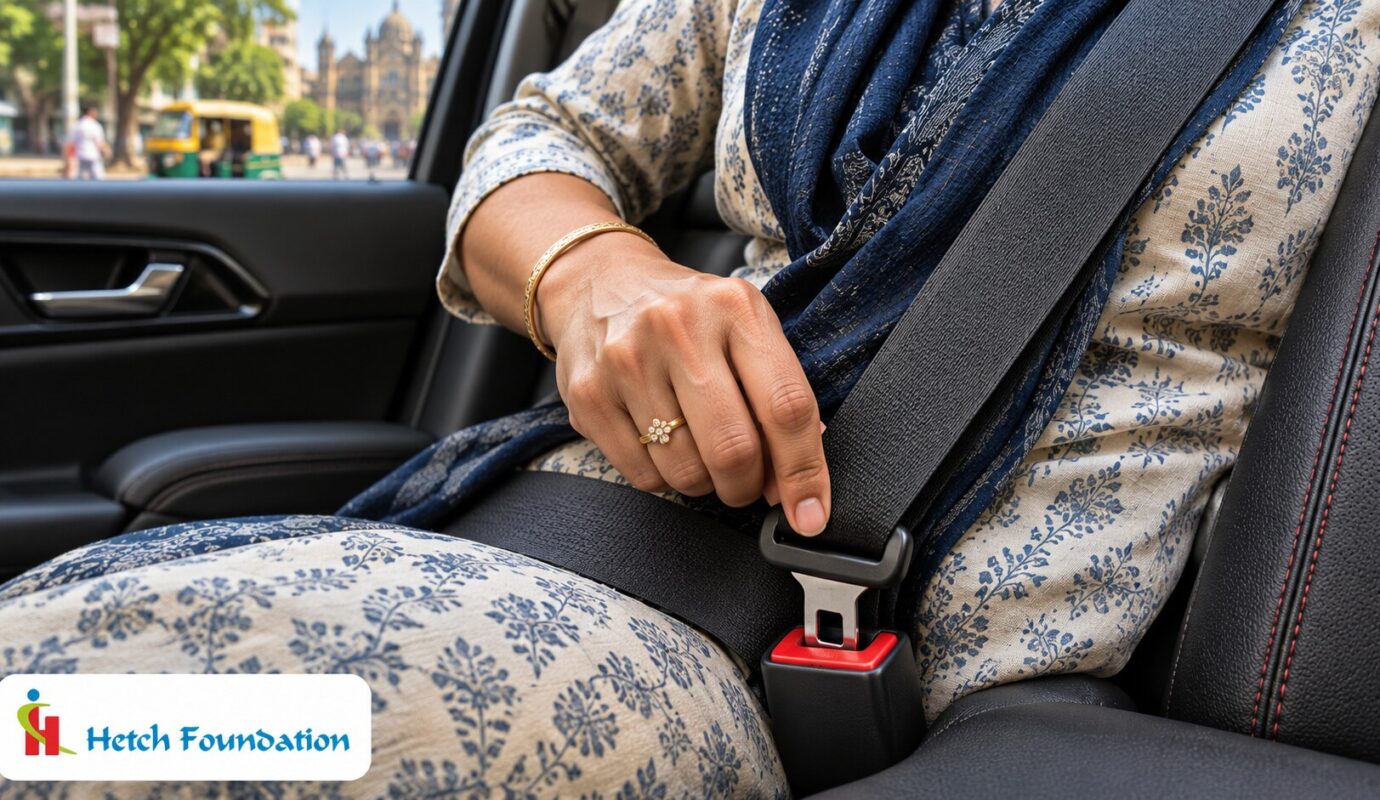
The Back-Seat Belt Counts Too
By Hetch Foundation
You get into a taxi outside the railway station with a bag at your feet. The driver checks the mirrors, the person beside you reads out the destination, and the vehicle is ready to leave. You look for the buckle and find that it has slipped down between the seat cushions. It would be easy to let the ride begin and sort it out later. Those few seconds while the car is still parked are the simplest time to ask for help.
A rear seat belt is designed to restrain the person sitting there. The front seat and the space between the rows cannot do that job. An unbelted person can move forward when the car slows abruptly, injuring themselves or others in the vehicle. The belt helps keep the person in place and spreads forces across stronger parts of the body when it is correctly fitted. That protection matters on a ride across the neighbourhood as well as on a long trip.
Why a sudden stop feels different in the back
As a vehicle moves, so does everyone inside it. If it slows suddenly, an unbelted passenger continues moving until something stops them. From the rear seat, that might be the seat in front, an interior panel or another person. A brief trip with a cautious driver can still involve sudden braking if someone steps into the road or another vehicle unexpectedly blocks the lane.
A belted passenger has a better chance of staying in the seating position the vehicle was designed to protect. The belt has to lie over the body in the intended places. An adult who puts the shoulder section under an arm or behind the back changes how the restraint can work. An adult who sits well forward and slouches under the lap section also changes its position. Start by sitting upright with your back against the seat and keep the belt routed as the vehicle maker intended.
A passenger can usually tell whether the belt is accessible, whether the tongue engages with the buckle and whether the strap feels correctly positioned. These are useful things to check before the doors close and traffic starts moving. An uncomfortable first few seconds can often be resolved by sitting more upright, choosing a more suitable seating position, or asking the driver to help find the correct buckle.
Check the belt before the car moves
Give each passenger their own designated seat and restraint. For an adult using a three-point belt, position the lap part low across the hips and the shoulder part across the chest and shoulder. Look for twists in the webbing and pull gently after fastening to check that the buckle has engaged. Keep the belt on for the whole journey, including while the vehicle slows down to approach your stop. Wait until the car has stopped in a safe place before unbuckling.
In the middle of the rear bench, several buckle receivers may be close together. Identify the one meant for your belt; some vehicles use a different arrangement for the middle seat. Ask the driver or consult the owner’s manual if the routing is unfamiliar. Passengers should never share a belt. Give a child the restraint appropriate to their size and the seating position, following both the restraint and vehicle instructions. An adult’s well-fitted belt does not show that the same belt fits a child.
If you find a belt trapped behind a cover, rolled into the back of a seat or hidden beneath luggage, take a moment to make it accessible before leaving. If it will not latch, is damaged or cannot be made usable, switch to a seating position with a working restraint if there is one for every passenger. Otherwise, arrange another ride. Repairing a faulty system is a job for an appropriately qualified service provider.
Make buckling in the rear ordinary
The person driving can give everyone a few seconds to get settled and ask whether the rear passengers are ready. A parent can ask older family members to do the same before taking the children out. The wording can be simple: “Everyone buckled?” This makes the pause part of departure, alongside checking the doors and mirrors. It also avoids singling someone out when the back seat is crowded and people are in a hurry.
If you take a taxi, make the check when you get in, while the car can still wait safely. Tell the driver if you cannot reach the buckle or if it will not close. At busy pickup points the driver may feel pressure to move on immediately. A clear request to wait a moment helps them understand what is happening. Consider raising an unusable belt with the operator after the trip is cancelled or completed safely, giving the seating position and what you observed.
A workplace or travel provider can remove pressure on passengers by expecting usable restraints in each designated seat and checking rear belts during routine vehicle inspections. Seat covers, cleaning and changes to seating layouts can affect access to buckles. Make it easy for drivers to report a problem and get it repaired, and give riders time to check their seat before departure. A reminder at pickup is most effective when the equipment is easy to reach and works.
Two questions people often ask
What if the belt rubs my neck?
Check your seating position and whether the vehicle provides a manufacturer-approved adjustment for that belt. An alternative seat may offer a better fit. Keep the shoulder section in its intended position across the chest and shoulder. If the issue is that a child is too small for the adult belt, use an appropriate child restraint or booster as specified for the child and vehicle.
What if there are more passengers than usable belts?
Use a vehicle or combination of vehicles with a suitable seat and restraint for every passenger. Plan for that before sending the car when you are arranging a group trip. Putting two people in one seating position or sharing one strap changes how the restraint works and leaves occupants without the protection intended for them.
The next time you sit in the back of a car, find your buckle as soon as you sit down. Fasten it, check that the webbing lies correctly and let the driver know when you are ready. If you are driving, give each person that same moment before setting off.