

The Scooter Check Before the First Ride
By Hetch Foundation
The scooter has been outside all night. You come down with your helmet in one hand and your keys in the other. There is enough time to get to work if you leave now. Before starting, you notice that the front tyre looks different from yesterday. It might be the way the scooter is leaning. It might be a slow puncture. The place to find out is beside the parked scooter, while you still have a choice about how to travel.
A pre-ride check gives you a chance to notice small changes before they matter in traffic. Build yours around the owner’s manual for your exact scooter. Models differ, including in the way brakes work, which lights come on automatically and what the display tells you. The aim of the first look is to spot anything that needs a closer check or service before you ride.
Start where the scooter meets the road
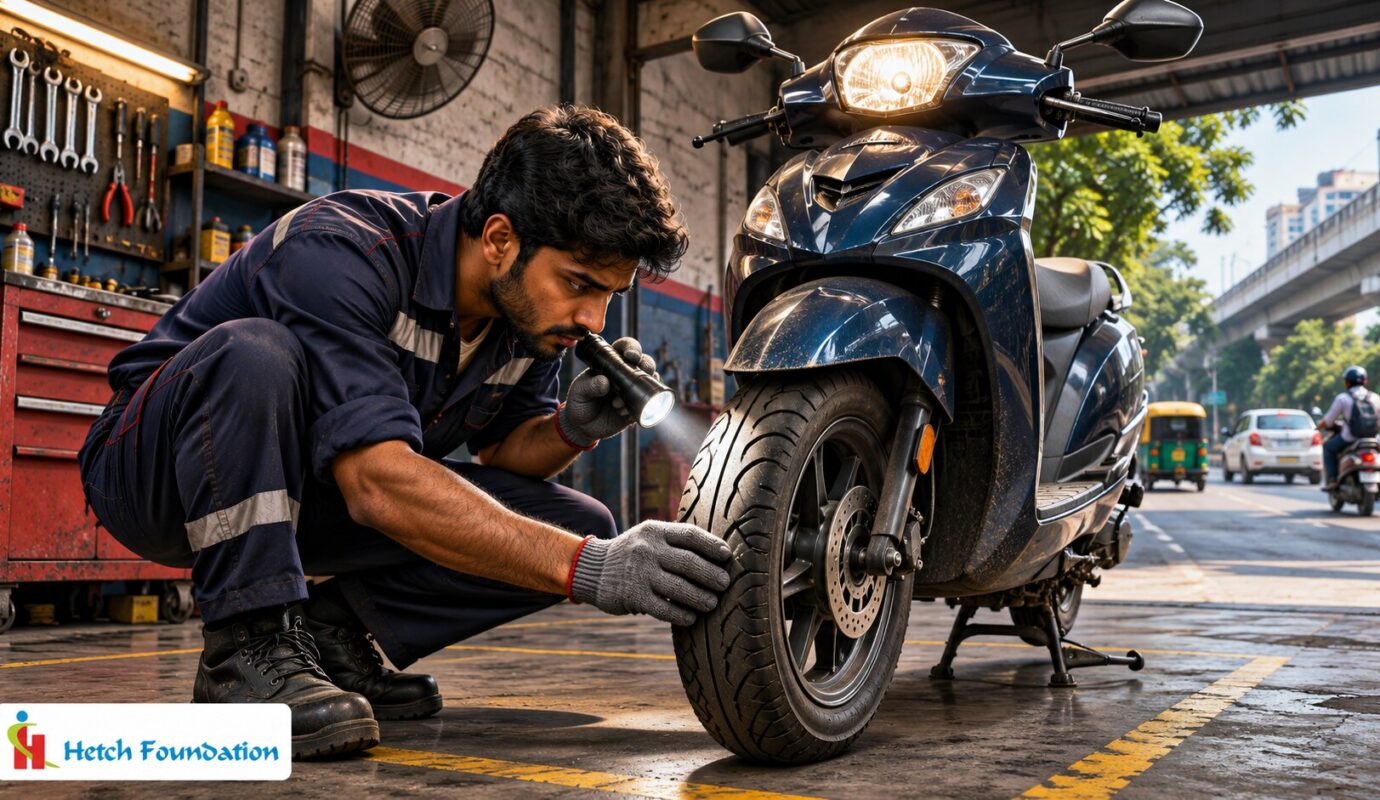
Look at both tyres in good light. Check the tread and the sidewalls you can see for cuts, bulges, pieces of debris and unusual wear. Compare the front and rear with what you normally see when the scooter is parked. A tyre can be below its recommended pressure without looking flat, so use a reliable gauge and the manufacturer’s cold-tyre pressures. Check the manual or the scooter’s information label for the specified load, especially when you carry a passenger or luggage.
Pressure that drops repeatedly deserves attention. Adding air may make the tyre look normal again while leaving the cause unresolved. Ask a qualified tyre shop or mechanic to inspect it before relying on it. If you see a bulge, serious cut or obvious loss of pressure, arrange an inspection or transport without riding on the damaged tyre. Parking in the shade and carrying a gauge make checking easier, but neither replaces following the maintenance schedule and replacing worn or damaged tyres as needed.
The ground can tell you something too. Look for a fresh wet patch under the scooter and note where it is. Water after rain or washing may explain it, while an unexplained leak or a fuel smell needs attention. If you suspect a fuel leak, keep the scooter switched off and seek professional help. A short ride to the mechanic is still a ride on a vehicle with an unresolved fault. Ask the shop about a safer way to get the scooter there.
Check the controls while you are still parked
Use the checks listed in your owner’s manual for both brake controls. Get to know how they normally feel on your scooter when it is parked. A lever that suddenly feels much softer, moves farther than usual or behaves differently after servicing is a reason to pause. When in doubt, ask a qualified mechanic to inspect the brakes. Riding around the block to see what happens puts the first real test in a place where someone may step or turn into your path.
Look at both mirrors from your normal riding position and set them before moving. A mirror can be bumped in a crowded parking area or moved when someone covers the scooter at night. Confirm that the handlebars and other controls feel normal as set out in the manual. If anything sticks, feels loose or is hard to operate, get the cause checked. If you share the scooter, tell the next rider what you noticed so they can make an informed decision while it is still parked.
Check the headlight, rear light, indicators and brake light according to the manual. If you cannot see the brake lamp from where you are standing, ask someone to look or use a reflection from a suitable surface while the scooter remains secure. Try the horn briefly where appropriate. Each light has a different job. A working headlight helps you see and be seen, while the brake light gives the person behind another cue that you are slowing. Check both before assuming the scooter is ready.
Notice what changed since the last ride
Suppose the scooter felt fine on the way home but struck a pothole near the end of the trip. In the morning, check the tyres and wheels with that event in mind. An unusual vibration, steering change or visible damage after an impact should be assessed by a mechanic. Record what you felt and when it began. That information can help the person inspecting it test the right thing first.
A scooter that has been unused for several weeks may need more attention than one ridden regularly. Check its manual for guidance on returning it to use. The same applies after a repair or a change in who normally rides it. If the display shows an unfamiliar warning that remains after the normal start-up sequence, look it up before setting off and contact the service provider if the manual calls for it. Avoid assuming that the warning can wait until the next scheduled service.
Make the check easy to repeat
Keep a tyre gauge where you can find it, and keep the manual or model information accessible. Use the same order each time: start at the wheels, then check controls, mirrors and lights. Put your helmet on and fasten it once the vehicle is ready. A shared scooter can have a simple way for riders to report problems, such as a note with the keys that says which light is faulty or when pressure was last checked. If the fault makes the scooter unsafe to ride, make that clear to everyone who might use it.
Families and employers who manage several scooters can keep service dates and fault reports together. Give riders a clear way to get an issue repaired and another travel option when a scooter is taken out of use. A good report records what changed, which part it affects and when the rider first noticed it. That is more useful to the next rider or mechanic than being told it just felt wrong.
Two questions people often ask
Can I use the same tyre pressure as a friend’s scooter?
Check your own model’s instructions and the relevant load. The correct values can differ by model and between front and rear tyres. Use the manufacturer’s guidance and measure when the tyres are cold as directed.
What should I say when I call the mechanic?
Describe the symptom and the circumstances rather than diagnosing it yourself. For example, explain that the rear tyre lost pressure twice this week or that a brake lever started moving farther than usual after an impact. Ask whether the scooter can be transported or inspected where it is if riding would be unsafe.
Before your next first ride of the day, give yourself time to look at both wheels, check the controls and confirm the lights. If something has changed, deal with it while the scooter is still parked.