

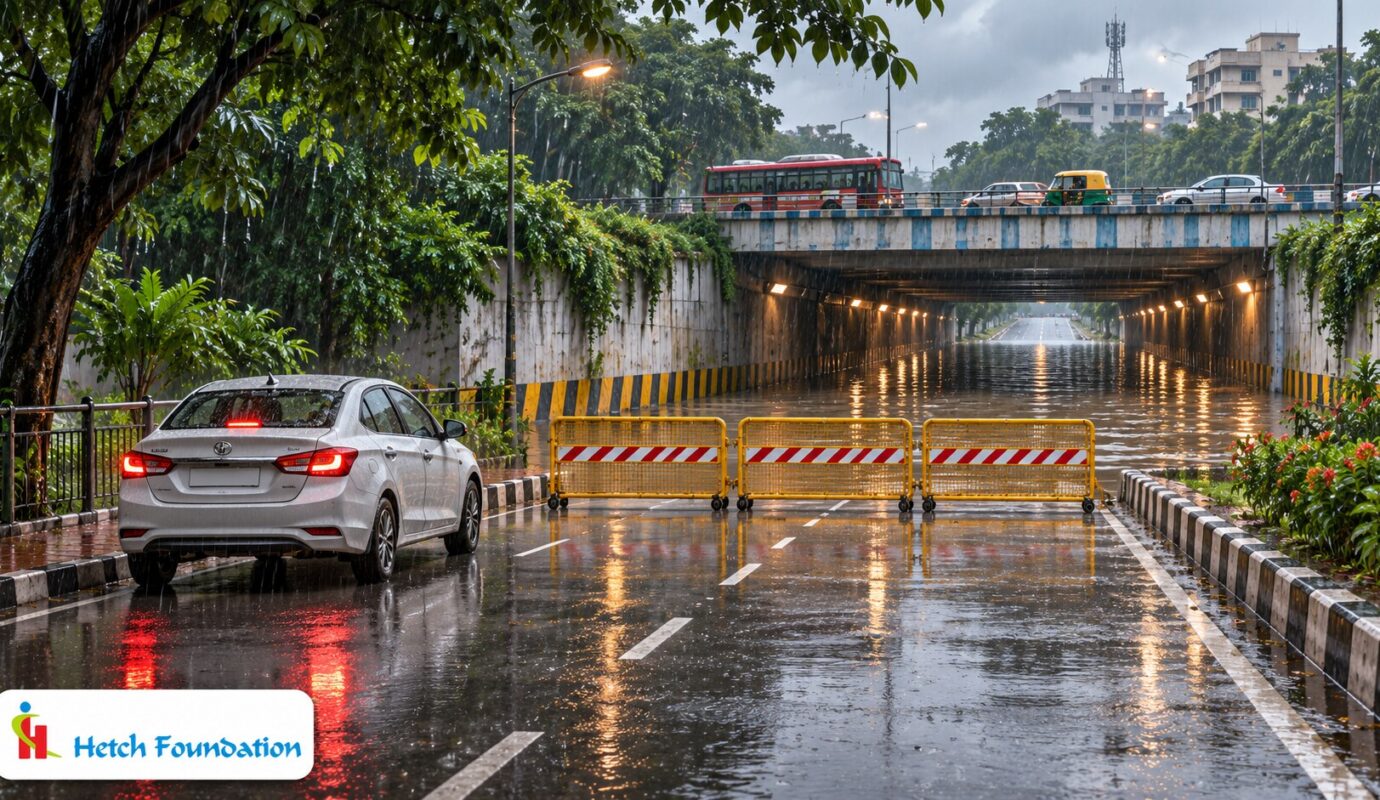
The Puddle That Hides the Road
By Hetch Foundation
After a heavy shower, a road you use every week disappears into a broad patch of water. A car on the far side seems to have made it through. Someone behind you is waiting, and the navigation app shows no problem. From the driver’s seat, the surface of the water gives you little information about what is underneath or how quickly it is changing. Stop well before the water in a safe place and look for an open, lawful alternative.
The problem is not confined to deep rivers or dramatic flooding. A flooded underpass, a low section of an urban road and a stream crossing can hide the edge of the carriageway. A drain cover may be missing, part of the road may be washed out, or water may be moving across the surface faster than it looks. A vehicle’s ground clearance does not tell you whether the road underneath is still usable.
Judge the route from dry ground
Recognise the places where water collects before it becomes difficult to turn back. Underpasses and dips are obvious examples. A road beside a channel or building site may lose drainage during heavy rain. If road markings disappear under water and you cannot establish the condition of the road, stay clear. A barricade or closure sign tells you to use another route. Leave it in place and follow the directions provided for the diversion.
Resist using another vehicle as a depth test. It may be on a different part of the road, and its passage can send water towards other people or vehicles. Conditions can change between the time it goes through and the time you arrive. A scooter, small car or larger vehicle also behaves differently when it loses grip or encounters a hole. Choose your route based on a road you can see and use safely.
A passenger can help find another approach while you keep attention on the road. If you are alone and need to check the map, park lawfully on dry ground away from moving traffic and low areas at risk of flooding. Look for official closures or local traffic updates. Navigation apps can lag when a road is closed quickly. On the ground, follow barricades, signs and authorised directions.
Decide what to do when traffic is behind you
If you spot water ahead, give drivers behind early warning by slowing smoothly when conditions allow. Keep space for the vehicle in front to stop. Look for a lawful turn or a place to pull off before reaching the flooded area. In a narrow approach, reversing or turning across traffic can create a new hazard. Use a suitable place and follow traffic control at the site. If you cannot identify a safe way out, stay clear of the water and seek local assistance from a safe position.
If the water is rising around you or someone is stranded, contact emergency services from the safest available position and describe the location, the water and the people affected. In India, 112 is the nationwide emergency number. Follow the operator’s instructions. Do not enter floodwater on foot to inspect the road or reach someone. The current, hidden debris and uneven ground can endanger a person on foot as well as someone in a vehicle.
If you are walking to a bus stop or home, the same decision applies. Seek a dry route and respect barriers. Standing water can hide a drop or a damaged electrical installation. A shallow-looking section can have flowing water where it crosses a side street or an open drain. If the alternative route is longer, allow time and explain the delay rather than trying to test the water with your feet.
Plan around rain before leaving
On routes you use often, identify low points and note an alternative that stays on higher ground when possible. If a trip is optional and heavy rain is expected, consider delaying it. If you need to travel, check local updates for known closures. Set your navigation before moving and share a realistic arrival time. Keep time available to change the route, especially on school pickup trips or journeys between shifts when other people are expecting you at a fixed hour.
A family can agree on an alternate meeting place beside a dry, accessible road so nobody has to cross a flooded approach to reach a pickup. A business can give staff flexibility to reroute or delay a trip when a road floods. Drivers need a clear way to report a closure without being pressed to try an uncertain route. People delivering orders by bicycle or scooter can be particularly exposed when schedules leave little time to turn back.
Report the closure from a safe place
A useful report gives the street, landmark, affected direction and time. Say whether the water covers all lanes, lies at an underpass or prevents access to a bus stop, school or clinic. Describe whether a barrier is already present. If a picture can be taken lawfully from dry ground and without moving into traffic, include a view of the approach. A report of immediate danger should go to emergency responders. A recurring drainage or road defect belongs with the local body or authority responsible for that stretch.
Authorities can assess whether better drainage, earlier closure, clearer advance signs or a usable diversion would reduce risk next time. A sign placed at the water’s edge may come too late for a driver to turn lawfully. An earlier warning can send people towards an alternative while they still have room. Think about pedestrians and public transport as part of the diversion, since drivers and people walking may have different usable options.
What if the water looks still?
The appearance of the surface does not reveal its depth or the condition of the road. Stay on dry ground and use an alternative route. If there is a closure, wait for the road authority to reopen it before treating it as usable.
What if the same road floods after every heavy shower?
Save a dry alternative and report the pattern, including which section floods and which nearby destinations are cut off. Describe what you have observed from a safe place and when. Repeated observations can help identify where an earlier warning or a more durable drainage fix is needed.
Before your next trip in heavy rain, choose a place on your route where you will turn back if water covers the road. It is easier to take an alternative when you have already agreed with yourself what will trigger the change.