

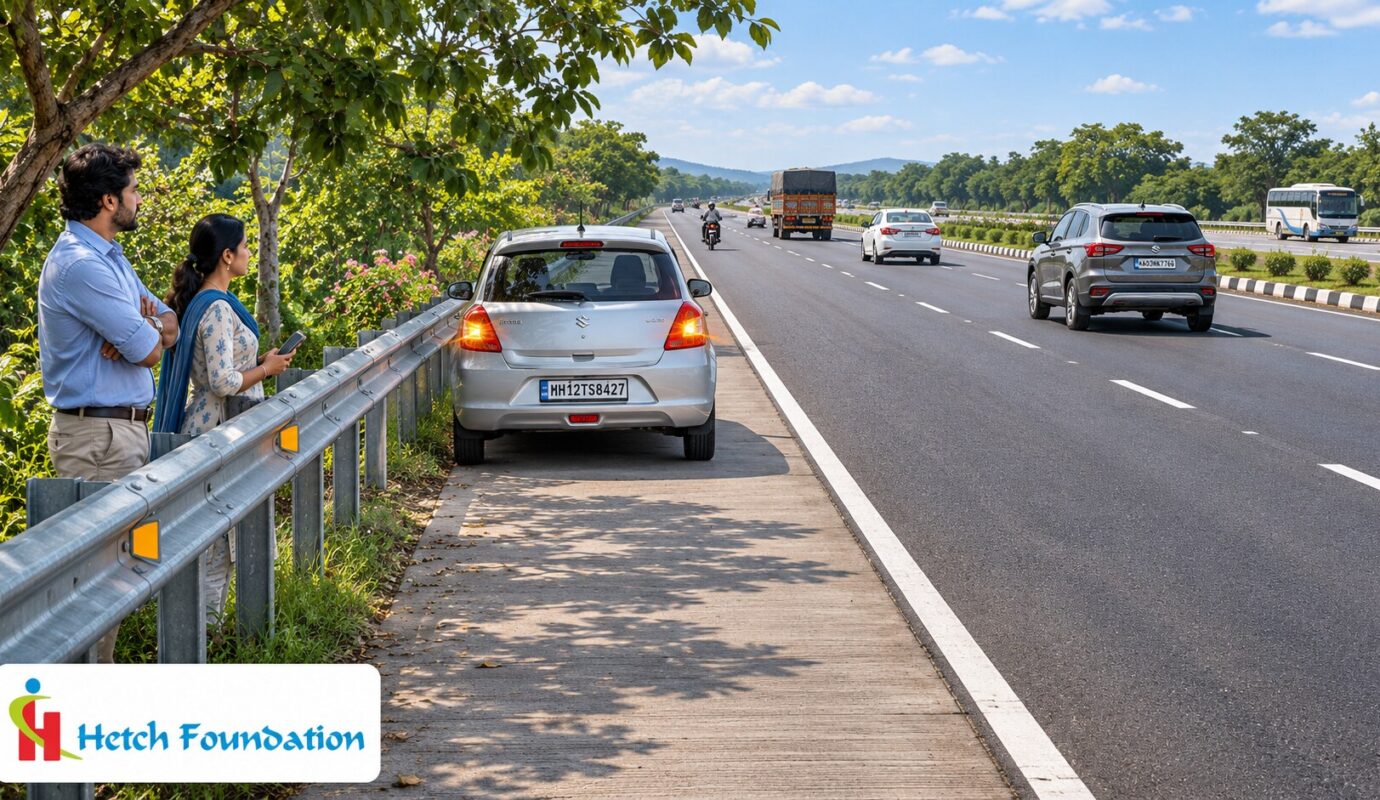
The Highway Breakdown Plan
By Hetch Foundation
The car loses power just as you pass a line of trucks. There is still enough momentum to move left, but the shoulder narrows beyond the next bridge. Someone in the back asks whether they should get out as soon as you stop. You will have to make that decision from the position where the car actually comes to rest. A clear plan makes it easier to judge what is safe in those first minutes.
A highway breakdown has two immediate problems. The vehicle needs attention, and everyone in or around it needs protection from passing traffic. Start with the second problem. If the vehicle can still be controlled, use the opportunity to reach a safer place. Once stopped, make it visible, decide where people can wait safely and give the person arranging help a usable location.
Move away from traffic if the vehicle still responds
If you notice a sudden loss of power, a serious warning or a change in steering or braking, concentrate on controlling the vehicle. Warn other road users as appropriate and move out of the traffic stream if you can do so safely. A designated refuge, a service area or another suitable place off the carriageway provides more separation from passing vehicles. If those options are out of reach, move as far left out of the live lane as conditions safely allow. A passenger can help look for an opening while the driver watches the road.
Once stopped, switch on the hazard warning lights if they work and secure the vehicle. At night or in poor visibility, use the appropriate vehicle lights as needed so approaching drivers can see the obstruction. Do not walk into moving traffic to place a warning device or retrieve belongings. On a high-speed highway the space beside or behind a disabled vehicle can be hazardous even if the nearest lane looks empty at first glance.
If the vehicle stops partly or wholly in a live lane, tell the emergency call handler that immediately. State whether traffic can get past and whether any occupants are unable to move. A breakdown in a protected stopping area may be a recovery job. A stranded vehicle in live traffic, a fire or an injury can require an urgent emergency response. Your first description helps the operator tell the difference.
Decide where everyone can wait
Look for an exit away from the traffic and a safe route to a place beyond the roadside barrier, where one is present. Check what is on the other side before moving. A barrier can also border a drop, a steep bank or another hazard. If it is safe to get out, leave from the side away from traffic where possible and guide everyone to the safe waiting area. Stay clear of the vehicle and avoid standing directly ahead of or behind it. Another vehicle could strike it or push it from its position.
If getting out would put someone into live traffic, or there is no safe place to reach, remain belted inside if staying in the vehicle is safer. Switch on hazards if available, call for emergency help and describe why you cannot leave safely. Follow the call handler’s instructions. A fire, smoke or another immediate threat may change the decision. Tell the operator what you can see and whether anyone needs assistance to move.
Consider each person separately. A person with a mobility limitation may need an accessible exit or more time than the rest of the group. A child may try to follow an adult back to the vehicle for a bag. If you get to a safe waiting area, keep the group there together and explain that belongings can wait. Avoid using your own body to direct or stop vehicles. Tell responders about risks so the people equipped to manage traffic can do their work.
Give a location that responders can use
In India, 112 is the nationwide emergency number. The National Highway helpline is 1033. For an immediate threat to life, injury, fire or an obstruction that creates serious danger, call emergency services. For assistance on a National Highway, give the highway operator or recovery service your position and what you need. A breakdown service may also be available through your insurer or vehicle manufacturer. Make those calls from the safest position you can reach.
Share the highway number if known, the direction of travel and a fixed landmark. Say whether you are past or before a toll plaza, bridge, exit or kilometre marker. A map pin can help, but also say which carriageway or service road you are on. Tell the operator where the vehicle is in relation to traffic, where the occupants are waiting and whether anyone needs help. Read back a confusing marker or landmark if asked and stay available for a callback.
Prepare for recovery before the next trip
Save the relevant emergency and assistance contacts. Know where the hazard switch is and how to use it without looking down for long. Review the owner’s manual for what to do if your particular vehicle loses power or needs towing. Ask family members or colleagues to share a basic plan for keeping the group together and giving a location if the driver is unable to call. When a vehicle has a recurring warning, get it checked before a high-speed trip.
Should I try to fix a tyre on the shoulder?
A roadside repair can leave you crouched beside fast traffic with little room to move. If you cannot work in a genuinely safe place off the carriageway, arrange recovery or qualified assistance. Let the operator know which side of the vehicle is affected and whether the position exposes anyone to traffic.
What if I cannot see a kilometre marker?
Give the most recent landmark and the direction you were travelling. Describe the road and surroundings as accurately as you can. Say whether the location is estimated, and use coordinates if available and requested. Avoid walking along the highway to get a better position for the call.
Before the next highway trip, check that someone other than the driver can locate the assistance numbers and describe the direction of travel. Those details are easiest to find when you are parked and everyone is calm.