

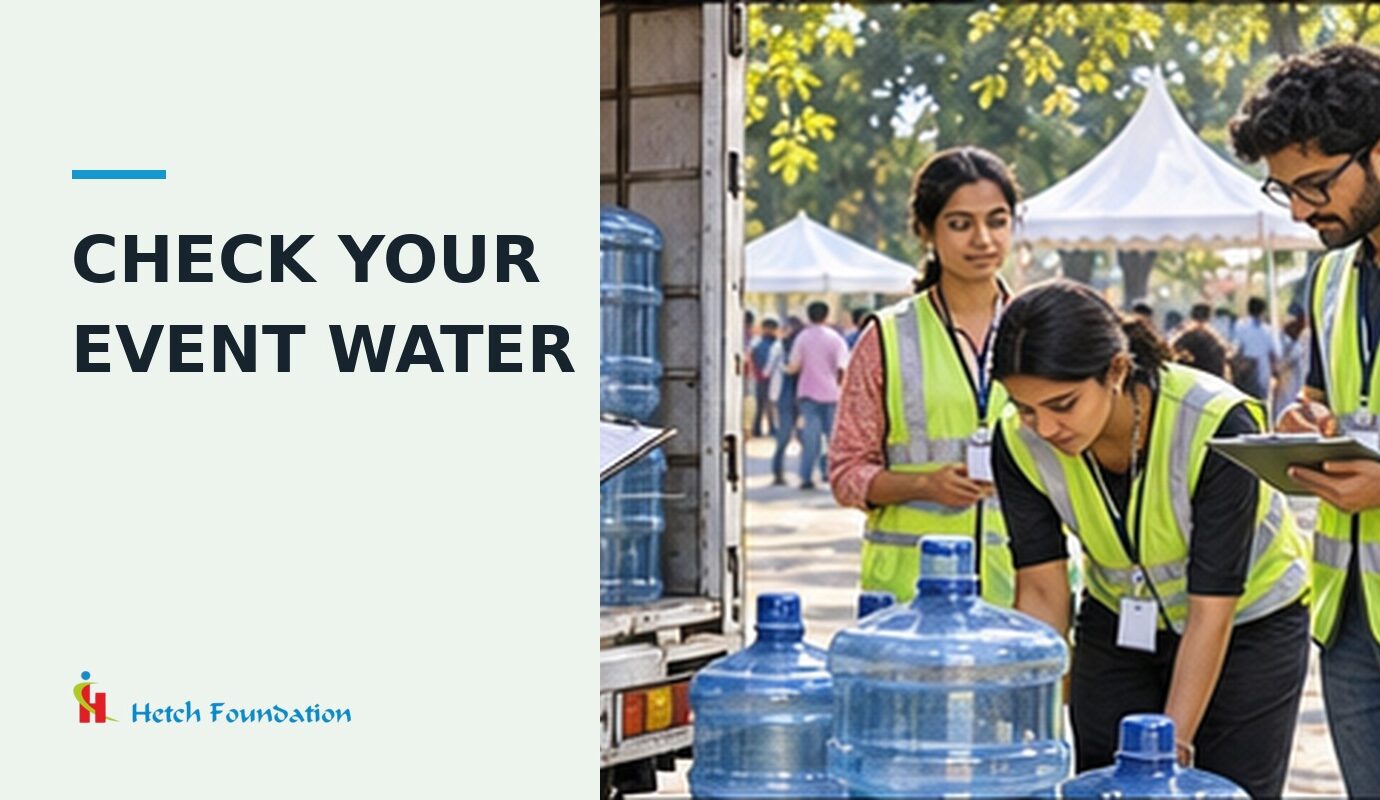
Who Checks the Water at Your Wedding, School Event or Food Drive?
At a wedding or a school function, drinking water may be booked by one person, received by another and served by a volunteer who was never told where it came from. Everyone assumes somebody else checked it. When several boxes arrive together, attention goes to counting them and clearing the passage. A well-run event gives one person responsibility for the drinking water from the moment the supplier is chosen until the last dispenser is taken away. Recent national attention to packaged water surveillance is a reminder that the people serving water need a reliable way to answer where it came from and how it was handled.
Give one person the authority to pause a delivery
Choose a lead and a backup before the event. Give both the supplier contact, delivery window, purchase details and the location where water should be received. Make it clear that the lead can set aside a questionable delivery and call for a replacement. Volunteers need to know whom to ask when they see a broken seal, an unmarked jar or a leaking box. Give the caterer, venue manager and volunteer team the same contact so a concern does not get passed from person to person.
At a school event, a member of staff can hold the delivery record while trained adults manage service. At a wedding, someone outside the immediate family may be better placed to handle deliveries while the ceremony is under way. At a food drive, appoint a volunteer for drinking water separately from the person directing the queue. Write down who will take over if the first person leaves early. An assigned duty works only if the person is available and knows what authority they have.
Decide what you are ordering before the supplier arrives
Specify whether you need individual sealed bottles, sealed bulk jars for drinking-water dispensers or another verified potable supply. Ask where the water is sourced, who packs it, what paperwork is available and who handles replacements. If the venue provides the water, ask for the same information. One phone call in advance can clarify whether the person delivering a jar represents the original supplier or another business working through it.
Estimate the number of guests and volunteers and consider how long they will be on site. Include areas such as registration, waiting lines and staff spaces. Plan a backup potable supply, especially at an outdoor venue or where access depends on one delivery vehicle. Ask what will happen if weather or traffic delays the delivery or demand is higher than expected. An organiser who has a backup can pause a questionable delivery without leaving guests wondering where to drink.
Receive the water in a place where it can be checked
Use a clean, reasonably well-lit receiving space. Match the delivery to the order and check the condition of the containers. Inspect closures and labels before jars are connected or bottles are moved to tables. Keep a receipt or delivery note and record representative batch details from packaged stock. If the delivery comes from more than one batch, note that fact. Set damaged or questionable stock aside and tell the people distributing it which stock is cleared for service.
If someone finds a problem after the water has been put out, work out which station or area received it. Keep the relevant package and purchase details and follow the official food safety reporting route if appropriate. Give the supplier a factual description, such as a closure already detached on an unopened jar. Visible cleanliness and an intact cap help assess the delivery, while testing and appropriate supplier controls answer questions about the actual water quality.
Protect the supply during service
Use drinking-water containers and equipment appropriate to their purpose. Keep the outlets and surrounding surfaces clean. Set dispensers up where a queue can form without blocking exits or forcing people to reach across dirty equipment. Follow the venue or competent food safety lead’s procedures for cleaning, storage and dispensing. Keep drinking water separate from supplies intended for cleaning or other uses. Labels should make that distinction clear to every volunteer, including someone who joins the shift later.
Check the service point partway through the event. A clean station can become difficult to keep clean as empty cups pile up or a leak leaves the floor wet. Assign a person to watch the water level, replace stock and deal with spills. Tell guests where to find another station if one is closed. Make an accessible option available or arrange assistance for anyone who cannot comfortably operate the dispenser. You can often address crowding by moving a second verified supply closer to the area of demand.
Know how to respond if several people raise a concern
Keep the same lead in charge of collecting what was reported, which station was involved and when people used it. If a particular supply is suspected, pause service from that supply and use the verified backup. Preserve relevant packages and records, and seek advice from the appropriate local food safety or public-health authority. Where somebody is unwell, encourage them to seek medical advice as appropriate. Keep health information private and limit event messages to the arrangements people need to know.
One habit to practise before the next event
Create a single-page water handover record. Include the lead, backup, verified source, arrival time, quantity, batch details where applicable, stations served and backup plan. Ask the lead and backup to explain what they would do if a jar arrived with a damaged closure. If either person is unsure who can arrange a replacement, resolve that question before guests arrive.
Frequently asked questions
Can we rely on the venue to handle everything?
Ask the venue to identify the person responsible, the source and the process for addressing concerns. Keep that contact in the event plan so volunteers know who can answer questions during service.
Do we need a copy of every bottle label?
Keep enough information to trace the stock. Record batch details for the different batches received and retain the purchase record. If a particular bottle raises concern, capture its own markings.
What if our event uses a permanent water point?
Ask the venue about its source, maintenance and verification. Inspect the service area before opening it and identify a verified fallback if the point is out of service.