

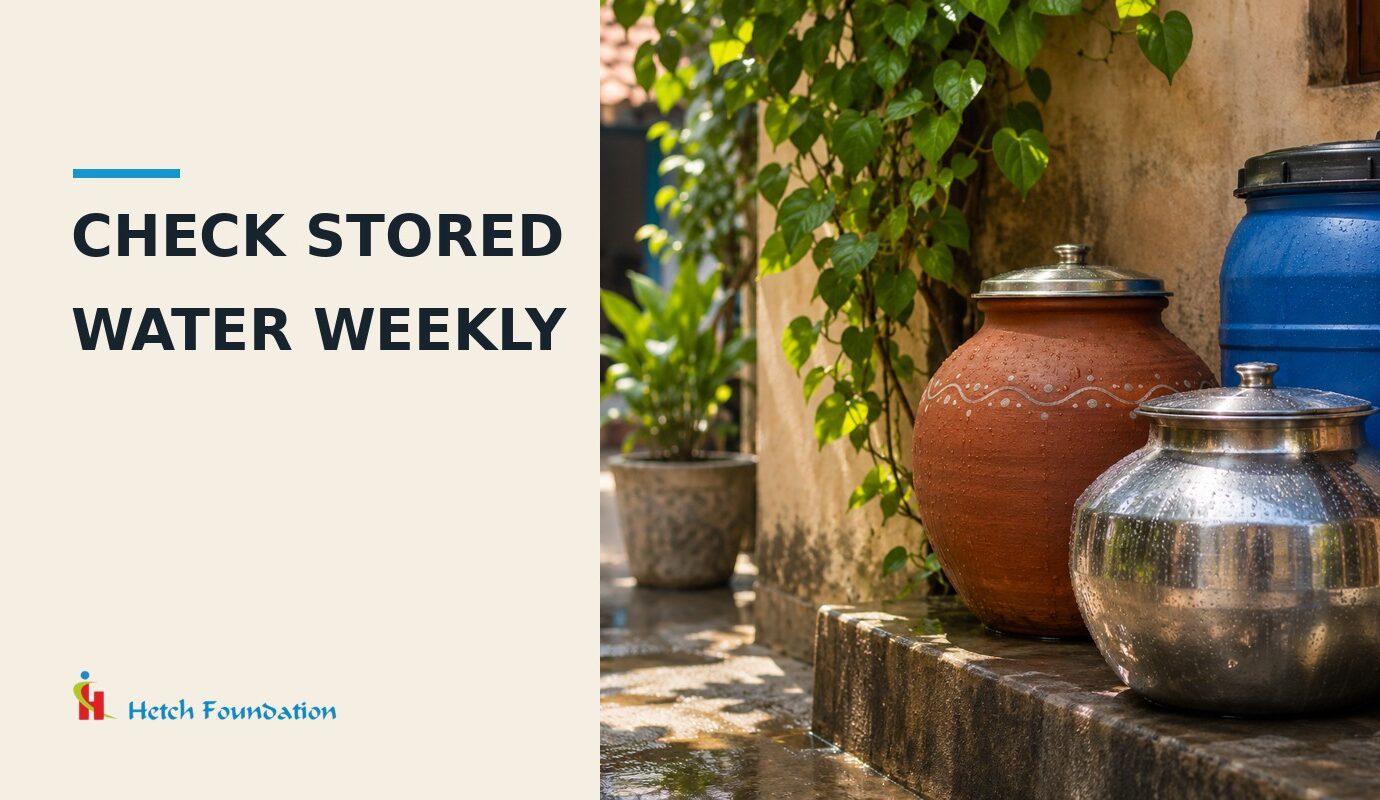
Stored Water Needs a Weekly Routine
When water arrives intermittently, a household may need to keep a reserve for drinking, cooking or other daily uses. Over time, a spare container can become part of the routine even if nobody remembers when it was last checked. A cover is left beside a bucket, a tap starts to leak, or a cup drops into the opening. A scheduled check helps protect stored drinking water and reduce opportunities for mosquitoes to breed. It can also make responsibilities clear in a building where several families or staff share the same supply.
Start with source and intended use
Identify which containers hold drinking water and which are for other purposes. Use a verified safe source for drinking and food preparation. If there is uncertainty about the supply or an official advisory, follow the local water provider or public-health authority’s instructions. A storage container cannot make an unsafe supply safe by itself. Save the provider’s contact and make sure the person who receives water knows how to check the source when a delivery or usual arrangement changes.
Use a suitable food-grade container for drinking water and avoid reusing anything that previously held hazardous substances. Choose one that closes securely and can be cleaned as directed. Consider how water is dispensed. A suitable spout or small covered opening can reduce the need to insert hands or utensils into the water. If the household must use a different system, ask local public-health staff how to handle it safely. Keep drinking-water containers identifiable and separate from containers used for cleaning or other purposes.
Make the everyday check easy
Place the container in an appropriate clean area and keep the lid closed. Check that the tap or spout is intact and that people do not have to rest cups, dirty utensils or cleaning materials around the opening. If the lid is loose, replace it or arrange a suitable alternative rather than depending on someone to remember to hold it in place. If children or guests use the container, show them where to take water and how to close it. Put the instructions where they actually collect water.
Look for leaks and pooled water around the storage area. A dripping tap may leave a small pool that easily goes unnoticed on the floor, on a tray or beside another container. Give the person who notices a defect a way to report it. Rotate old stock and refresh the supply under safe conditions, following local instructions. Do not treat a calendar reminder as a reason to keep using a supply that is compromised or suspected of being unsafe.
Use the weekly review to reduce mosquito breeding
Walk around the storage area and check any item that holds water. Cover usable water storage containers tightly so mosquitoes cannot get in. Empty and scrub smaller items that collect standing water when safe and appropriate, or turn them over or dispose of them if they are unused. Consider flowerpot saucers, unused buckets, containers outdoors and trays that have been left beneath a leak. Where storage is necessary, check the physical cover and look for damaged edges or gaps.
A large or shared tank may require a different maintenance process. Ask building management or a qualified provider how it is inspected and cleaned safely. Residents and caretakers should not enter or lean into a tank to check it. Follow the building’s approved procedure and ask how water service will be managed during maintenance. Write the details where the people using the system can find them, including who is responsible and how residents will receive an update if the normal supply is interrupted.
Decide who cleans, refills and follows up
In a small household, one person can check the cover, follow appropriate cleaning instructions and confirm that a verified safe supply is available. Where jobs are shared, name who does each one and how they will record the next check. Use instructions from the water authority or competent health guidance for cleaning and disinfection. Avoid improvising doses or mixing products. Check the container’s design and follow suitable handling instructions before returning it to service. Ensure that the replacement supply is available if a drinking-water container is temporarily out of use.
In a building, ask who keeps the source, maintenance and complaint records. If a concern affects only one outlet, date the observation and tell the responsible contact exactly where it occurred. If you suspect water is unsafe, stop using the affected supply for drinking and food preparation and seek advice from the responsible provider or public-health authority. Use a verified safe alternative while waiting for guidance. Communicate which supply is affected and what residents should do next, without representing an unverified fact as a test result.
Check what happens after a supply interruption. Ask whether the usual water source has returned and whether any official advice remains in force. Update the people using the container before it is refilled or put back into routine service.
One habit to practise this week
Pick a day and give someone responsibility for a short walk around the water storage area. Check the lid, dispensing point and standing water nearby. List any shared container that needs attention and agree who can arrange it. Link the check to an existing routine, such as a regular grocery day or building inspection. At the next review, confirm what was repaired and adjust any part of the routine that somebody could not carry out.
Frequently asked questions
Can I judge water safety by its appearance?
Appearance may show damage or visible contamination, while water safety also depends on the source, handling and any testing required. Use official advice when there is a concern.
What if our building has only one person who knows the tank schedule?
Record the schedule, contact and procedure where another authorised person can find them. Make sure the backup knows what they can safely do and what needs a qualified service.
Should all containers be cleaned on the same schedule?
Follow appropriate instructions for each container and use. Use the weekly check to spot standing water, damaged covers and overdue maintenance, and address a concern sooner when it appears.