

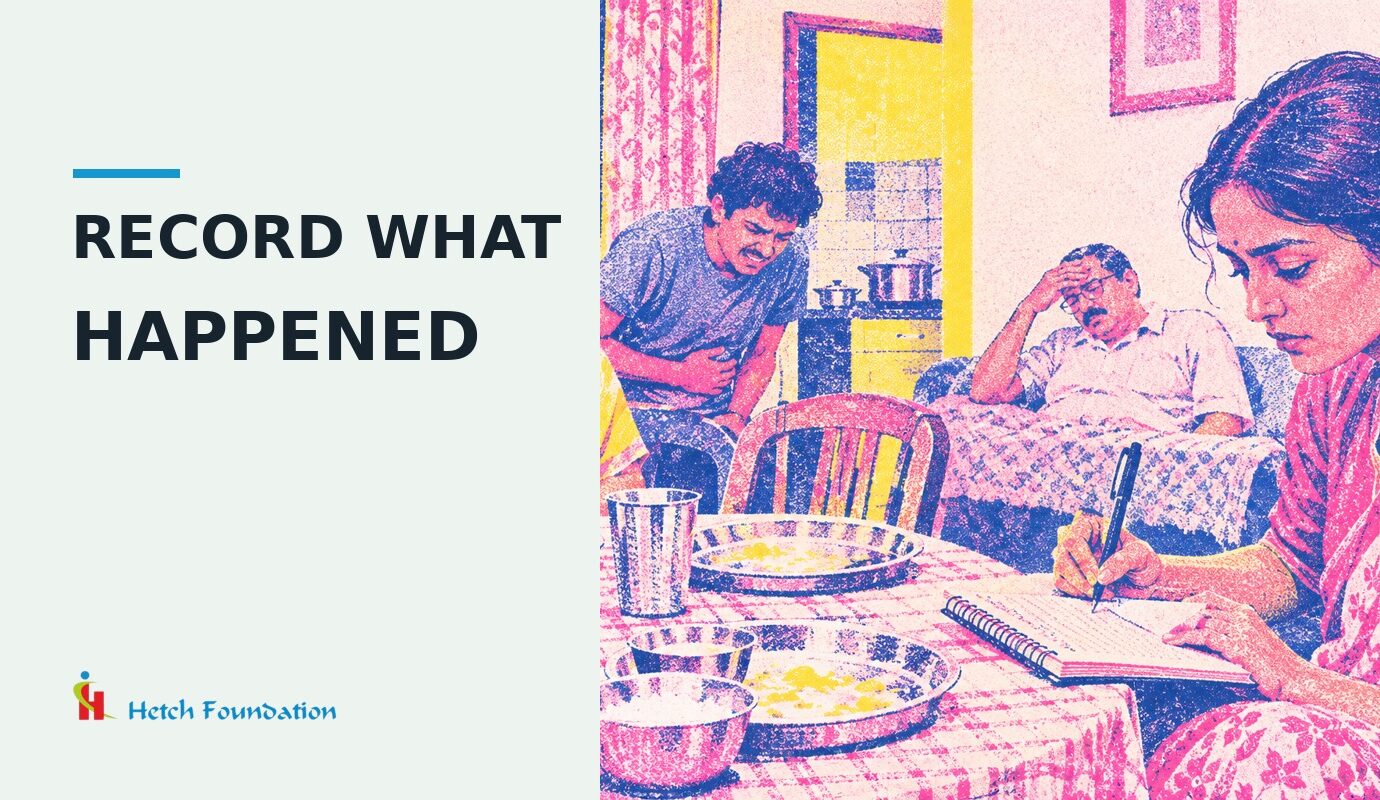
One Household, Several Stomach Illnesses. What Should You Record?
One person becomes unwell in the evening. By the next morning, somebody else in the household reports similar symptoms. Family members start comparing yesterday’s meals and checking the kitchen. The pattern can be important, but the useful first response is to look after the people affected and make a simple record. A clinician or public-health worker can use the timing and observations to ask better questions. The record also helps family members avoid giving different versions of what happened as they try to recall several busy days.
Start with the person who needs care
Check how each person is doing and arrange medical advice when needed. Seek prompt medical advice for bloody diarrhoea, signs of dehydration, persistent vomiting that prevents drinking, or other severe or concerning symptoms. Young children, older people and people with certain health conditions may need advice sooner. In an emergency, seek urgent help through the appropriate local service. Give the clinician the symptoms and timing you know and tell them that more than one person has become ill. Do not delay care to complete a timeline or collect a receipt.
Ask the clinician or local health service what to do to limit spread in the household. Use soap and clean running water for handwashing when available, particularly after using the toilet and before preparing food. Follow appropriate local instructions about food preparation, shared areas and care. Leave decisions about diagnosis, testing and medicines to a healthcare professional. A medicine that one person was prescribed may not be suitable for another person with similar symptoms.
Write one line for each person and one for each shared event
Use a notebook or a private digital record. For each affected person, write when symptoms began, which symptoms they report, how those symptoms changed and whether they have already spoken to a healthcare professional. Use approximate times where people are unsure. If a child first mentioned feeling ill after school, note the first observation rather than estimating an exact start time. Ask the person or their caregiver what they want shared before passing information to others, and keep the record available to people who need it for care.
Make a separate list of shared activities. Include meals prepared at home, takeaway orders, food eaten at a gathering, drinking-water sources, travel and other recent events a professional might ask about. Record who took part in each event if you know. Include what people ate separately as well as what they shared. An exposure might have happened before the last meal, and not every illness in the household necessarily has the same cause. Record evidence and uncertainty separately so a clinician can see the difference.
Keep records that would be hard to recover later
Save relevant receipts, order confirmations and packaging. Record batch details and dates from a package if they help identify the item. If the household recently switched water sources or used a different dispenser, record when it happened and who was likely to have used it. Note whether anyone else used the same supply and how the household learned about any other reports. Give dates wherever you can. At this stage, the aim is to make the information traceable if the people assessing it need to ask a follow-up question.
If you are worried about a particular food or drink still in use, set it aside so no one consumes it while the concern is assessed. Ask the appropriate authority or clinician whether they want any remaining package or other item retained, and how to handle it. Keep receipts and photos of relevant markings even if you cannot retain the item. Avoid collecting or handling specimens unless healthcare staff give you specific instructions through the appropriate service. Keep personal medical details out of any public post or group message.
Give a short summary when asking for advice
A useful summary starts with who is affected and how they are doing. You could say, “Three people in our household developed diarrhoea between Tuesday evening and Wednesday morning. One is a child. We shared two meals and used the same water supply. I have written down when symptoms started.” Then answer the questions the clinician or public-health worker asks. Report new cases or changing symptoms if the service asks to be updated. Keep the time and any reference number for the call. Where the pattern may involve a shared food business or water supply, ask which local food safety or public-health channel is appropriate.
If people outside the household are asking about the situation, share only the practical information they need. You can tell a relative that the household is seeking advice or that you will confirm whether a gathering can go ahead. A public accusation about the cause can spread faster than the facts. A neutral summary allows the people responsible for clinical assessment or investigation to consider other possibilities.
When one person gives updates, agree when they will check for further messages. Save the questions the clinician asked so relatives can collect the relevant information without repeating a full interview.
One habit for the next shared meal
Keep a purchase receipt or order reference until you no longer need it and agree where the household keeps important health contacts. If several people become ill, start a private timeline with the earliest onset, the main symptoms and common activities. Ask someone else to help with the notes if you are arranging care. Review the information before sending it so each entry makes clear whether it came from direct observation or from somebody else’s recollection.
Frequently asked questions
Can symptoms show which food caused the illness?
Symptoms and timing can guide questions, but they cannot usually identify a source on their own. Let clinicians or public-health staff make the assessment.
Do we need to wait until everybody answers?
Seek appropriate care and report relevant concerns with the information you have. Add missing details later through the agreed channel.
What if only one person ate a particular dish?
Record that clearly along with the other meals or exposures. It may help the assessment, but the record alone cannot decide the cause.