

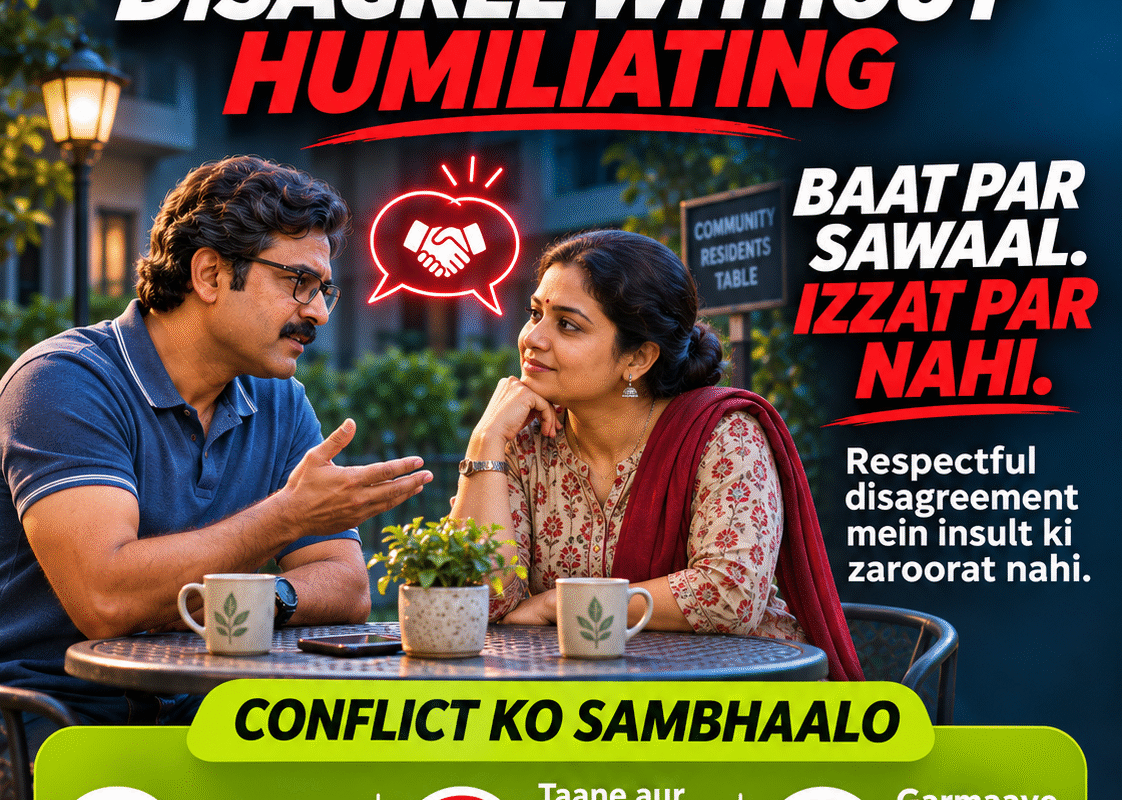
Disagree Without Humiliating: Challenge the Issue and Protect Dignity
A residents’ meeting starts with a parking problem and ends with someone being mocked. The original issue remains, and now trust has been damaged too. A disagreement can be firm without becoming a personal attack.
What you should know
Different opinions are part of ordinary relationships. Respect does not require pretending to agree. It means giving the other person room to explain, checking your understanding and keeping criticism focused on a specific issue.
When emotions rise, people may interrupt, assume motives or bring up unrelated mistakes. The NHS recommends taking time out when a discussion cannot stay calm and returning when everyone feels calmer. Acas guidance also emphasises preparation, listening and practical next steps in difficult conversations.
What you should do
- Describe the problem clearly. Replace “You never care” with an observation: “The entrance was blocked this morning, and people could not pass.” Explain the effect and ask what happened. Avoid insults, sarcasm and remarks about identity or background.
- Listen before answering. Let the person finish. Summarise their point and ask whether you understood it correctly. Separate what you know from what you have assumed. Understanding an explanation does not mean accepting harmful behaviour.
- Agree on a next step or pause. Suggest a practical action and when to review it. If voices rise, propose a break and a clear time to return. If there are threats or violence, prioritise safety and seek appropriate support rather than continuing the argument.
One habit to practise today
Before your next difficult conversation, write down one fact, its effect and one request. For example: “The music continued after midnight. I could not sleep. Could we agree on a quieter volume after 10?” Keep the request specific and realistic.
Quick questions
Does being respectful mean staying silent?
No. You can reject a proposal, correct misinformation or set a boundary clearly. Focus on the claim or behaviour instead of humiliating the person.
What if we still disagree?
Record what was agreed, identify what remains unresolved and consider a neutral mediator or appropriate complaint process. Every disagreement does not need an immediate winner.
Sources and further reading
Part of Hetch Foundation’s “Kaash Mujhe Pehle Pata Hota!” public-awareness campaign. Learn. Act. Share.