

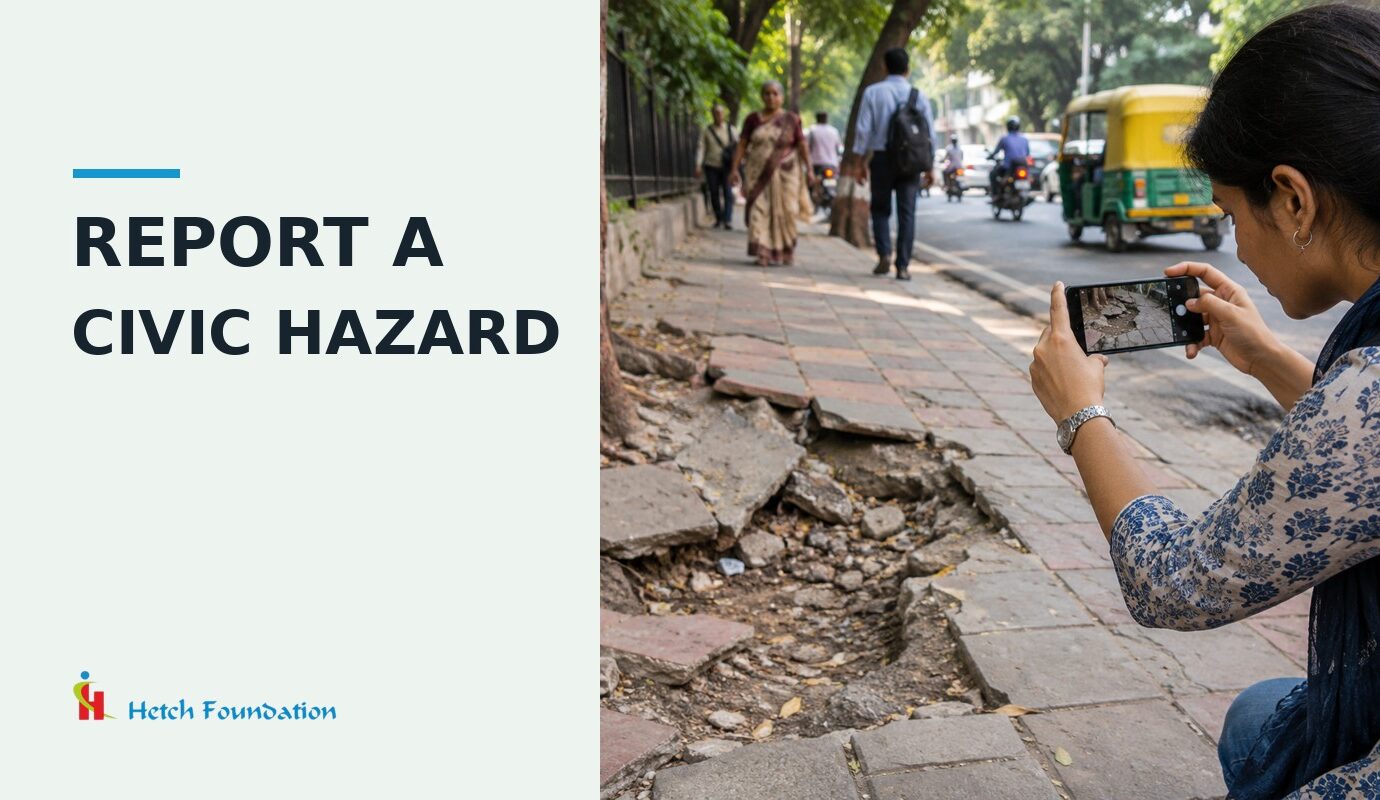
From Complaint to Repair: How to Report a Civic Hazard Clearly
A broken stretch of pavement may be obvious to people who walk past it every day. To a municipal officer receiving a report, “the road outside our building is dangerous” may describe several places and several different problems. A useful report gives the recipient a clear location, an observable problem and a practical request. It makes it easier to send a person to the right place, understand the effects on people who use the route and follow up if the repair is still pending. This approach works for problems such as a damaged footpath, an inaccessible public entrance or an obstructed crossing.
Observe from a safe place
Describe what you can see without stepping into traffic, climbing over a barrier or entering a work area. Start with a fact. A pavement slab may be missing. A vehicle may block the only kerb ramp during a particular period. A pedestrian crossing may become difficult to reach when a construction fence changes the approach. Avoid assuming the cause if you do not know it. Say whether the condition was present once, or whether you have observed it on several days at a similar time.
If an immediate emergency is occurring, use the appropriate emergency channel from safety. In India, 112 is the national emergency number. Ordinary repair requests can go through the civic or site channel appropriate to the location. Taking photos or finding the name of the responsible department should never delay urgent assistance. If you are safe and there is no immediate emergency, record details that will help a repair team identify the issue.
Give the location as somebody arriving from outside would find it
Write the street, nearest intersection, visible landmark and direction of approach. Add the side of the street, a gate name or the building entrance if it matters. A map pin can help where the correct spot is hard to describe, but include words that still work when the message is forwarded or a map cannot be opened. Use a public landmark where possible. Avoid posting somebody’s private address in a public group when a junction or service entrance is enough.
Take a useful photo only when you can do so safely. A wide photo can show the location in context. A close photo can show the specific defect. Consider whether you need both. Avoid including faces, number plates or private information when the layout conveys the problem. Add the date and time. If the location is regularly obstructed only during an arrival window or evening service period, say when an officer is most likely to see it.
Describe what the hazard makes people do
A report is more useful when it explains why the location matters. A narrow passage may force people into traffic, make it hard to use a wheelchair or create a queue that blocks another entrance. State what you actually observed. For example, “At 8:15 a.m. on two school days, pedestrians walked into the carriageway beside the west gate because the hoarding blocked the full footpath.” The same location may have an additional problem for somebody with low vision or limited mobility. Ask users what they experienced if they want to share it.
Keep the description short and avoid turning a visit into a confrontation. If somebody is carrying out work, use the reporting channel and give the relevant site information without approaching hazardous equipment. If the problem affects a facility other than the public street, find the appropriate manager or operator and explain how the barrier affects access to the service. Where work or a repair needs a competent assessment, ask for one and describe the outcome you want people to be able to use.
Put one specific request in the first report
You might ask the authority to inspect a broken surface and make the route passable, review a missing crossing or address a blocked access point. Identify the location where action would help. If there is a temporary arrangement, ask how it will be communicated to users until the longer-term work is completed. Use the official local reporting channel if available and keep the acknowledgement or case reference. Save what you sent, including the time and any photographs or map details that were attached.
For example, you could write: “Please inspect the footpath on the north side of Market Road, outside the public library entrance, before the next junction. On Tuesday at 4 p.m. a missing section forced people onto the road. This is the main route to the entrance. Please confirm that it has been logged and tell me whom to contact for an update.” Adapt the example to what you can accurately describe. The request should make sense even if the person reading it has never visited the location.
Follow the issue through
Use the same reference when asking for an update so the recipient can see the history. If a different authority is responsible, ask for the correct contact or whether the report can be transferred. Check what action was taken once it is safe to do so. Where a temporary fix has moved the difficulty elsewhere, describe the new observation and when it occurs. A closed ticket can be checked against whether people can actually use the route. Give the responsible staff useful feedback about the result.
One habit for your next walk
Pick one public route you already use. If a problem needs reporting, capture the street, landmark, date, direct observation and one requested action. Send it through the appropriate channel and keep the acknowledgement. If a community group is coordinating reports, ask one person to track updates and keep records private where they include personal details.
Frequently asked questions
What if I cannot take a photo?
Give the precise location and a description from safety. Note when the problem is easiest to verify. A clear written account can help an officer find it.
Do several people need to make separate reports?
A shared report can be useful when it combines distinct observations. Follow the authority’s preferred process and refer to an existing case number when appropriate.
What if the authority marks the issue complete but people still cannot pass?
Record what you observed during normal use, refer to the earlier case and ask for a review. Explain where the remaining barrier affects the route and what people have to do because of it.