

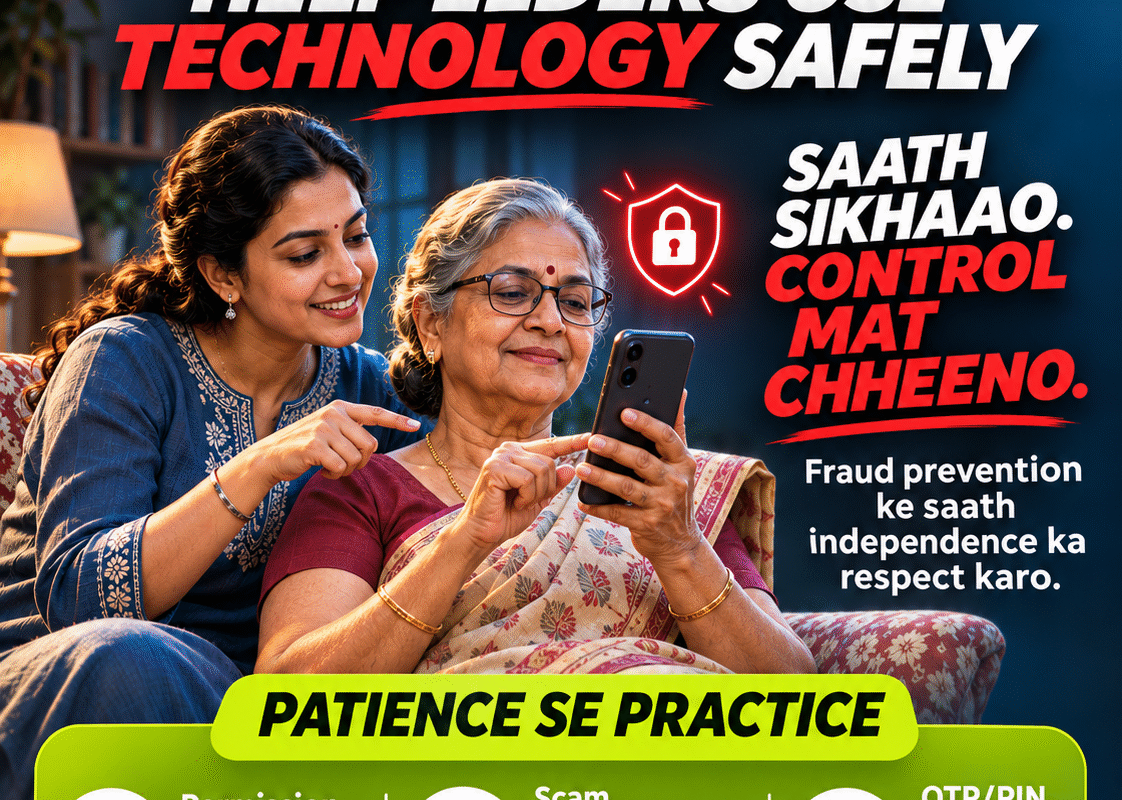
Help Elders Use Technology Safely: Build Confidence Without Taking Control
An older relative asks for help with a payment app. Taking the phone and doing everything may finish the task quickly, but it leaves the next confusing message just as difficult. Patient teaching can build a safer routine and preserve independence.
What you should know
Anyone can encounter a convincing scam. Age alone does not tell you what someone understands. Ask which tasks the person wants to learn and what makes them uncomfortable. The eSafety Commissioner’s learning resources emphasise building digital skills and confidence at the learner’s pace.
RBI warns against sharing passwords, PINs and OTPs, including in response to urgent KYC messages. Helping someone learn should not require collecting their confidential credentials. Practise navigation while they enter private information themselves.
What you should do
- Teach one useful task. Let the person hold their device and complete the steps. Explain unfamiliar words, allow time and write a short checklist in their preferred language. Adjust text size and other accessibility options with their agreement.
- Build a pause-and-check rule. Practise ending an unexpected call and contacting the bank through a saved official number. Explain that a threatening deadline or familiar-looking logo is not proof of authenticity. Avoid unknown links and unsolicited requests to install apps.
- Plan help without blame. Agree whom they can contact when unsure. If financial cyber fraud occurs, contact the bank immediately and report through 1930 or cybercrime.gov.in. Keep relevant messages and transaction details. Prompt reporting helps the response but does not guarantee recovery.
One habit to practise today
Save one official customer-support number together, then practise finding it without using a number supplied by an unexpected caller. Ask the learner to explain the verification step back to you.
Quick questions
Should I keep their PIN so I can help faster?
Do not make sharing confidential credentials the default. Use the bank’s authorised support or accessibility arrangements where needed.
What if they make a mistake?
Respond calmly. Shame can discourage someone from reporting a problem when quick action matters.
Sources and further reading
Part of Hetch Foundation’s “Kaash Mujhe Pehle Pata Hota!” public-awareness campaign. Learn. Act. Share.