

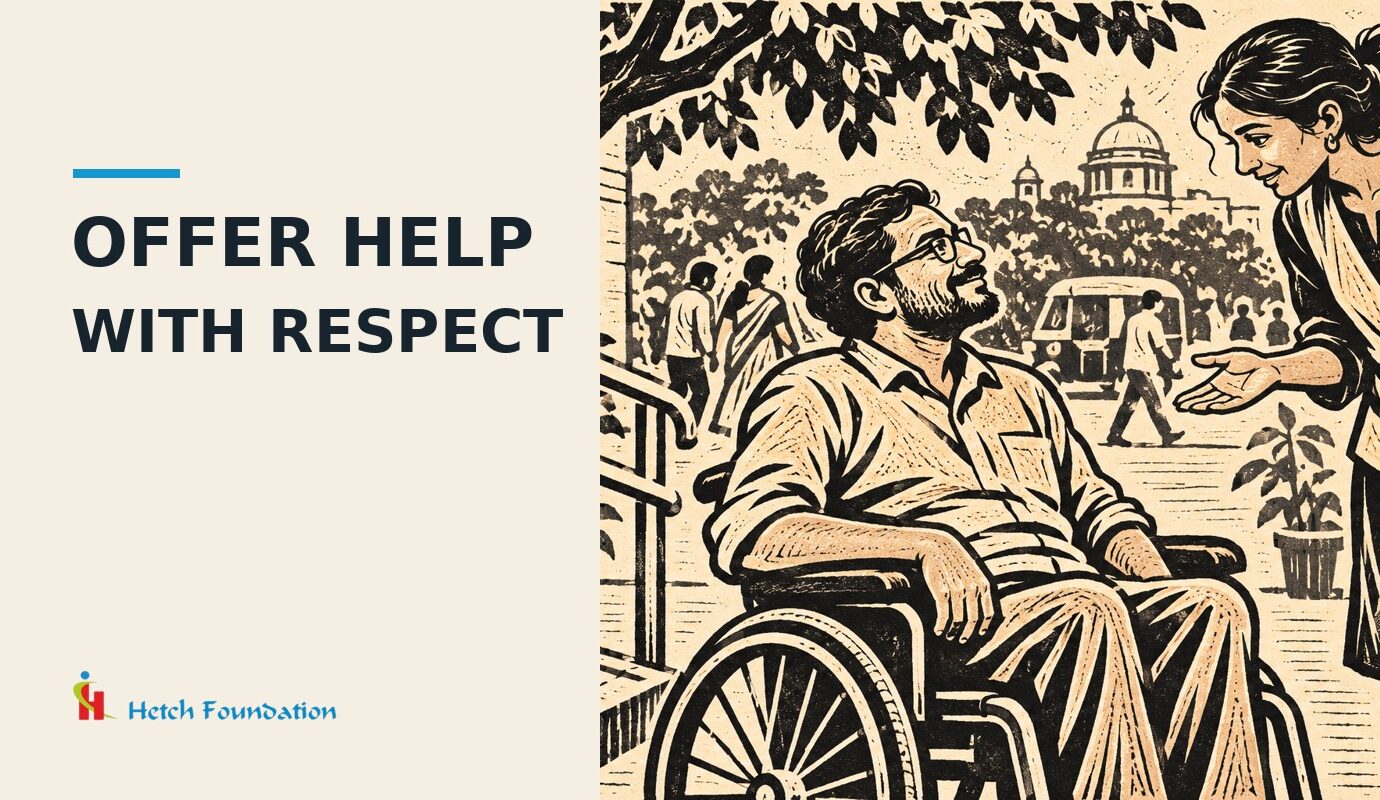
How to Offer Help Without Taking Over
At a registration desk, a volunteer notices a visitor navigating around a crowded table. The volunteer can see that the layout is awkward and steps forward to help. Before touching the visitor’s belongings or moving a chair, they ask, “Would you like me to clear a little space?” The visitor says yes and points to the chair that is in the way. That exchange takes a few seconds. It solves the immediate problem and leaves the visitor in charge of what happens next. The same approach works when a person needs information, directions or time to complete an ordinary task.
Ask before you act
Begin with a direct, specific offer. “Would you like me to read that notice?” is often easier to answer than a broad question about whether someone needs help. Give the person time to consider the offer and respond in their preferred way. If they decline, allow them to continue. You can tell them where to find you if they change their mind. Some people may appreciate help while others may have a method already in mind. The same person may want assistance in one situation and prefer to do a similar task independently elsewhere.
Speak directly to the person, including when a friend, family member or support worker is present. If you are unsure whether the person wants a companion to speak for them in a particular conversation, ask. A companion may be there for a reason unrelated to your question. Where someone uses a communication device or another method, wait for the response. Ask how you can make the conversation easier. A rushed exchange can make a person repeat what they have already told you or make it difficult for them to correct a misunderstanding.
Offer to address the barrier first
Look at the environment as well as the immediate task. A misplaced chair, a confusing sign or a counter where paperwork is out of reach may be something the venue can fix. Offer to remove the obstruction when it is safe and appropriate, or get the person responsible for the area. If there is an alternative entrance, explain where it is and check it is available before sending the person there. A useful offer gives the visitor another practical choice and reduces the chance that the same problem will affect the next person.
Keep the explanation ordinary. For example, “The seating here is tight. I can ask the venue team to move this table if you’d like.” If there are two suitable options, describe their relevant differences and let the person choose. If a suggestion creates a new problem, listen to the answer and ask what would work better. The person may want to continue with friends, avoid a noisy area or reach a place where it is easier to communicate. Those details matter even if an alternative looks convenient to the volunteer.
Let the person direct any practical assistance
If the person asks you to help, listen to what they want you to do and where they want you to stop. Do not grab a cane, wheelchair, bag or other equipment without permission. If a visitor asks you to guide them, ask them to explain how they prefer to be guided. Describe features of the route that are useful, such as a door opening, a change in level or a queue ahead, as appropriate. Leave technical or physical assistance beyond your training to suitable staff. If you cannot safely do what is requested, say so and help find someone who can.
Check that the agreed assistance is working without taking over the next task. A person who asks you to carry a form may want to speak to the officer or sign the document themselves. A person who asks you to find a seat may want to choose which part of the room to use. Finish the action they asked for, then give them space. If someone arrives to take over your shift, ask the person whether they want you to pass on the arrangement and share only the practical details the next volunteer needs.
Protect privacy when help involves sensitive information
At an event, people may need to ask about a restroom, the waiting system or a service without discussing a personal issue in public. Offer a suitable place to speak if one is available. Keep details of an access request out of general volunteer groups. A team can often arrange the practical support with minimal personal information. If a photo or video is being taken, check the person’s permission separately. Needing assistance does not imply agreement to appear in campaign material.
In an emergency, follow official directions and the venue’s approved plan. If possible, ask the person about their needs and explain what help is available. Tell responders what they need to provide assistance. In everyday situations, avoid turning a request for assistance into an announcement. Dignity often depends on the ability to use a service without an audience and on being able to decide what information other people receive.
One habit for the next volunteer shift
Practise three questions with another volunteer: “Would you like help?”, “What would work for you?”, and “Is there anything else you want me to do?” Try them in a crowded desk scenario and a quiet one. Ask the volunteer to accept one offer, change another and decline the third. Think about where the venue could make the task easier without depending on a volunteer’s intervention. Pass that specific observation to the person responsible for the space.
Frequently asked questions
What if someone says no?
Respect the answer and give them room to continue. If appropriate, say where they can find you later.
What if I do not understand the request?
Ask the person to repeat it or explain it differently. Be patient and check back in your own words. Ask whether another communication method would help if the conversation is difficult.
Is it helpful to ask about someone’s disability?
Start with the assistance they want to receive. In most everyday situations, knowing the expected action lets you help without asking for medical information. If specialised assistance is needed, ask the responsible service to explain what information is relevant.