

Online Abuse Against Women: Support Her Voice and Safety
Women’s Empowerment Series · Hetch Foundation
Online abuse against women can restrict expression, work, and participation. Digital safety requires accountable platforms and respectful behaviour, alongside practical support that keeps the affected woman in control of her choices.
An everyday situation
Consider this illustrative example: A woman shares her professional opinion online and receives repeated threatening messages. A friend advises deleting her account. She may choose to step away, but losing her public voice should not be treated as the only answer to someone else’s abusive behaviour.
The problem: harassment pushes women out
Abuse can include persistent unwanted contact, stalking, impersonation, exposure of private information, or non-consensual image-sharing. These behaviours differ from disagreement or fair criticism. Their effects can extend beyond a screen into personal relationships, employment, and physical safety.
The cause: normalised abuse and weak accountability
Misogynistic attitudes, group harassment, and poor responses to reports can enable harm. Friends or bystanders may amplify abuse by forwarding material “for awareness.” Technology also allows content to spread quickly, while the person targeted carries the burden of seeking its removal.
The impact: lost privacy and participation
Women may reduce their online activity, miss professional opportunities, or spend significant time responding to abuse. Some threats require urgent attention. No one should have to prove they were a perfect internet user to deserve support and protection.
Evidence in brief
UN Women’s guidance describes technology-facilitated violence as harm committed, assisted, or amplified through digital tools. It recognises that online and offline harms can be connected and calls for cooperation, platform accountability, prevention, and support. This is a global framework, not a claim that every online dispute is abuse. Read UN Women’s digital abuse FAQ.
What needs to change
- Friends and communities: Listen without blame. Ask what support is wanted; do not share screenshots publicly or contact an alleged abuser without consent.
- Platforms: Provide usable reporting, responsive review, and clear ways to challenge harmful content or impersonation.
- People targeted: Where safe, consider keeping relevant links, dates, and messages privately before blocking or reporting. Choose steps that fit personal circumstances; preserving evidence must not come before immediate safety.
- Institutions and bystanders: Challenge harassment and avoid amplifying it. Workplaces and community organisations need clear support procedures when abuse affects participation.
Key notes to save
- Barrier: Harassment, privacy violations, and weak responses.
- Change needed: Accountability and support that respects the affected person’s decisions.
- Who can act: Platforms, institutions, bystanders, and trusted supporters.
Important questions and answers
Should a woman always delete her account?
That decision belongs to her. Blocking, reporting, privacy changes, a temporary break, or support may suit different situations. None of these choices makes her responsible for the abuse.
Should friends repost abusive material to expose it?
Reposting can spread the harm and reveal more private information. Ask permission before sharing anything and avoid circulating intimate material. Private, consent-based support is often more useful than public attention.
What if a message includes a credible threat?
Prioritise immediate safety and seek appropriate local emergency or specialist support when needed. Avoid direct confrontation that could increase risk. A trusted person can help assess practical next steps without taking over.
One action this week
Review one platform’s privacy and reporting options using its official help pages. If supporting someone, ask what assistance she wants. After a week, ask: Do I know how to seek help without spreading the abusive content?
Read our companion guide to digital inclusion for women.
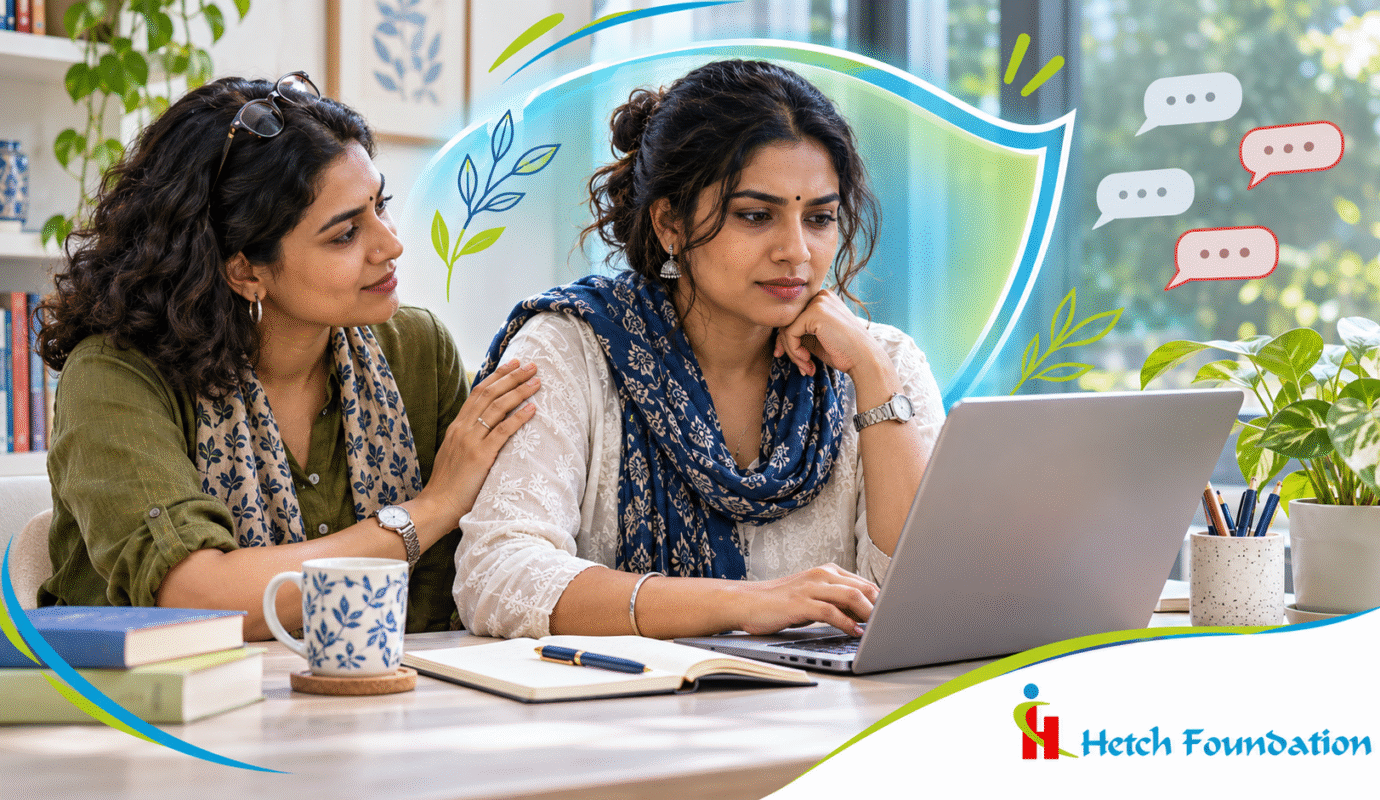
Featured image: AI-generated editorial illustration.