

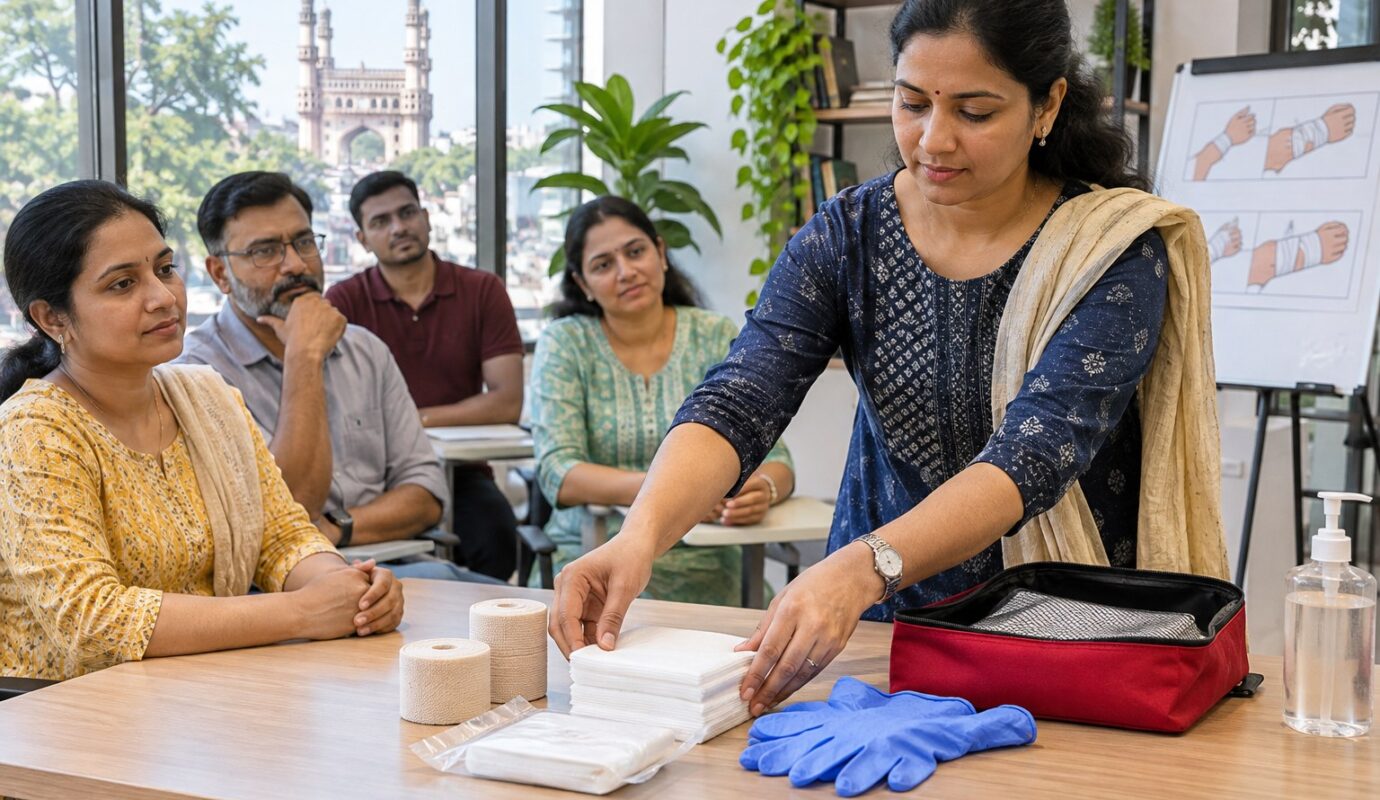
Severe Bleeding: Prepare to Give Effective First Aid
Chapter 11 includes visible bleeding among the urgent problems a bystander may meet. Severe bleeding needs an emergency call and immediate appropriate care. Ask another person to call 112 while you help, or use speakerphone and follow the operator.
Start with protection and firm pressure
Use gloves if available. For a bleeding wound without an embedded object, apply firm, steady direct pressure with gauze or a clean cloth. Do not repeatedly lift the original dressing to inspect it. If an object is embedded, do not pull it out; follow emergency guidance and apply pressure around it.
Do not replace a skill with improvisation
Life-threatening limb bleeding may need a manufactured tourniquet, and some wounds may need packing. Learn these techniques in a recognised course and follow emergency instructions. A belt or a handful of supplies does not by itself establish the skill to use them safely. Tell the operator if bleeding continues.
Build a kit around knowledge
Check that your gauze and gloves are accessible and in usable condition. Practise with training materials so you know how to open packaging quickly. Keep spare supplies for real use. The value of a kit is not the number of items inside it; it is whether the person holding it knows what the next safe action should be.
Reference: Red Cross: life-threatening external bleeding.
About the book
This original article is inspired by Chapter 11, “The Knowledge That Saves Lives,” in HarGhar Se EkSainik by Syed Abdul Hakeem, Chairman of Hetch Foundation. The chapter brings the movement’s concern for every waiting family into emergency preparedness, responsible first response and practical learning. Explore the Chapter 10 appeal and learn more through Hetch Foundation.