

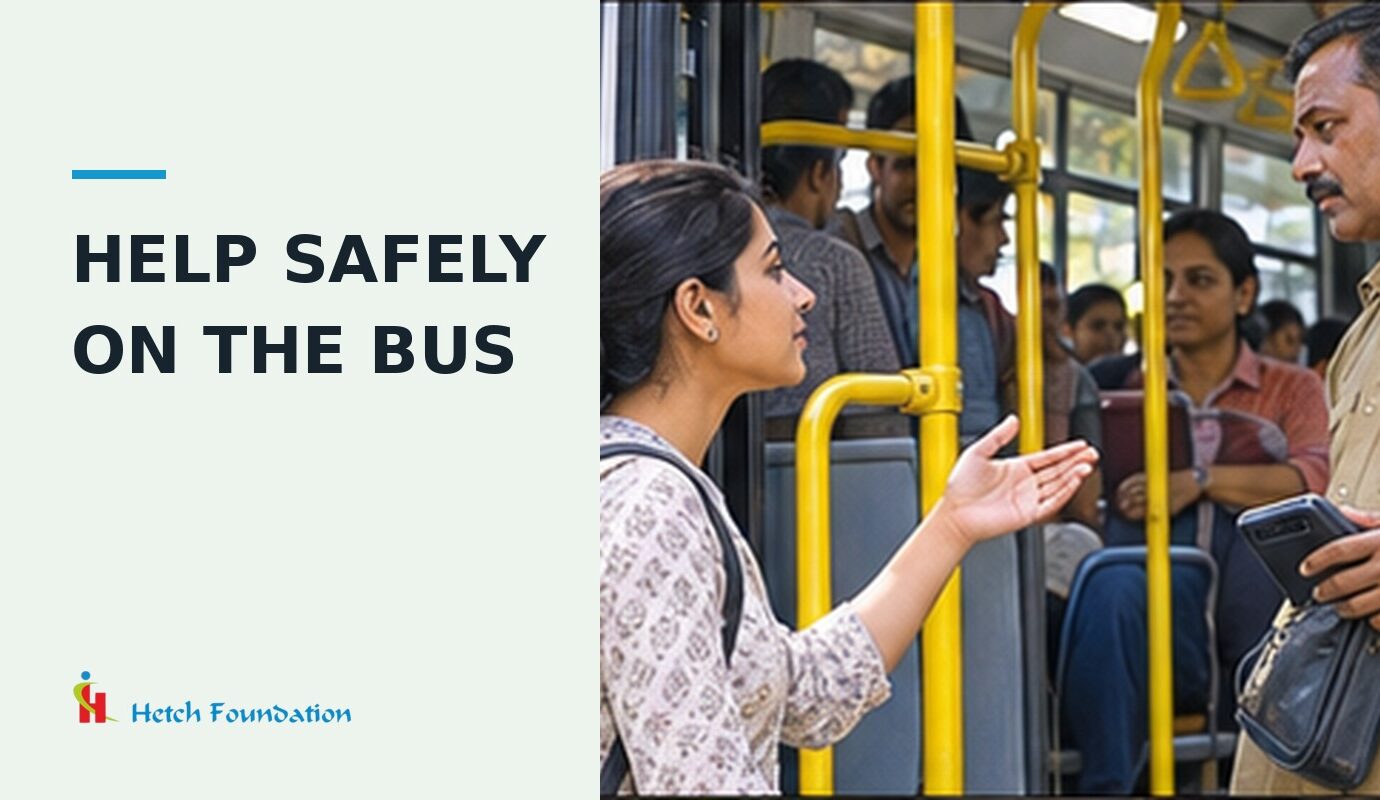
Someone Is Being Harassed on a Bus. How Can a Bystander Help Safely?
You are standing near the middle of a busy bus. A passenger is trying to move away from someone who keeps leaning towards them and making comments. You can see that they are uncomfortable, but the aisle is crowded and you are unsure how the other person will react. You can still help. Look for a way to increase the passenger’s choices, involve someone with a role on the bus and avoid making the situation more dangerous. The safest action depends on what is happening, where the bus is and what the affected person wants.
Check the immediate risk and your surroundings
Look for a visible conductor, driver, attendant or nearby passenger who could help. Check where you can stand without blocking the driver’s view, an exit or another passenger’s path. Think about whether the person behaving aggressively appears likely to escalate. If there is immediate danger, call 112 in India when safe to do so. Give the location, route, direction and vehicle details if you can observe them safely. Let the operator explain what to do next.
Different situations call for different responses. If a bus is moving, avoid distracting the driver or asking passengers to make a risky move. A conductor or other attendant may be able to communicate with the driver at an appropriate moment. If there is no attendant, look for a safe way to get help from another passenger or ask the driver when the vehicle reaches a stop. Keep a clear exit and describe what is happening rather than getting into an argument about motives.
Speak to the person affected when it is safe
You can ask quietly, “Are you okay?” or “Would you like to stand over here?” Make room for a yes, no or no answer. The person may prefer to move closer to the conductor, sit with another passenger or get off at a stop where help is available. Ask before touching or moving them. If they indicate a preference, take it seriously. They may see a risk that you do not, or they may depend on finishing the journey to reach work, friends or another connection.
A small distraction can give someone room to move when the situation allows it. Ask an ordinary question about the next stop or offer a seat. Choose a distraction that does not trap the person in a conversation or draw unnecessary attention. In a crowded bus, offering an existing space beside you can be more practical than asking someone to squeeze all the way to the front. If the situation appears unsafe, get assistance from a safer position.
Ask a specific person for a specific action
One bystander can quietly tell the conductor, “A passenger near the back is asking for help. Can you speak to them?” If there is no conductor, a nearby passenger may agree to make space or inform staff at the next safe opportunity. Point out the location without shouting across the vehicle. If the vehicle is approaching a staffed station or terminal, staff there may be able to assist. Ask the affected person whether they want someone to stay with them while help is arranged.
Where multiple people are ready to help, give them separate useful jobs rather than letting a crowd gather. One can tell staff, another can stay nearby if invited and another can note basic service information from a safe position. Keep doors clear and avoid following or surrounding anyone. Direct confrontation can put the passenger and everyone nearby at risk. If the situation becomes urgent, focus on distance, safe access to help and accurate information for responders.
Be careful with recording and public sharing
Basic details such as a route number, time, stop, direction or vehicle identification can help the person report what happened later. If taking notes is safe, stick to what you observed. Recording can increase risk or capture the affected person’s identity. Ask what they want done with any material you already have and keep it private. Avoid circulating an image in local groups or using an incident to create social media content. There may be consequences for the person on the bus long after you have left.
Check in after the incident if the person wants that
When the immediate situation has passed, ask, “Would you like me to stay with you, or would you prefer some space?” Offer to share route details or help them find the transport operator’s official complaint channel. If they want to call somebody or find staff, give them room to do that privately. You can offer one practical action at a time and let them pick. Avoid assuming that they want to get off at a stop they did not choose or disclose personal information to other passengers.
If you later give an account to the transport operator, say whether you saw the behaviour directly or heard about it from somebody else. Note the route, approximate time and location, and keep any private account separate from public messages.
One habit for your next commute
Identify who can help on your usual bus and note where the route or vehicle number is displayed. Practise a simple phrase you would use with the conductor or another passenger. An ordinary sentence such as, “Can you check whether the person in that seat needs help?” gives you a way to act without improvising under pressure. Review which nearby stops have a staffed location or a well-used public waiting area.
Frequently asked questions
What if I am unsure what I witnessed?
Check in with the person privately if safe and describe specific behaviour to staff if needed. Share what you saw and ask what support the person wants.
Should I confront the person responsible?
Assess the risk first. Getting staff involved, making space or offering a safe distraction may be more useful. In an emergency, call for help from safety and follow responders’ directions.
What if the person says they want to be left alone?
Respect their request and give them space. Stay available if appropriate. If an immediate threat becomes apparent, obtain emergency help when safe to do so.