

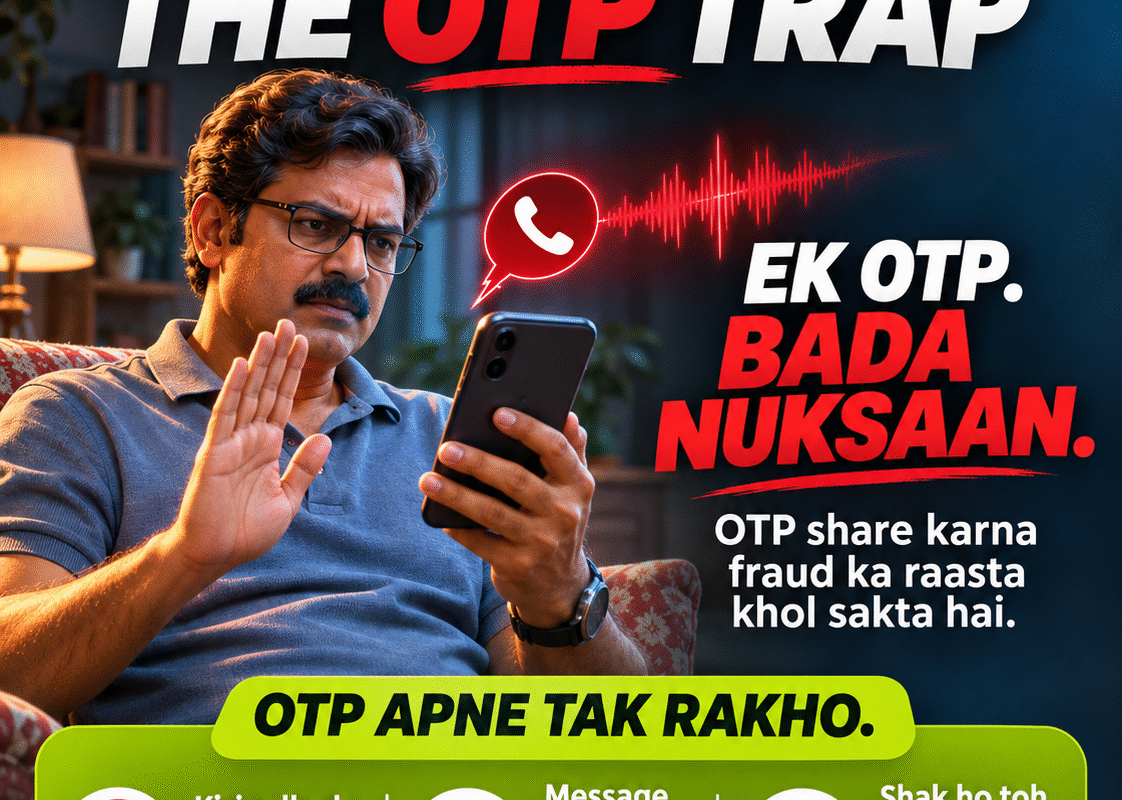
The OTP Trap: What to Check Before Sharing a Code
A caller says your bank account will be blocked unless you read out a code that has just arrived. They sound professional, know your name and insist you act immediately. That pressure is your cue to pause.
What you should know
An OTP is a one-time password used to verify a specific action. Depending on the service, it may approve a payment, a login, a password reset or another account change. Sharing it can help a scammer complete an action you never intended. Not every code performs the same function: read the entire message, including the purpose and any amount or recipient shown.
The Reserve Bank of India warns customers not to disclose OTPs, PINs or passwords, even to someone claiming to be a bank official. Knowing your personal details does not prove a caller is genuine.
What you should do
- Keep the code private. Do not read it out to an unsolicited caller or send it through chat. Never share a screenshot containing it.
- Check what it authorises. If you did not initiate the action, do not enter or approve the code. Avoid links supplied by the caller.
- Verify independently. End the call. Open the organisation’s official app or contact a verified number from your card or official website.
One habit to practise today
Before entering any code, ask: “What exactly am I authorising?” Practise this pause with family members without asking them to reveal real codes.
Quick questions
What if the caller already knows my name?
Personal details can be obtained through many sources. They are not reliable proof of identity.
What if I already shared an OTP?
Contact the relevant bank or service immediately through its official channel and secure the affected account. For financial cyber fraud in India, call 1930 promptly and complete your complaint at cybercrime.gov.in. Preserve messages and transaction details. Reporting does not guarantee recovery.
Sources
Part of Hetch Foundation’s “Kaash Mujhe Pehle Pata Hota!” public-awareness campaign. Learn. Act. Share.