

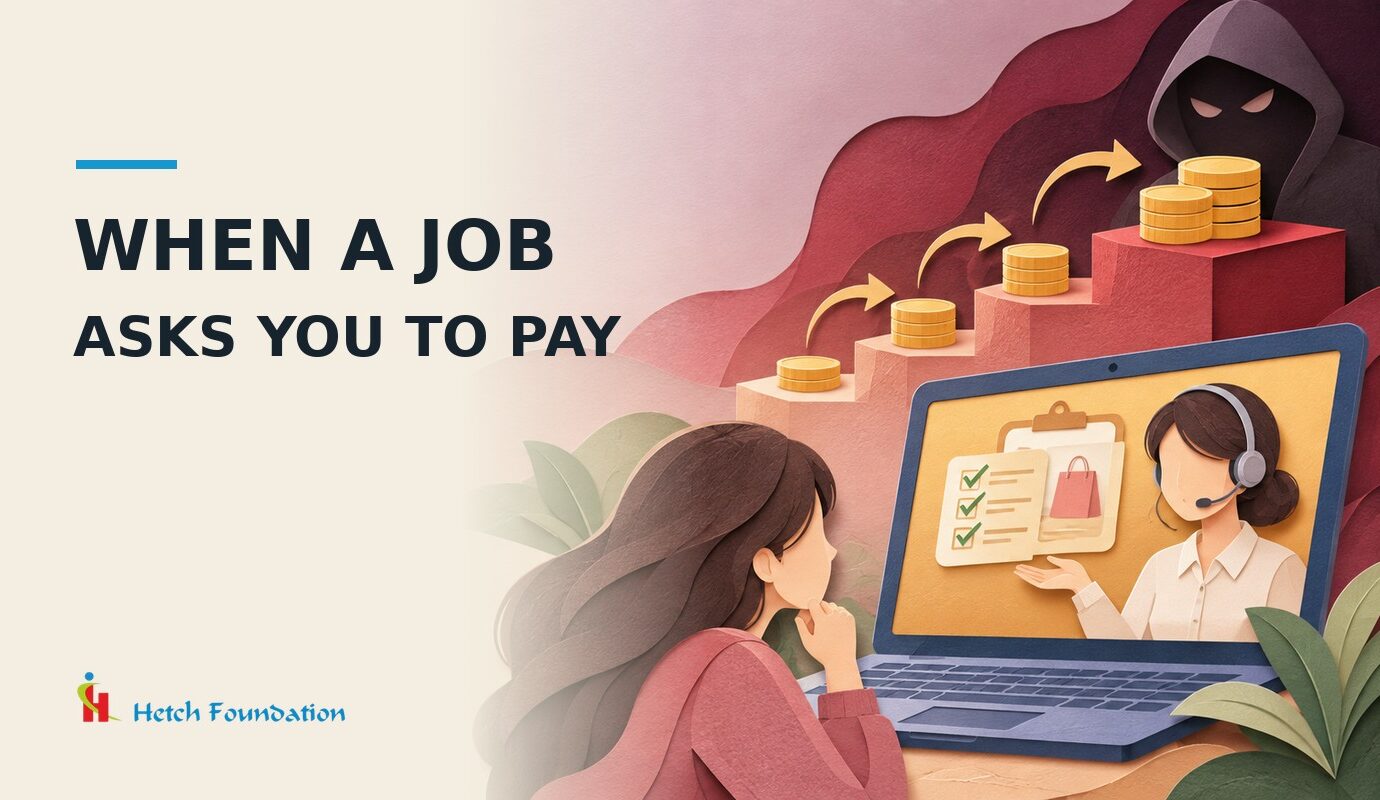
The Part-Time Job That Starts Paying You, Then Asks You to Pay
The offer sounds suited to someone looking for a little extra income. Work from home for a short time each day, complete tasks and get paid quickly. An initial payment arrives. A coordinator then says a bigger commission is available if you put in some of your own money. November 2026 reporting on Cyberabad police cases included part-time job fraud. The practical question for a job seeker anywhere in India is simple: what changed between the original offer and the request to transfer money?
Treat the first payment as one event
A small payment shows that money entered your account. It tells you little about who is employing you, what their agreement says or whether a later balance can be withdrawn. People often trust the next instruction because the first task appeared to work. This is a good moment to slow down, especially if the conversation moves from describing work to asking you to fund it.
Look back at the original offer. Did it identify an employer, specify what you would deliver and explain the rate and schedule? If the work can apparently only continue once you make a deposit, ask for a written explanation and stop sending money while you verify the arrangement. Screenshots and testimonials sent by the same coordinator carry the same limitation as the coordinator’s own promise.
Find the employer independently
Look for the role on the employer’s official careers page or contact the organisation using details you find yourself. Ask whether the recruiter and role are real and whether the organisation asks workers to pay for access to tasks. If the business has a similar name to a well-known company, check the exact spelling of its site and communication channels. A familiar logo does not establish that the recruiter works there.
Ask for the work description, the payment terms, the contact responsible for the hiring decision and any written agreement. Give yourself enough time to check each answer. Avoid sharing identity documents, bank logins or verification codes through an unverified chat. If a genuine employer requires documents, confirm the destination and why the documents are needed through its official onboarding process.
Spot the switch from work to payments
The request may be framed as a deposit, account upgrade, mistake correction or fee for releasing your earnings. The language can change while the action remains the same: the worker is asked to transfer money before being allowed to continue or withdraw. A deadline may be added to discourage you from asking anybody else. Leave the conversation briefly and describe the arrangement in ordinary language to someone you trust. Would it still sound reasonable without the promised commission?
Keep a record of what you have agreed to and what you have already paid. Write the actual cash movements beside any figures shown on a dashboard. If a platform says you earned a large amount but the only money you have received is a small initial payment, keep those figures separate. Do not send additional money in the hope that the balance will become available.
If you already sent a deposit
Contact your bank or payment provider through an official channel promptly. If you suspect financial cyber fraud in India, call 1930 and report through cybercrime.gov.in. Keep the amount, time, transaction reference, receiving details and messages. Save relevant files privately and send them through official channels when requested. Record the incident reference and any instructions the bank or complaint system gives you.
If you have shared a password or code, or installed an unfamiliar app at the request of someone you suspect, tell the bank what happened. Follow official advice on securing the account and device. Do not let an offer to restore your balance delay reporting. Somebody promising to recover money for a new fee should be treated as a fresh claim to verify.
How schools, colleges and families can help
Career offices can give students a way to verify roles that circulate in class groups. Families can agree that a student or job seeker may ask for a second opinion without being judged for considering an offer. Ask the person to show what the recruiter is requesting now, then help them obtain an independent contact. If there is an urgent deadline for payment, use that time to check the offer rather than to gather money.
Use anonymous examples in awareness discussions. A group review can identify the point where a proposed wage turns into a demand for a transfer. It also gives people a chance to practise how they would leave the conversation. Keep actual identity and bank details out of teaching examples.
One habit to practise this week
Before accepting any unexpected remote-work offer, answer three questions in writing: who is hiring me, what work am I delivering, and who pays whom? Look up the employer independently and discuss any mismatch before you provide documents or send money.
Frequently asked questions
What if my friend really received a payment? That is worth noting, but verify the employer and the current terms yourself. Your friend may have seen only the initial stage.
What if the coordinator says the next task is optional? You can decline it and ask for a written explanation of any amount the platform claims it owes you. Avoid making a transfer to test the withdrawal.
What if I have only the chat and no payment receipt yet? Preserve the chat and check your bank or payment app for the transaction record. Report suspected fraud promptly with what you have.