

When “Everyone Does It” Becomes an Excuse on the Road
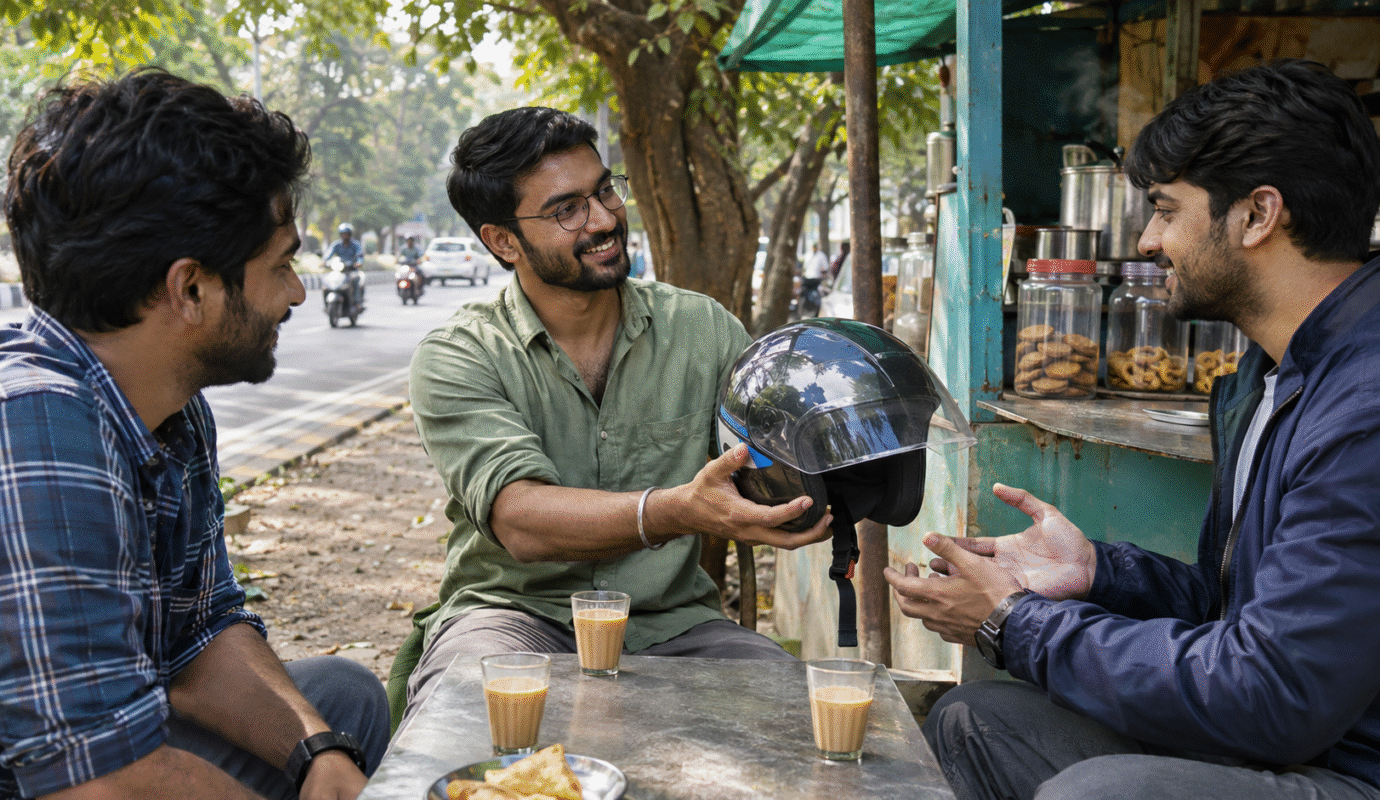
A friend points to other riders without helmets. Someone laughs at a passenger fastening a belt. The message is familiar: if a risky choice looks common, resisting it can feel unnecessarily difficult.
Chapter Six asks readers to examine this kind of permission. A behaviour does not become protective simply because we can find other people doing it.
Notice the social pressure
Sometimes nobody gives an instruction. A joke, an impatient look or a casual remark does the work. Recognising that pressure helps you answer the situation rather than automatically fitting in. PIARC’s road-safety guidance includes social norms among the influences on road-user behaviour.
Keep your response concrete
Try: “I’m fastening my belt before we leave,” or “Let’s get the other helmet.” You do not need to prove that every person in the group is wrong. State the action you will take and give it the time it needs.
Make the practical alternative available
A spare suitable helmet, a different travel arrangement or an earlier departure can help turn an objection into a workable plan. An alternative should still meet the needs of the people travelling. Do not improvise unsuitable equipment merely to end the discussion.
Support the person who chooses care
If someone else speaks first, back them calmly. Do not reward the joke that makes protection embarrassing. On your next group journey, notice which conduct earns approval. Your response can make a considerate choice easier for another person to repeat.
About the book
This original reflection by Oliver Bennett is inspired by Chapter 6, “The Mirror We Avoid — From Blame to Responsibility,” printed pages 66–84 of HarGhar Se EkSainik by Syed Abdul Hakeem, presented by Hetch Foundation. It independently develops the chapter’s invitation to examine our own conduct and the everyday influence we have on others, alongside the continuing responsibility of public institutions. Explore the book’s wider call to protect life through ordinary actions.