

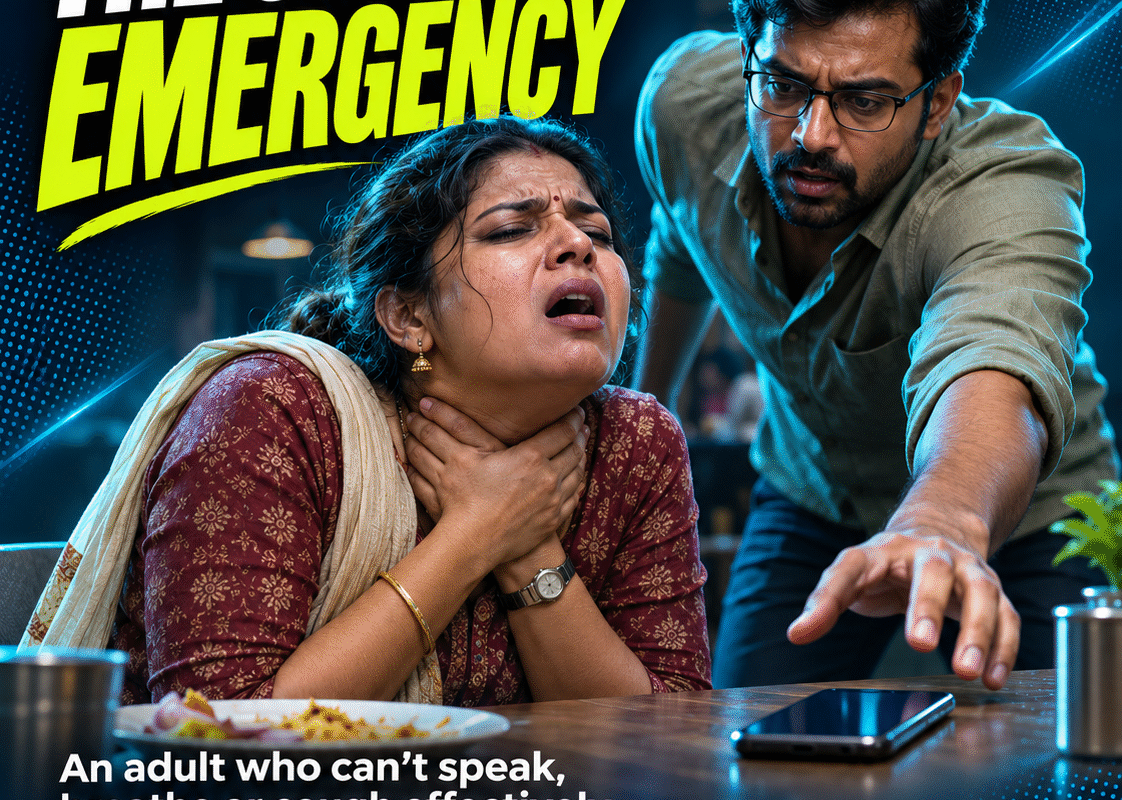
When Someone Is Choking: Recognise the Signs and Act
A meal stops mid-conversation. Someone grabs their throat and cannot answer. Severe choking may be quiet: a person with a blocked airway may be unable to speak, breathe or cough effectively. Recognising that change matters.
What you should know
If the person can cough strongly, encourage coughing and watch closely. If their cough becomes weak or silent, or they cannot speak or breathe, shout for help and have someone call 112 in India. Use speakerphone if you are alone.
The response depends on age and circumstances. The sequence below is for a conscious adult; practical first-aid training helps you learn positioning and technique.
What you should do
- Give up to five back blows. Support the adult leaning forward. Use the heel of your hand to strike firmly between the shoulder blades. Check after each blow and stop if the blockage clears.
- If ineffective, give up to five abdominal thrusts. Stand behind them, place a fist just above the navel and below the breastbone, grasp it with your other hand, and pull sharply inward and upward. Alternate up to five back blows with up to five thrusts until the blockage clears or they become unresponsive. In pregnancy, or if you cannot encircle the abdomen, use chest thrusts instead; follow emergency guidance.
- If they become unresponsive, lower them safely and start CPR. Ensure emergency help has been called and follow the call handler’s instructions. Never sweep blindly inside the mouth. Remove an object only if clearly visible and easily reachable.
One habit to practise today
Book hands-on first-aid training that includes choking and CPR. Practise techniques on appropriate training equipment, rather than trying forceful thrusts on a healthy person.
Quick questions
Is the adult technique suitable for a baby?
No. Infants under one year need back blows and chest thrusts, not abdominal thrusts. Children need age-appropriate care, and paediatric CPR differs. Call for help and follow the dispatcher while applying the skills you have learned.
Is medical care needed after the food comes out?
Anyone treated with abdominal thrusts or chest compressions should be assessed by a healthcare professional because injuries or complications can occur. Persistent breathing or swallowing difficulty needs urgent help.
Sources and further reading
Resuscitation Council UK: first-aid guidelines · American Red Cross: adult choking and special circumstances · NHS: choking in babies and children · India’s emergency number 112
Part of Hetch Foundation’s “Kaash Mujhe Pehle Pata Hota!” public-awareness campaign. Learn. Act. Share.