

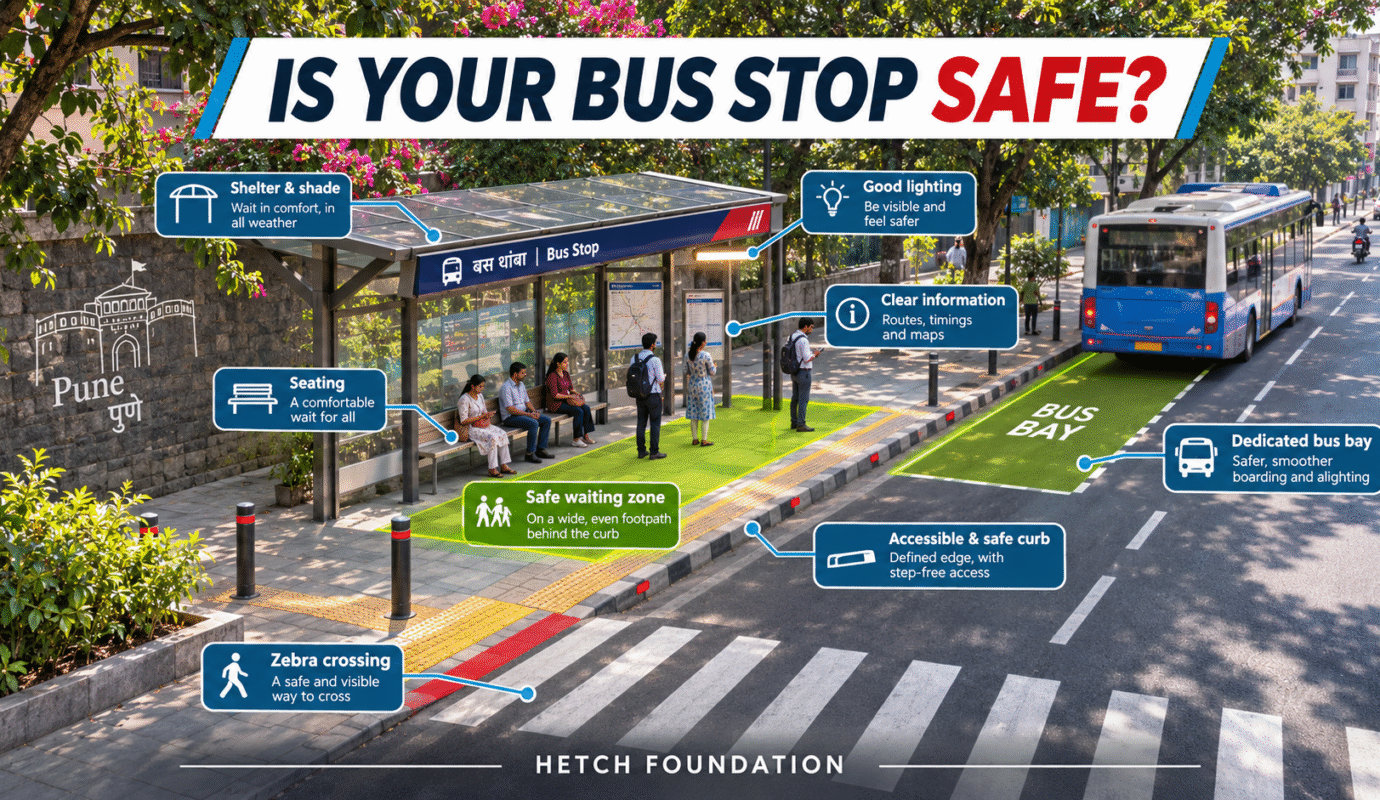
Would You Let Your Child Wait at This Bus Stop?
At a bus stop, the most important part of the journey takes place before the bus arrives. Students gather, people look down the road for their ride, and anyone running late may take the shortest path across traffic. On 25 November 2026, reports from Pune described a vehicle striking students waiting at a bus stop. That incident raises a question that parents, students and communities across India can answer for their own streets: where exactly do we expect people to stand while they wait?
Walk the route once at the usual pickup time. Allow five minutes at the stop itself. Go with your child if possible, because the place where adults think students wait can be different from where students actually gather. Observe from a safe spot and use these five checks.
1. Find the place where everyone can wait
Start at the sign or pickup marker, then look at the ground. Is there a continuous footpath or a waiting area clearly set back from moving vehicles? Can the entire group fit there when the bus is late? A bench or shelter helps only if students can reach it and stay there without spilling towards the roadway. Look for utility poles, parked two-wheelers, damaged paving and puddles that reduce the usable space. If the shelter is full, check where the next person naturally stands. That overflow spot is part of the stop too.
2. Walk the crossing students actually use
Follow the route from the side of the road where children arrive. If the marked crossing is farther away, note whether the connecting footpath is usable. A crossing can look practical on a map and still be difficult to reach on foot. Check whether a parked van, bend or bus blocks the view. Stand on the footpath and consider what a shorter child can see from there. If they need to step into the roadway to see approaching traffic, record that specific problem and look for an alternative route together.
3. Watch one bus arrive and leave
Observe where the bus stops, where its door opens and what the waiting group does when it arrives. Students may begin moving before the bus has stopped because it sometimes pulls up farther along the road. Ask the transport operator to agree on one predictable stopping point where passengers can board and alight from the protected side. If stopping there would block a crossing, leave students in traffic or require an unsafe manoeuvre, ask the operator and the school to review the location. A family should coordinate any change before sending a child to a different pickup point.
4. Run the same check in the conditions that change the stop
A stop can behave differently before sunrise, after rain or during the busiest part of the morning. Lighting affects whether people can see the edge of the footpath and whether drivers can see people near a crossing. Standing water can push the group towards traffic. A parked delivery vehicle can hide a child from view. If you made your first visit during a quiet hour, repeat the check during the pickup window. Where possible, ask a student, a wheelchair user or someone accompanying a younger child which part of the route is hardest for them.
5. Ask for one specific change
Write down the stop name or map pin, nearest landmark, direction of travel and the time the problem occurs. Describe what you saw in plain language: “At 7:40 a.m., parked two-wheelers block the footpath beside the shelter, and students wait in the roadway.” If it is safe to take a photo from the footpath, frame the obstruction or road layout and keep children’s faces out of the image. Give the school or college a copy if it uses the stop. Contact the transport operator about boarding arrangements and the relevant road or municipal authority about the crossing, footpath or lighting.
Ask for a defined action. A school can review a pickup location with the operator. A road authority can assess a crossing or damaged footpath. A parent group can agree on a supervised waiting point while the matter is reviewed. Keep the complaint number or acknowledgement so the next conversation starts with the existing report. If the stop changes, ask the school to communicate the new location and start date to every affected family.
Practise this habit this week
Walk to the stop once at the usual travel time and ask your child to show you three places: where they wait, where they cross and where they board. Agree what they should do if the bus is late or pulls up somewhere unexpected. Give older students space to explain the route they prefer and the difficulties they see. If one of the three places feels unsafe, write down why and contact the person who can change it.
Frequently asked questions
Does a shelter make a stop safe?
A shelter can make waiting more comfortable. Check the space around it, the crossing used to reach it and where passengers board. The whole route needs to work for the people using it, including when the shelter is crowded.
Should I ask the driver to pick up my child somewhere else tomorrow?
Discuss the proposed location with the school and operator first. Confirm that the driver can stop there safely, that your child can reach it safely and that everyone has the same information. If you arrange a temporary change for your own family, make sure the person supervising pickup knows exactly what was agreed.
What if several families have already complained?
Combine the relevant dates and reference numbers in one message and add a short observation from the busiest pickup time. Ask who is handling the report and when the location will be reviewed. A concrete observation about when and where students enter the roadway gives the recipient something they can verify on site.