

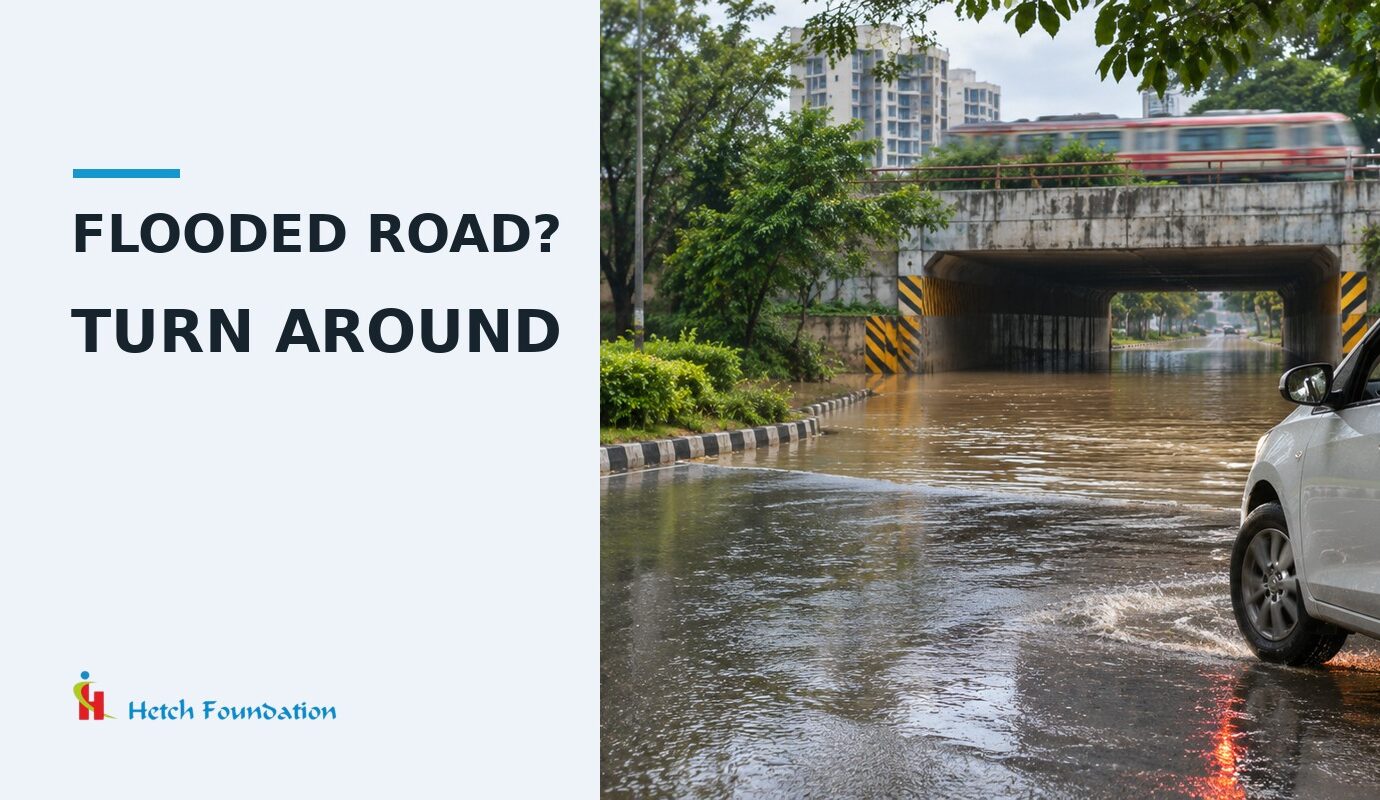
A Flooded Underpass Is a Turnaround Decision
A route you use every day reaches an underpass that is holding water. The ramp slopes down and a driver ahead appears to be deciding whether to continue. You cannot see the deepest part, and someone behind you wants to move. This is where your decision matters most. Leave the flooded route before entering it and use a safe, legal alternative or wait in a safe place. Official flood guidance advises people to avoid driving into flooded areas. An underpass is a poor place to find out how deep the water is or what has happened to the road beneath it.
Decide while you still have room to leave
Look far enough ahead to respond to barriers, stopped vehicles and warnings before reaching the slope. Slow safely and follow police instructions, barricades and diversions. If the approach is flooded or the route is closed, use a permitted turn or exit before the affected section. Where there is no safe turn, stop in a suitable location and follow directions from authorities. Avoid reversing across live traffic or making an abrupt manoeuvre because somebody behind is impatient. The objective is to leave the affected route without creating another hazard.
Choose a waiting place clear of traffic and potential floodwater. If you need to check a map or message somebody, do it after stopping safely or ask a passenger. Take a moment to check whether the supposed alternative is also affected. Route software can show a road as open even as conditions change. Use current official notices when available and obey signs and instructions on the ground. If no suitable route is available, tell the person expecting you that you are waiting or changing plans.
Do not use another vehicle as a depth gauge
It can look as though a road is passable because a vehicle ahead has gone through. You may not know the condition of that vehicle, exactly where it travelled or how the water changed afterward. Pooled water can conceal a drop, a missing cover, damaged pavement or an object swept into the roadway. A moving vehicle can also shift water around another road user. There is no need to test the route yourself. Keep clear and let authorities assess when it can reopen.
The same decision applies if you are riding a motorcycle, cycling or walking. A tempting shortcut around a barricade can lead to unstable ground, fast water or a place that is difficult to leave. Keep children and companions away from the water and check an officially indicated alternative. If a bus or hired vehicle is using the route, raise the concern with the driver or person responsible before the vehicle reaches the water. The most useful intervention happens before anyone enters the flooded area.
Know what to report from safety
If a flooded underpass is unmarked, use the appropriate local traffic or civic reporting channel from a safe location. Give the road name, direction of approach, nearest junction and whether vehicles or people may already be affected. In an emergency in India, call 112. Give the dispatcher the location and explain what you can see safely. If a person or vehicle is trapped, leave rescue to appropriately equipped responders and follow their instructions. Avoid approaching the water to make a video or obtain a more exact estimate of depth.
In a group message, identify the location and time of your observation and point people to verified updates. If you are writing about the road from another neighbourhood, say where the information came from. A forwarded photo may show yesterday’s conditions or the opposite side of a divided road. Avoid presenting it as a current assessment for every driver. When officials reopen a route, follow their current traffic directions on the ground.
Plan alternatives before the trip
Mark a second route that avoids low points on the way to your school, workplace or clinic. Check whether it involves another underpass or a stretch that also floods. Note a place where you can stop safely to reassess conditions. Use local weather and traffic warnings when planning an essential trip and allow extra time. For a discretionary trip, consider a later departure if flooding is expected. Let other people know that your arrival time may change.
Workplaces and schools can reduce pressure by giving staff and families a way to communicate a delay. If you coordinate a vehicle, give the driver a contact who can change the schedule and confirm which route is permitted. Do not expect a driver to catch up lost time after a diversion. Recurring flooding can be documented and reported to the body responsible for the road. A clear record names the location, date, direction and effect on travel.
Plan the return journey as well. Rain may continue while you are inside, and a road that was open on the way out can be restricted several hours later.
If several people share a vehicle, agree who will check alerts and who will contact the destination. Keep the driver focused on driving and make any route discussion before entering the affected area.
One habit before the next rain alert
Look at a journey you make regularly and pick one low point where you would turn away if it flooded. Identify the last legal turn before reaching it and a safer alternative destination or route. Share the plan with the other people who regularly make that journey. When the alert comes, check the actual conditions and choose before joining a queue on the approach.
Frequently asked questions
Can I cross slowly if the water looks shallow?
Avoid entering a flooded road. You cannot establish the safe depth, condition of the roadway or strength of any current from its appearance.
What if the route is physically open?
Use the visible conditions and current official instructions. A route can be flooded before a barrier or notice is put in place.
What if my vehicle is already surrounded?
Call emergency services if you can do so safely and give your exact location. Follow responder instructions. Do not enter moving floodwater to try to reach someone else.