

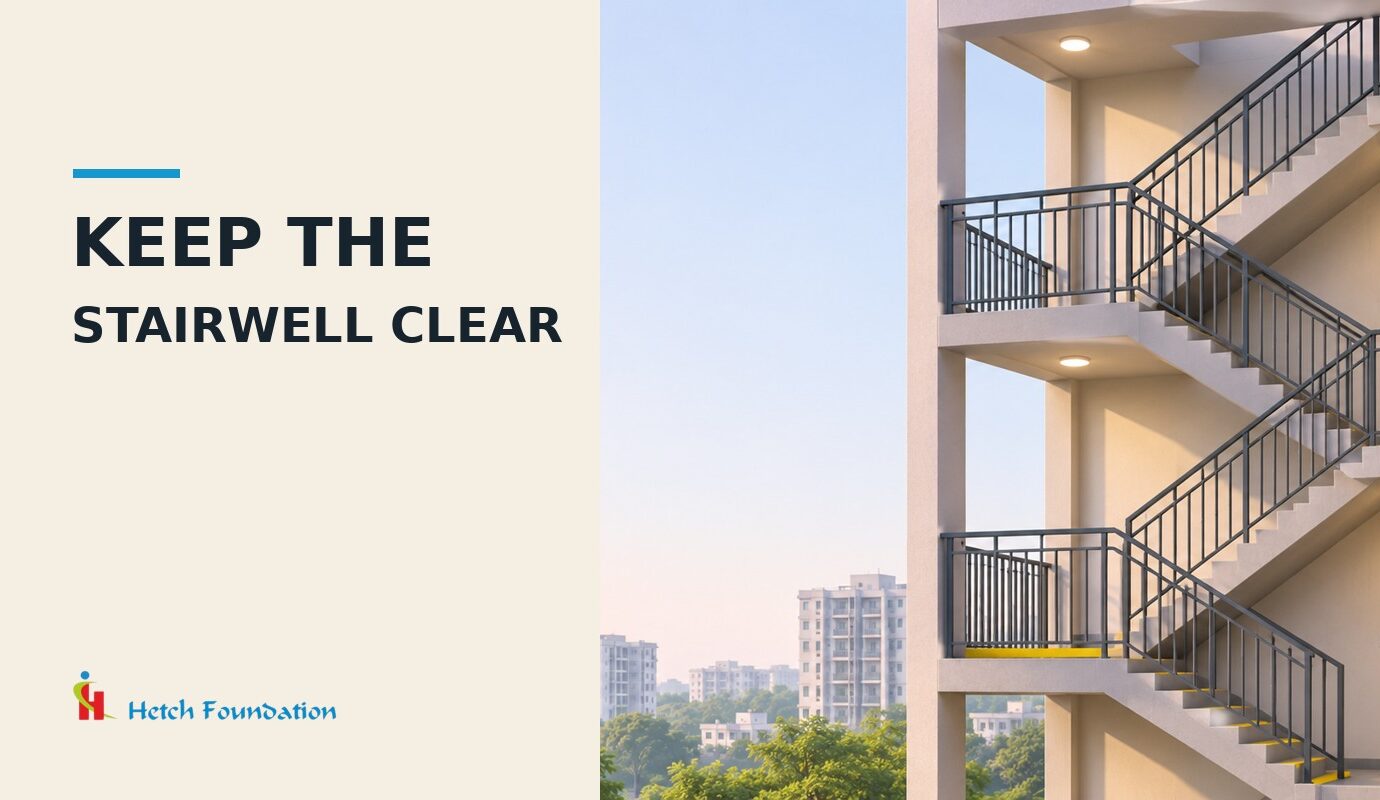
The Stairwell Is Part of Your Building’s Fire Plan
In an apartment building, a stair landing can gradually become a place to leave a bicycle, a cabinet or a box awaiting collection. On an ordinary day, people can often squeeze around these objects. In a fire emergency, building occupants may need to move under stress, with limited visibility and with neighbours who need assistance. The stairwell is one part of the building’s approved fire plan, and its condition matters long before an alarm sounds. Residents, guards and building managers can improve that condition by checking the entire route and agreeing who deals with anything that obstructs it.
Find the approved route before you inspect it
Ask the building manager or responsible fire safety person for the approved evacuation information. Identify which stairs, doors and paths occupants of your floor should use under the plan. Some buildings have protected stairs, designated refuge arrangements or different procedures for particular locations. Ask who can explain how the plan applies to your building. Treat the posted instructions and local fire service guidance as authoritative, and ask competent people to resolve anything unclear. A route residents use for convenience every day may serve a different purpose from an approved emergency route.
Locate the route in person under ordinary conditions. Start at your door or where a visitor would arrive. Look at the signs at decision points and check which way they send you. Continue until you reach the location designated by the building plan. Pay attention to changes in direction, doors that look alike and places where the route passes a lobby or parking area. Looking only at the stair flight can miss a blocked door or a difficult turn at the bottom.
Notice how ordinary storage reduces the usable route
Look for bicycles, cupboards, prams, shoes, crates and contractors’ equipment that project into a walking path or door swing. Take note of deliveries, relocation work or maintenance that temporarily puts material in the route. A person moving alone and in good light may be able to pass, while two people assisting a neighbour could have less space. Avoid treating a landing as a spare storeroom. Ask management where residents or contractors should store the items instead and how long temporary storage is permitted in approved locations.
Identify hazards without touching building safety equipment or attempting unauthorised repairs. Report broken lighting, damaged signs, unstable handrails and missing instructions. If a fire door is wedged open or a closing device appears damaged, report it to the management so it can be assessed and repaired appropriately. Do not alter or obstruct fire doors. Ask whether the relevant door, wayfinding and locking arrangements comply with the building plan and local requirements. Ask a qualified person to review any concern that depends on technical design.
Make the route understandable to people who seldom use it
A visitor may have arrived by lift and never seen the stairs. A new resident may be unfamiliar with the language used on a notice. Somebody who has difficulty seeing or hearing may need a different form of information. Ask management how people can learn the route when they first move in and how visitors are directed in an emergency. Check whether the plan explains assistance arrangements and how to request help. If a person has specific needs, discuss suitable arrangements with the responsible staff in advance and preserve their privacy.
Where a route is being repaired, check that the building has reviewed any alternative through its approved procedures. Give residents a clear update about what has changed and where they should look for current instructions. If a sign or a notice gives conflicting directions, report both locations. Ask the building manager to confirm which applies and check that the correction reaches everyone who uses that floor, including tenants, guards and cleaners.
Report a specific observation and follow up
Give the floor, staircase or door identifier and a short factual description. For example, “On the third-floor landing by Stair B, a delivery cabinet extends into the marked exit route and stops the door from opening fully.” Include the date and, when safe and appropriate, a photo of the layout without people’s faces or flat details. Ask who will resolve it and when. Keep the record until you can confirm the route is clear. If it is a recurring issue, ask why it recurs and whether occupants have a practical alternative.
If there is an actual fire or smoke emergency, follow the building’s emergency plan and official instructions. In India, call 112 from a safe position if emergency help is needed. Give the exact location and tell responders if someone may need assistance. Avoid going into a smoke-filled or otherwise unsafe route to investigate. Do not re-enter until the appropriate responders or authorities say it is safe.
Ask who checks the route during weekends or evening shifts. A problem that appears after the office closes should have a clear reporting channel and someone who can coordinate a prompt response.
One habit for the next building meeting
Walk one approved route from an occupied floor to the location shown on the plan. Invite a resident who rarely uses the stairs and a staff member from another shift. Have each person point out any place that surprised them. Record one concrete improvement, name the person responsible and agree when to check it again. Repeat after major maintenance, changes in gate access or a new occupancy arrangement.
Frequently asked questions
What if the object is only there for a few hours?
Keep the approved route clear throughout the day. Ask the manager for an appropriate place to hold deliveries or equipment while the work is under way.
Should I move a fire door or other equipment myself?
Report a problem to the responsible building contact and leave technical inspection or repair to a competent person.
What if I need assistance using the stairs?
Discuss your needs privately with the responsible building staff. Ask how the approved plan provides assistance and how to alert staff or responders if you need it.